• 2026.03.23 (Mon)
  • All articles
  • LOGIN
  • JOIN
Global Economic Times
fashionrunwayshow2026
  • Synthesis
  • World
  • Business
  • Industry
  • ICT
  • Distribution Economy
  • Well+Being
  • Travel
  • Eco-News
  • Education
  • Korean Wave News
  • Opinion
  • Arts&Culture
  • Sports
  • People & Life
    • International Student Report
    • With Ambassador
  • Column
    • Cho Kijo Column
    • Cherry Garden Story
    • Ko Yong-chul Column
    • Kim Seul-Ong Column
    • Lee Yeon-sil Column
  • Photo News
  • New Book Guide
MENU
 
Home > Synthesis

Pantanal Amphibians Face Over 80% Habitat Loss by 2100

KO YONG-CHUL Reporter / Updated : 2025-03-28 17:49:01
  • -
  • +
  • Print
Brazilian and Swiss Researchers Warn of Amphibian Extinction Risk Due to Climate Change

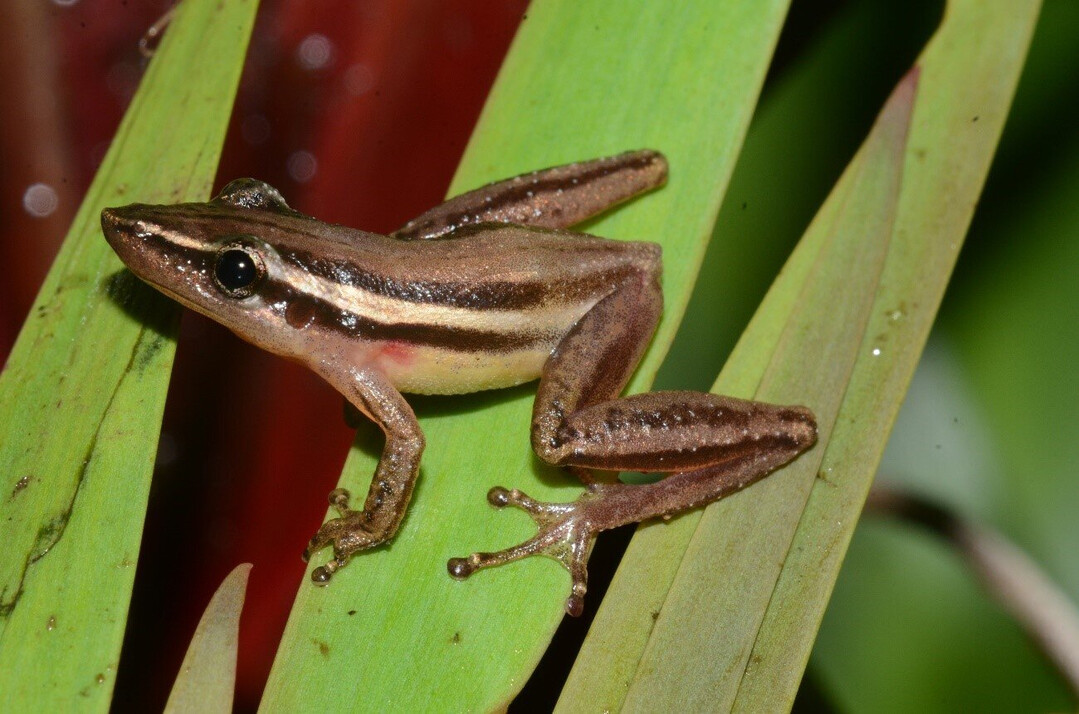
Cuiabá, Mato Grosso State, São Paulo, Brazil - The future of amphibians (frogs, toads, newts, etc.) inhabiting Brazil's Pantanal, the world's largest tropical wetland, and the surrounding Upper Paraguay River Basin is under severe threat. According to the latest research published by Brazilian and Swiss scientists, over 80% of amphibian species in this region could lose suitable habitat by 2100. The study, featured in the Journal of Applied Ecology, specifically analyzes the impact of climate change on biodiversity.

Climate Change Scenarios and the Future of Amphibians

Researchers cross-analyzed over 4,000 records of 74 amphibian species in the Upper Paraguay River Basin with climate prediction data up to 2100. The analysis was based on two scenarios from the Intergovernmental Panel on Climate Change (IPCC): an optimistic scenario where current greenhouse gas emission levels are maintained, leading to a 2°C rise in global average temperature, and a pessimistic scenario where emissions increase, resulting in a 4°C temperature increase.

The results are alarming. Even under the optimistic scenario, local extinctions of amphibians are projected to occur in 99.87% of the region, with that figure reaching 99.99% under the pessimistic scenario. Notably, species commonly found in the Pantanal, such as Scinax squalirostris, are at risk of complete disappearance by 2100.

Limitations of Protected Areas and the Need for New Measures

Currently, Integral Conservation Units in the Upper Paraguay River Basin cover only 5.85% of the total area, protecting less than 5% of the average amphibian distribution. This falls significantly short of the 2022 UN Convention on Biological Diversity recommendation to designate 30% of the Earth's surface as protected areas by 2030. The current global proportion of protected areas, including conservation units and indigenous lands, stands at 17%.

"The current protected areas in the Pantanal contribute almost nothing to the protection of amphibian species," emphasized Mario Ribeiro Moura, a professor at the Federal University of Paraíba (UFPB) in Brazil, who led the research. "We need to expand protected areas considering a hotter and drier future." The researchers proposed establishing new conservation units in areas likely to remain suitable for amphibians in the future, such as the Cerrado transition zone in the north of the basin (near Cuiabá, Mato Grosso), the southeast (near Campo Grande, Mato Grosso do Sul), and the southwest (near the Paraguayan Chaco).

Climate Crisis and Ecosystem Restoration

The researchers also stressed the need to mitigate the impacts of inadequate agricultural practices and restore aquatic ecosystems, which are crucial for moisture-dependent amphibians. "Although the Paris Agreement aimed to limit global temperature rise to 1.5°C by the end of the 21st century, we have already reached that level in 2024," warned Moura. "Without a fundamental change in the fossil fuel-based economic model, it will be impossible to reduce the impact of the climate catastrophe on biodiversity and society."

The Biodiversity Crisis in the Pantanal

The Pantanal, a key area of the Upper Paraguay River Basin spanning Brazil, Paraguay, and Bolivia, boasts a globally unique ecosystem. However, climate change and human activities are increasingly threatening the region's biodiversity. While this study focused on amphibians, it suggests that similar risks may be imminent for other faunal groups.

Experts hope this research serves as a critical wake-up call for policymakers, urging immediate action to expand protected areas and address climate change. The disappearance of Pantanal amphibians would not only represent a loss for the region but also signal a significant disruption to global ecological balance.

[Copyright (c) Global Economic Times. All Rights Reserved.]

  • #globaleconomictimes
  • #글로벌이코노믹타임즈
  • #한국
  • #중기청
  • #재외동포청
  • #외교부
  • #micorea
  • #mykorea
  • #newsk
  • #nammidonganews
  • #singaporenewsk
KO YONG-CHUL Reporter
Reporter Page

Popular articles

  • Ko Sang-goo, President of World Federation of Korean Associations, Elected as First Private Sector Chair of World Korean Community Leaders Convention

  • Revised and Expanded Edition of ‘Failure of Negotiations with North Korea: Truth and Solutions’ Published

  • Commentary That Douses the Joy of Victory: A Twisted Perspective

I like it
Share
  • Facebook
  • X
  • Kakaotalk
  • LINE
  • BAND
  • NAVER
  • https://www.globaleconomictimes.kr/article/1065602893917669 Copy URL copied.
Comments >

Comments 0

Weekly Hot Issue

  • Coway Clinches Top Honor at "Water Taste Awards" for 7th Consecutive Year
  • HP Targets Korea as Strategic Hub for 'Edge AI' Expansion, Seeking Startup Partnerships
  • Pearl Abyss’s 'Crimson Desert' Shatters Records with 2 Million Copies Sold on Day One
  • "BTS Over Books?" Indian Academies Issue Emergency Notices as Students Plot Mass Absences for Comeback Live
  • Naver to Shut Down Men's Fashion Service 'MR.' to Launch Expanded AI-Driven Fashion Platform
  • JBNU and SKKU Researchers Achieve Breakthrough in "Dream Material" MXene, Setting New World Records in Performance

Most Viewed

1
An Open Letter to BTS On the Eve of a Historic Performance
2
From Industrial Capital to Tourism Mecca... Ulsan Makes a Bold Move with ‘Experiential Content’ in 2026
3
Ko Sang-goo, President of World Federation of Korean Associations, Elected as First Private Sector Chair of World Korean Community Leaders Convention
4
It is Time for BTS’s Fandom, ARMY, to Step Forward
5
Korean Stock Market Plunges: Circuit Breaker and Sidecar Triggered Amid Geopolitical Crisis
광고문의
임시1
임시3
임시2

Hot Issue

Vishay Unveils Ultra-Compact 0404 RGB LED with Independent Chip Control for Enhanced Color Precision

Coway Clinches Top Honor at "Water Taste Awards" for 7th Consecutive Year

AI Medical Ecosystem in Focus: KIMES 2026 Opens in Seoul as Global Healthcare Hub

Netanyahu Declares Decisive Blow to Iran’s Nuclear and Missile Programs, Signals Early End to War

Let’s recycle the old blankets in Jeju Island’s closet instead of incinerating them.

Global Economic Times
korocamia@naver.com
CEO : LEE YEON-SIL
Publisher : KO YONG-CHUL
Registration number : Seoul, A55681
Registration Date : 2024-10-24
Youth Protection Manager: KO YONG-CHUL
Singapore Headquarters
5A Woodlands Road #11-34 The Tennery. S'677728
Korean Branch
Phone : +82(0)10 4724 5264
#304, 6 Nonhyeon-ro 111-gil, Gangnam-gu, Seoul
Copyright © Global Economic Times All Rights Reserved
  • 에이펙2025
  • APEC2025가이드북TV
  • 독도는우리땅
Search
Category
  • All articles
  • Synthesis
  • World
  • Business
  • Industry
  • ICT
  • Distribution Economy
  • Well+Being
  • Travel
  • Eco-News
  • Education
  • Korean Wave News
  • Opinion
  • Arts&Culture
  • Sports
  • People & Life 
    • 전체
    • International Student Report
    • With Ambassador
  • Column 
    • 전체
    • Cho Kijo Column
    • Cherry Garden Story
    • Ko Yong-chul Column
    • Kim Seul-Ong Column
    • Lee Yeon-sil Column
  • Photo News
  • New Book Guide
  • Multicultural News
  • Jobs & Workers