• 2026.05.08 (Fri)
  • All articles
  • LOGIN
  • JOIN
Global Economic Times
fashionrunwayshow2026
  • Synthesis
  • World
  • Business
  • Industry
  • ICT
  • Distribution Economy
  • Well+Being
  • Travel
  • Eco-News
  • Education
  • Korean Wave News
  • Opinion
  • Arts&Culture
  • Sports
  • People & Life
    • International Student Report
    • With Ambassador
  • Column
    • Cho Kijo Column
    • Cherry Garden Story
    • Ko Yong-chul Column
    • Kim Seul-Ong Column
    • Lee Yeon-sil Column
  • Photo News
  • New Book Guide
MENU
 
Home > Industry

South Korea Delays Poultry Farming Reforms Amid Industry Pushback

KO YONG-CHUL Reporter / Updated : 2024-11-20 18:07:01
  • -
  • +
  • Print


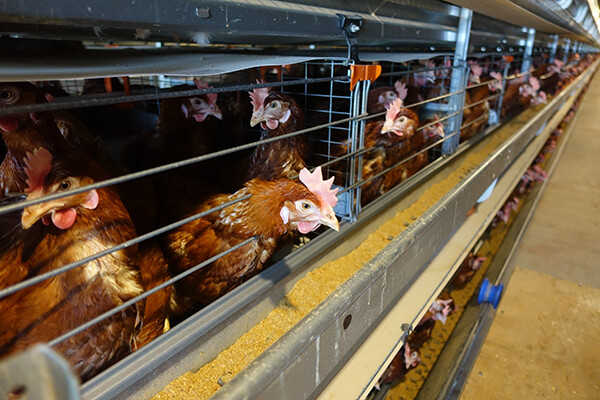
Seoul, South Korea – South Korea has delayed the implementation of new regulations designed to improve the living conditions of laying hens, citing concerns about the financial burden on poultry farmers. The Ministry of Agriculture, Food and Rural Affairs announced that the mandatory increase in cage size, originally scheduled for September 2024, will now take effect in September 2027.

The decision to delay the reforms comes amid strong opposition from poultry farmers who argue that the required renovations are too costly and time-consuming. They have called for an even later implementation date, suggesting 2033.

The new regulations were introduced in 2018 following a food safety scandal involving contaminated eggs. The incident highlighted the poor living conditions of many laying hens, which were often confined to cramped cages. To address these concerns, the government mandated a 50% increase in cage size.

However, poultry farmers have argued that the transition to larger cages would require significant investments in new facilities, and many have expressed concerns about the financial implications. The government has provided financial support to help farmers with the renovations, but industry representatives contend that it is insufficient.

“We cannot be expected to replace decades-old facilities in such a short timeframe,” said Andu-young, president of the Korean Layer Association. “Farmers who invested in their facilities before the regulations were introduced should not be retroactively penalized.”

The poultry industry has also raised concerns about the potential impact on egg prices. A study by the Korea Rural Economic Institute estimated that the new regulations could lead to a 33% decrease in egg production, resulting in a 57% increase in egg prices.

While the government acknowledges the challenges faced by farmers, it maintains that improving animal welfare is a priority. “Improving the living conditions of laying hens is a promise we made to the public,” said a spokesperson for the Ministry of Agriculture, Food and Rural Affairs. “We have already granted a seven-year grace period for farmers to make the necessary adjustments, and we must balance the needs of the industry with the welfare of animals.”

Despite the delay, animal welfare advocates have expressed disappointment with the government's decision, arguing that it undermines efforts to improve the lives of farm animals.

[Copyright (c) Global Economic Times. All Rights Reserved.]

KO YONG-CHUL Reporter
Reporter Page

Popular articles

  • President Lee’s Approval Rating Hits Record High of 67% for Second Consecutive Week: Gallup Korea

  • The AI Tsunami: Meta to Slash 10% of Workforce Amid Global Tech Purge

  • ElevenLabs Partners with Caring to Support ‘Senior Emotional Care’ via Voice AI

I like it
Share
  • Facebook
  • X
  • Kakaotalk
  • LINE
  • BAND
  • NAVER
  • https://www.globaleconomictimes.kr/article/1065603906628837 Copy URL copied.
Comments >

Comments 0

Weekly Hot Issue

  • Samsung Electronics Shifts Strategy in China: Moving from Hardware Sales to Platform-Based Business
  • Banking War 2.0: South Korean Banks Race to Transition into 'AI-First' Institutions
  • Tesla Model Y Becomes First to Pass Grueling New U.S. Autonomous Safety Tests
  • Celltrion’s Zymfentra Sees Explosive 300% Growth, Hits Record Quarterly Prescriptions in the U.S.
  • BMW Korea Ignites May with Exclusive 9-Model Online Limited Edition Lineup
  • Hyundai Mobis Completes Independent EV 'Heart' Lineup: A Major Leap Toward Global Leadership in Power Electric Systems

Most Viewed

1
Iran Imposes Transit Fees on Strait of Hormuz Amid Escalating Maritime Tensions
2
Korea and Vietnam Forge Strategic Partnership in Science, Technology, and Innovation
3
80% of Enterprises Hit by 'AI Agent Anomalies': SailPoint Calls for Integrated Identity Governance
4
Kurly Abandons 'All-Paper' Packaging Strategy Amid Rising Cost Pressures
5
University of Utah Asia Campus Hosts ‘2026 Film Festival,’ Showcasing Student Cinematic Excellence
광고문의
임시1
임시3
임시2

Hot Issue

Tensions Flare in Strait of Hormuz: U.S.-Iran Clashes Threaten Fragile Truce

Tesla Model Y Becomes First to Pass Grueling New U.S. Autonomous Safety Tests

U.S. Trade Court Strikes Down Trump’s ‘Global 10% Tariff,’ Citing Executive Overreach

Hyundai Motor Group Bets $700 Million on Mexico Amid Trade Policy Volatility

Fashion Runway Show 2026

Global Economic Times
korocamia@naver.com
CEO : LEE YEON-SIL
Publisher : KO YONG-CHUL
Registration number : Seoul, A55681
Registration Date : 2024-10-24
Youth Protection Manager: KO YONG-CHUL
Singapore Headquarters
5A Woodlands Road #11-34 The Tennery. S'677728
Korean Branch
Phone : +82(0)10 4724 5264
#304, 6 Nonhyeon-ro 111-gil, Gangnam-gu, Seoul
Copyright © Global Economic Times All Rights Reserved
  • 에이펙2025
  • APEC2025가이드북TV
  • 반달곰 프로젝트
Search
Category
  • All articles
  • Synthesis
  • World
  • Business
  • Industry
  • ICT
  • Distribution Economy
  • Well+Being
  • Travel
  • Eco-News
  • Education
  • Korean Wave News
  • Opinion
  • Arts&Culture
  • Sports
  • People & Life 
    • 전체
    • International Student Report
    • With Ambassador
  • Column 
    • 전체
    • Cho Kijo Column
    • Cherry Garden Story
    • Ko Yong-chul Column
    • Kim Seul-Ong Column
    • Lee Yeon-sil Column
  • Photo News
  • New Book Guide
  • Multicultural News
  • Jobs & Workers