• 2026.09.26 (Sat)
  • All articles
  • LOGIN
  • JOIN
Global Economic Times
[등록] 2026-09-01 15:48:31
  • Synthesis
  • World
  • Business
  • Industry
  • ICT
  • Distribution Economy
  • Well+Being
  • Travel
  • Eco-News
  • Education
  • Korean Wave News
  • Opinion
  • Arts&Culture
  • Sports
  • People & Life
    • International Student Report
    • With Ambassador
  • Column
    • Cho Kijo Column
    • Cherry Garden Story
    • Ko Yong-chul Column
    • Kim Seul-Ong Column
    • Lee Yeon-sil Column
  • Photo News
  • New Book Guide
MENU
 
Home > World

Ford's China Dilemma: Why US Automakers Can't Cut Ties with Chinese EV Technology Introduction: The Core Conflict

Eugenio Rodolfo Sanabria Reporter / Updated : 2026-09-15 18:23:50
  • -
  • +
  • Print


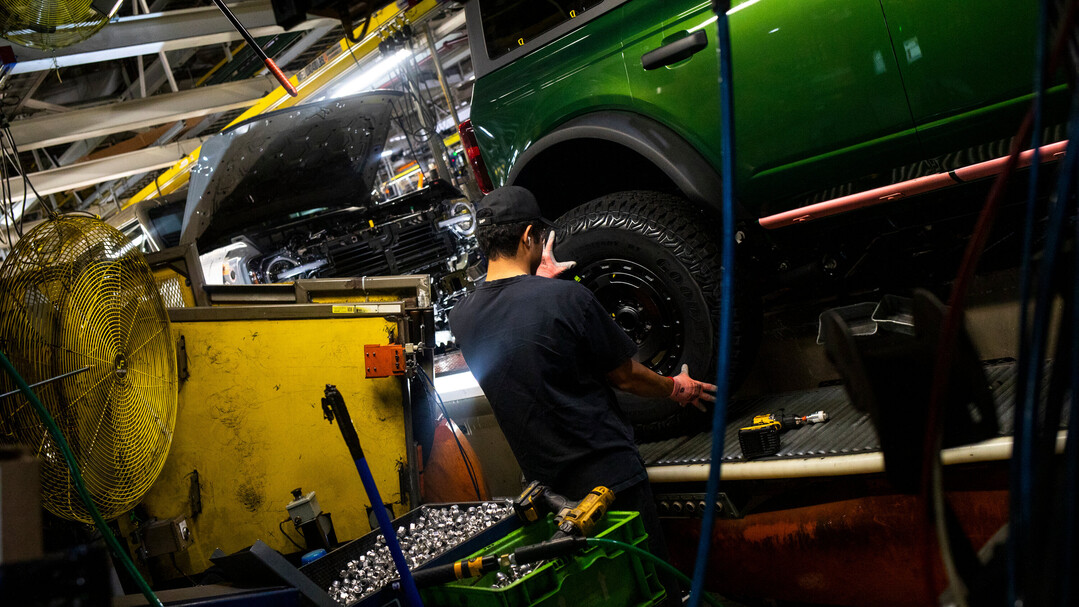
Despite advocating for strict barriers against Chinese automakers in the United States, legacy giant Ford Motor Company finds itself entangled in a deep industrial paradox. Ford's partnership with CATL (Contemporary Amperex Technology Co. Limited)—the world's leading Chinese battery manufacturer—has drawn heavy criticism from the U.S. government. Washington argues that such collaborations undermine American supply chain independence and national security. However, Ford maintains that leveraging Chinese technical expertise is a non-negotiable step to stay globally competitive. This dynamic highlights a broader challenge across the U.S. automotive industry: balancing national protectionism with the urgent need for cost-efficient electrification. 

1. The Financial Pressure and the Shift to LFP Batteries

Between 2023 and 2024, Ford's electric vehicle division accumulated massive operating losses totaling nearly $9.8 billion. To survive and chart a path toward profitability, Ford overhauled its EV roadmap, pivoting away from expensive, large-scale models toward high-volume, affordable mainstream electric vehicles.

Because batteries account for roughly 40% of an EV's total production cost, reducing cell expenses became the ultimate priority:

The Cost Advantage of LFP: Traditional Nickel Cobalt Manganese (NCM) batteries are expensive. Lithium Iron Phosphate (LFP) chemistry is over 40% cheaper, eliminating costly elements like nickel and cobalt entirely. 
The Supply Chain Barrier: Because LFP production is heavily dominated by Chinese firms, importing cells directly exposes automakers to steep tariffs and regulatory roadblocks.

2. The CATL Partnership and the Michigan Plant Model

To bypass import restrictions while harnessing advanced chemistry, Ford chose a unique licensing approach. Rather than forming a standard joint venture, Ford owns and operates the Michigan LFP battery facility 100%, while licensing manufacturing technology and services from CATL.

Bridging the Technological Gap: Ford executives noted that developing competitive LFP technology entirely in-house would have delayed their roadmap by a decade.
Commercialization: This collaboration enabled the development of Ford's advanced U.S. production lines, slated to supply economical models, including upcoming affordable EV platforms and utility vehicles.

3. The Broader Industry Dilemma: Protect or Partner?

Ford is not alone in facing this strategic crossroads. The entire U.S. and Western automotive landscape is grappling with a profound structural dilemma: insulating domestic markets from Chinese competition versus leveraging unmatched Chinese production efficiency to avoid falling behind.

Different automakers are navigating this tension through varied geographic strategies:

Stellantis: Partnered with China's Leapmotor to leverage its low-cost EV architecture and battery technology for European markets, while strictly keeping development localized in the U.S.
General Motors (GM): Despite facing declining sales volume inside China compared to past decades, GM extended its joint venture with SAIC Motor to harness low-cost Chinese manufacturing capabilities—channeling those affordable vehicles strictly to third-party markets like the Middle East and Asia rather than importing them directly into the U.S.

Conclusion

The American automotive sector faces a definitive fork in the road. Completely decoupling from China risks rendering legacy automakers uncompetitive against rapidly advancing global rivals. Conversely, integrating Chinese technology invites intense political scrutiny and regulatory friction. Ultimately, companies like Ford are forced to walk a tightrope—embracing Chinese technological prowess to survive financially while attempting to satisfy domestic security demands.

[Copyright (c) Global Economic Times. All Rights Reserved.]

  • #\ormuz Impasse
  • #globaleconomictimes
  • #micorea
  • #mykorea
  • #nammidonganews
  • #singaporenewsk
  • #Samsung
  • #Daewoo
  • #Hyos
Eugenio Rodolfo Sanabria Reporter

Popular articles

  • OpenAI Claims Breakthrough on Millennium Prize Problem: Navier-Stokes Existence and Smoothness Solved in 88 Hours

  • Kim Jae-joong Unveils His Luxury Tokyo Detached House for the First Time: Featuring a 4-Meter High Ceiling and a Private Elevator 

  • White House Inquires About Recovery of US Remains in North Korea Ahead of Potential North Korea-US Summit

I like it
Share
  • Facebook
  • X
  • Kakaotalk
  • LINE
  • BAND
  • NAVER
  • https://www.globaleconomictimes.kr/article/1065604968203228 Copy URL copied.
Comments >

Comments 0

Weekly Hot Issue

  • Geoje, Still Scarred by Flood Damage, Receives 'Chuseok Warmth' from Across the Country Over 2 Billion Won Donated Since Disaster; 380,000 Items Worth 1.1 Billion Won in Relief Supplies
  • Season-Over Lee Jung-hoo: Only the Burden of a 33.5 Billion Won Price Tag Remains for the 2026 Season
  • Public Criticism on Stage... The Dignity of a Senior Singer Missed by Shim Soo-bong 
  • 'Slump in Results Followed by Asylum Scandal' – North Korean Delegation Shaken in Nagoya
  • Xi Jinping Arrives in Washington… Begins 3-Day State Visit to the U.S.
  • “18 Years as a North Defector… ‘I Wish I Could Offer a Bowl of Rice at My Parents’ Grave’” Yu Sun-hee, a North Korean defector ahead of Chuseok

Most Viewed

1
Desperate Pursuit of HBM: China’s AI Chip Sector Faces Crippling Bottlenecks as Gray Market Prices Soar
2
Chuncheon to Light Up the "Lights of Ethiopia": The 16th Ethiopia Road World Coffee Festival & Meskel Festival Opens on September 25
3
The Era of "Working AI" Has Arrived: Why OpenAI's GPT-6 Astra is a Blessing for Samsung Electronics and SK Hynix
4
 Iran and Gulf Nations to Hold First Ministerial Meeting in Salalah for Hormuz Navigation
5
Surging LNG Prices Forebode a Freezing Winter amid Middle East Conflict
광고문의
임시1
임시3
임시2

Hot Issue

South Korea and U.S. Leaders Hold Pivotal Summit in New York

From a Symbol of Security to a Space for Healing... Walking Paju's Veiled 'Re:DMZ' Forest

Pocheon Hantan River Garden Festa

A Different Side of Gyeonggi Province Seen While Running… Autumn Running Courses Recommended by 'Run Gyeonggi'

Fashion Runway Show 2026

Global Economic Times
korocamia@naver.com
CEO : LEE YEON-SIL
Publisher : KO YONG-CHUL
Registration number : Seoul, A55681
Registration Date : 2024-10-24
Youth Protection Manager: KO YONG-CHUL
Singapore Headquarters
5A Woodlands Road #11-34 The Tennery. S'677728
Korean Branch
Phone : +82(0)10 4724 5264
#304, 6 Nonhyeon-ro 111-gil, Gangnam-gu, Seoul
Copyright © Global Economic Times All Rights Reserved
  • 향기네무료급식
  • BCB부천방송
  • 반달곰 프로젝트
Search
Category
  • All articles
  • Synthesis
  • World
  • Business
  • Industry
  • ICT
  • Distribution Economy
  • Well+Being
  • Travel
  • Eco-News
  • Education
  • Korean Wave News
  • Opinion
  • Arts&Culture
  • Sports
  • People & Life 
    • 전체
    • International Student Report
    • With Ambassador
  • Column 
    • 전체
    • Cho Kijo Column
    • Cherry Garden Story
    • Ko Yong-chul Column
    • Kim Seul-Ong Column
    • Lee Yeon-sil Column
  • Photo News
  • New Book Guide
  • Overseas Koreans
  • Multicultural News