![[등록] 2026-09-01 15:48:31](/support/_updata/banner2/tl181982910_6749.png)


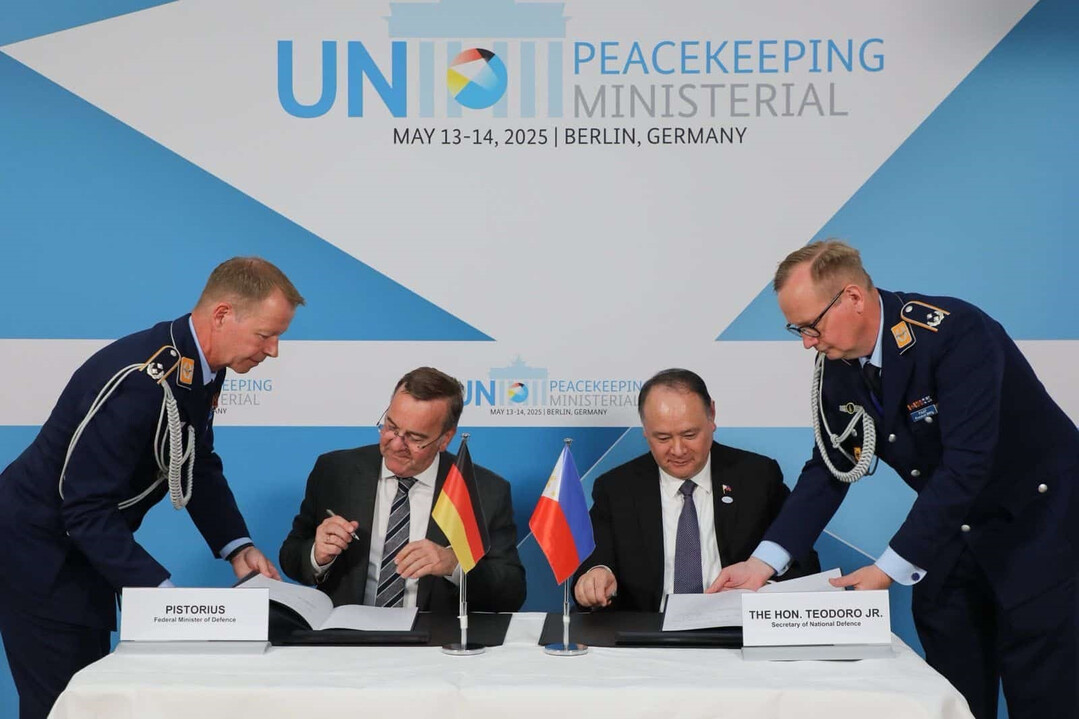
BERLIN, MANILA – In May 2025, Germany and the Philippines solidified their defense ties by signing a defense cooperation agreement. This move is seen as part of the Philippines' broader effort to build multilateral alliances in its South China Sea territorial dispute with China. German Defense Minister Boris Pistorius and Philippine Defense Secretary Gilberto Teodoro laid the groundwork for this agreement when they met in Manila in August 2024.
According to the Philippine Department of National Defense, the agreement expands cooperation across various areas, including cybersecurity, ordnance and logistics, and UN peacekeeping operations. This signifies the beginning of comprehensive defense cooperation, going beyond mere military exercises and information exchange. It's expected to significantly contribute to the modernization and capacity building of the Philippine defense forces. The Philippines has shown a strong commitment to enhancing its command and control, anti-access/area denial (A2/AD) capabilities, and maritime domain awareness, making Germany's technology and experience highly valuable.
Expanding Philippine Defense Cooperation Network
This agreement with Germany marks the culmination of the Philippines' efforts to diversify its defense cooperation beyond its long-standing ally, the United States. In recent years, the Philippines has actively responded to changes in the regional security environment by forging various partnerships.
New Zealand: In April 2025, the Philippines agreed with New Zealand to expand military cooperation, leading to the signing of a Visiting Forces Agreement (VFA) beyond a mutual logistics support agreement. This strengthens the legal basis for security cooperation by facilitating reciprocal deployments and joint exercises.
Canada: The Philippines is also on the verge of signing a similar agreement with Canada, having already inked a Memorandum of Understanding (MOU) on defense cooperation in January 2024. Canada has shown interest in providing systems to enhance the Philippines' maritime information integration network.
Japan: In December 2024, the Reciprocal Access Agreement (RAA, known in Japan as the 'Facilitation Agreement') with Japan was ratified, paving the way for reciprocal deployment of troops between the two countries. This not only significantly aids the Philippines in countering China in the South China Sea but also expands the operational scope of the Japan Self-Defense Forces. The two nations have initiated negotiations for an 'Acquisition and Cross-Servicing Agreement (ACSA)' regarding military material exchange, and discussions for a 'General Security of Military Information Agreement (GSOMIA)' are also underway for the future.
France: Philippine President Ferdinand Marcos Jr. has been proactive in expanding cooperation with European nations, including approving negotiations for a visiting forces agreement with France.
South Korea: This past March, South Korea and the Philippines officially began discussions for a 'Visiting Forces Agreement (VFA).' The Philippines is also actively engaged in defense industry cooperation with South Korea, having already acquired FA-50 light combat aircraft and considering additional procurements.
These defense agreements are interpreted as a strategic move by the Philippines to avoid isolation in the South China Sea dispute and counter China's expanding influence through multilateral security cooperation.
Background of the South China Sea Dispute and International Stance
The South China Sea is a critical maritime route through which approximately one-third of global maritime trade passes, and it is a strategic hub believed to contain vast reserves of oil and natural gas. China claims sovereignty over the entire South China Sea based on historical grounds, but surrounding nations like Brunei, Malaysia, the Philippines, and Vietnam also claim sovereignty over parts of the sea, leading to sharp confrontations.
In 2016, the Permanent Court of Arbitration (PCA) in The Hague ruled in a case brought by the Philippines that China's claims to the South China Sea had no legal basis. However, China has not recognized this ruling and has been strengthening its effective control through the construction of artificial islands and the deployment of military facilities. Clashes between Chinese Coast Guard vessels and Philippine ships are frequent, serving as a major source of escalating regional tensions.
German Defense Minister Boris Pistorius clearly stated that the 2016 arbitration ruling "remains valid without any exceptions," siding with the Philippines. Germany emphasizes freedom of navigation for a free and open Indo-Pacific, and in September 2024, two German naval vessels sailed through the Indo-Pacific region, including a port call in Manila, demonstrating an active commitment to regional security. This is interpreted as a warning against China's maritime expansionism and a message emphasizing the importance of adhering to international law.
Philippines' Strategic Choice and Future Outlook
The Philippines has chosen a strategy of securing international support to defend its sovereignty and protect its marine resources, while avoiding direct military conflict with China in the South China Sea dispute. To achieve this, it is solidifying its traditional alliance with the United States while strengthening security cooperation with various countries such as Japan, Australia, New Zealand, Canada, Germany, and France, thereby building a multilateral coalition. This diversified diplomatic strategy is expected to broaden the Philippines' security horizon and enhance its negotiating power in the South China Sea dispute.
The defense cooperation agreement between Germany and the Philippines also exemplifies the increasing engagement of European countries in Indo-Pacific security issues. Stability in the South China Sea is no longer merely a regional issue; it has emerged as a global concern directly linked to international trade and maritime security. Therefore, it is anticipated that solidarity and cooperation among the international community for peace and stability in this region, including the Philippines, will continue to strengthen.
[Copyright (c) Global Economic Times. All Rights Reserved.]