![[등록] 2026-09-01 15:48:31](/support/_updata/banner2/tl181982910_6749.png)


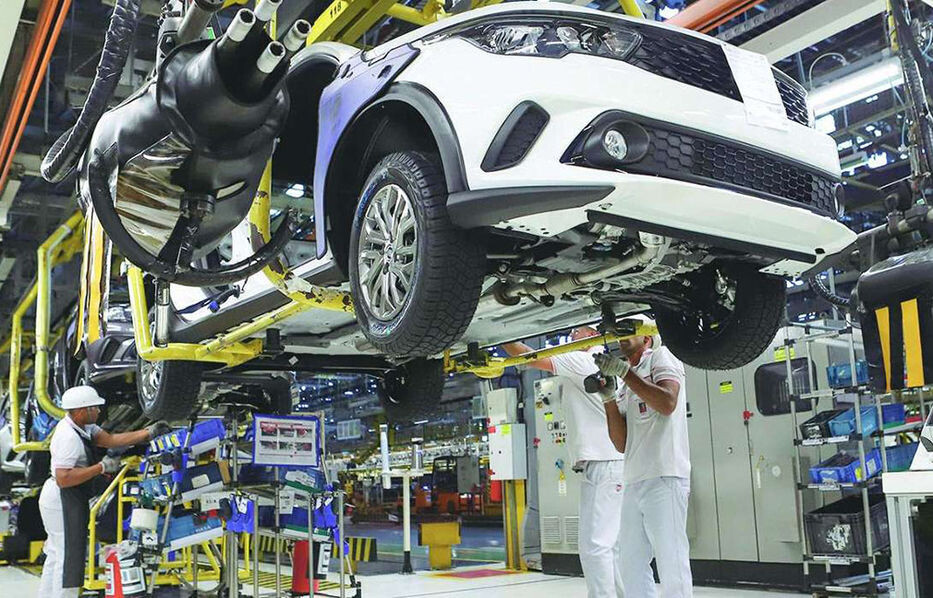
Buenos Aires, Argentina – Argentina's automotive industry is facing significant challenges due to a sharp decline in vehicle demand from Brazil, its primary trading partner. The economic policies implemented by Brazilian President Luiz Inácio Lula da Silva's government, including high interest rates and a devalued real, have directly impacted Argentine car exports, leading to production adjustments and emergency measures at local factories.
The situation not only threatens the stability of Argentina's automotive sector but also underscores the trade tensions between the two countries within Mercosur, where Brazil plays a crucial role as an export destination.
Demand Decline: A Crisis Hits Argentina's Auto Sector
According to data from the Association of Argentine Automotive Manufacturers (ADEFA), Argentine car exports to Brazil plummeted by 32% in 2024 compared to the same period in the previous year. This decline is a result of a combination of macroeconomic factors that have weakened Brazilian consumption:
Interest rate hikes that increase the cost of vehicle financing.
Real devaluation that raises import costs and reduces demand for foreign products.
Lula da Silva's economic policies aimed at stabilizing inflation and strengthening local industry.
The impact of this decline is not limited to Brazil. Overall, total exports from Argentina's automotive sector fell by 13.5%, also affected by decreased demand in markets such as Colombia and Peru.
Despite this setback, increased demand in Central American markets has partially offset the sales decline, but not enough to balance the crisis caused by Brazil's demand reduction.
Industry Adjustments: Factory Shutdowns and Production Cuts
One of the most noticeable effects of this crisis is the temporary suspension of production at several car factories.
General Motors in Rosario: The General Motors plant in Alvear (Rosario) announced a three-week shutdown from March 25th to adjust its manufacturing pace to Brazil's reduced demand.During this period, workers will receive 75% of their salary, according to an agreement with the Smata union.
The plant produces the Tracker model, which is also assembled in Brazil and has seen a significant drop in demand.
General motors has also been implementing voluntary retirement plans to reduce their workforce.
Impact on Other GM Plants in Brazil: The decline in vehicle demand in Brazil could also affect General Motors plants in São Caetano do Sul, Gravataí, and São José dos Campos, demonstrating that the crisis extends beyond Argentina's borders, impacting the entire regional automotive production network.
Despite these challenging circumstances, General Motors plans to proceed with a $50 million investment in June to renew the Tracker model. However, this investment will involve another production shutdown to adapt the plant to the new requirements.
Macroeconomic Factors: Brazil's Decisions and Impact on Bilateral Trade
The trade relationship between Argentina and Brazil, particularly in the automotive sector, is directly influenced by the economic decisions of both governments.
In Brazil's case, the Lula da Silva administration has prioritized restrictive monetary policies to control inflation and strengthen the economy, resulting in:
Interest rate hikes that increase credit costs for vehicle purchases.
Real devaluation that weakens Brazilian consumers' purchasing power.
Promotion of the local automotive industry to reduce import needs.
These factors have led to a sharp decline in demand for Argentine vehicles, forcing local manufacturers to rethink their strategies and adjust production to avoid excess inventory.
Conversely, Argentina faces its own economic difficulties, including high inflation, exchange rate restrictions, and difficulties accessing imported inputs, further exacerbating the sector's situation.
What Options Does Argentina's Auto Industry Have to Address the Crisis?
In this context, Argentine automotive companies must explore new strategies to mitigate the impact of declining exports. Possible solutions include:
Market diversification: Strengthening presence in Central America and other regional countries.
Increased regional integration: Seeking agreements within Mercosur to reduce dependence on Brazil.
Innovation and development: Investing in the production of models with higher competitiveness and added value.
Renegotiation of trade agreements: Seeking incentives or tax flexibility for exports.
Cost optimization: Adjusting production to real demand to avoid unnecessary excess costs.
The main challenge is to balance production and demand while avoiding mass layoffs and ensuring the sector's long-term sustainability.
Future Outlook: When Is Recovery Expected?
The outlook for Argentina's automotive industry depends on how Brazil's economic situation unfolds and what policies the Argentine government implements to support the sector.
If the Brazilian economy stabilizes and the real strengthens, demand for imported vehicles could gradually recover.
If the Argentine government provides incentives to the automotive industry, it could mitigate the impact of the crisis and promote the sector's competitiveness.
If automotive companies diversify their markets, they could reduce their dependence on Brazil and create new growth opportunities.
However, in the short term, production adjustments and temporary shutdowns will remain a reality for many companies.
The crisis in Argentina's automotive industry highlights the sector's high dependence on Brazil and the vulnerability of bilateral trade to macroeconomic changes.
With a 32% decline in car exports to Brazil and production shutdowns at companies like General Motors, the situation is complex and challenging.
To overcome this crisis, it is crucial for the industry to explore new strategies for market diversification, cost optimization, and investment in innovation to reduce dependence on the Brazilian market and strengthen its presence in other countries.
Meanwhile, the sector's recovery will depend on the evolution of economic policies in Brazil and Argentina, and the ability of automotive companies to adapt to an increasingly volatile global environment.
[Copyright (c) Global Economic Times. All Rights Reserved.]