Gyeongsangbuk-do announced a comprehensive blueprint to develop Pohang’s Yeongilman Port into a specialized hub for critical materials and eco-friendly energy, while establishing an AI-driven polar maritime technology cluster in the region to prepare for the upcoming Arctic route era.
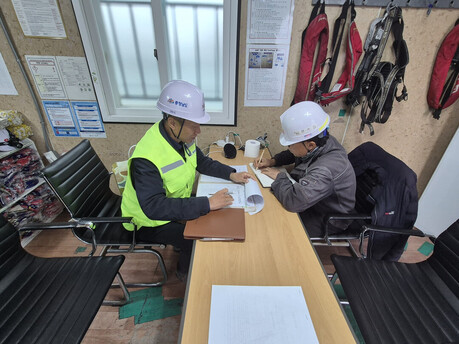
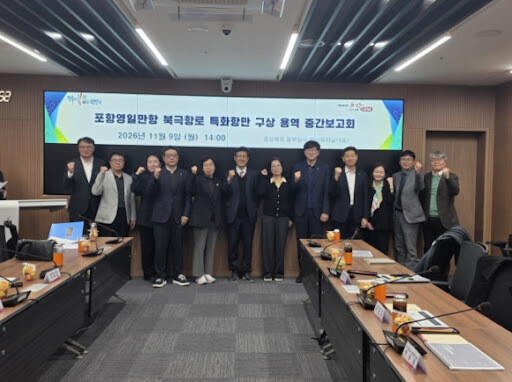
The provincial government held a joint reporting session on December 9 at the East Coast Headquarters video conference room. The event combined an interim report on the "Yeongilman Port Arctic Route Specialized Port Development" study and a final report on the "Master Plan for AI-Based Polar Maritime Technology Development and Industrial Ecosystem Establishment."
The session brought together approximately 30 experts from industry, academia, shipping, and research sectors, including Professor Emeritus Kim In-hyun of Korea University, Center Director Jung Young-du of the Korea Maritime Guarantee Corporation, Center Director Jang In-sung of the Korea Institute of Ocean Science and Technology (KIOST), POSCOFLOW Management Planning Group Leader Park Yong-chul, and Eco-Logistics Director Park Jung-hee.
Building a Specialized Port for Critical Resources and Energy
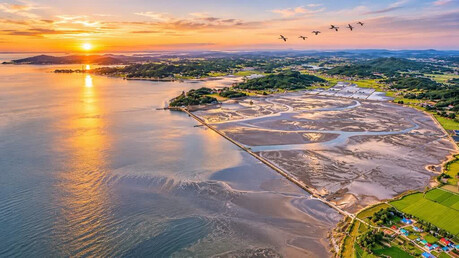
Led by Professor Lee Hee-yong of Yeungnam University, the study on specializing Yeongilman Port outlined a long-term strategy to link Yeongilman Port and Pohang New Port, positioning them as a premier import hub for energy and strategic minerals.
The master plan focuses on fostering a "National Strategic Industrial Material and Eco-Friendly Energy Specialized Port" capable of handling the import and processing of critical minerals vital to Korea's core industries, alongside eco-friendly energy supply chains.
10-Year Plan for an AI-Powered Polar Technology Cluster
Meanwhile, T-Lab concluded its research on the AI-based polar maritime technology cluster, unveiling a blueprint to build the "PROA (Polar Route Ocean AI) Innovation Cluster" centered in Pohang.
Spanning a 10-year period from 2027 to 2036, the project proposes the establishment of four key institutional pillars—an AI Polar Ocean Research Center, a Demonstration Center, a Business Support Center, and a Workforce Training Center—alongside a dedicated AI Data Center.
Next Steps and Government Proposals
Gyeongsangbuk-do has already submitted the proposed initiatives to the Ministry of Oceans and Fisheries (MOF) and the National Assembly as new national budget projects for 2027. The specialized development strategy for Yeongilman Port, slated for completion by May next year, is expected to be integrated into the Ministry's regional port development strategies.
Over the long term, these strategies are anticipated to be incorporated into the 5th National Port Master Plan, solidifying the mid-to-long-term development trajectory of Yeongilman Port.
"The opening of the Arctic route is not merely the creation of a new shipping lane; it is a game-changer that will transform the landscape of our industries and logistics," said Choi Young-sook, head of the East Coast Headquarters at Gyeongsangbuk-do. "We will foster Yeongilman Port as a specialized hub for strategic materials and establish Pohang as an advanced outpost for AI-driven polar maritime technology, securing tangible economic benefits for our region in the Arctic era."
[Copyright (c) Global Economic Times. All Rights Reserved.]