![[등록] 2026-09-01 15:48:31](/support/_updata/banner2/tl181982910_6749.png)


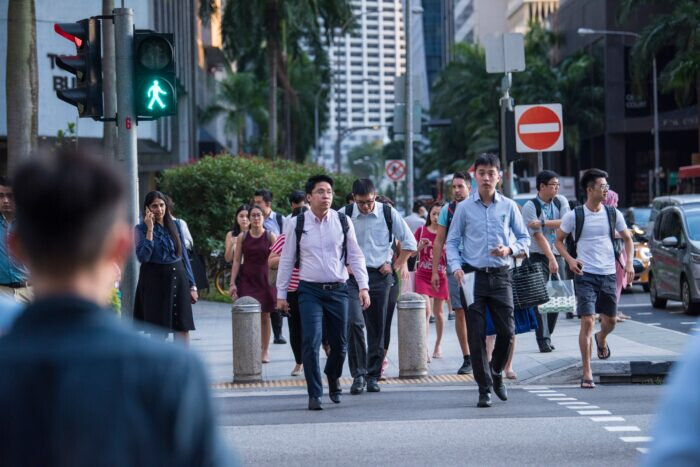
Singapore – Singapore's real wages saw a significant increase of 3.2% in 2024, a substantial jump from the 0.4% growth recorded in the previous year. This latest data, jointly released by the Singapore Department of Statistics and the Ministry of Manpower (MOM), reflects the economic recovery post-pandemic and robust demand in the labor market. While high inflation largely contributed to the low growth in 2023, the moderation of inflationary pressures in 2024 is seen as the reason for improved real purchasing power. The Singapore government attributes this wage growth to strong economic fundamentals and efforts to enhance productivity.
However, despite this positive trend, there's a noticeable decrease in companies planning wage increases for 2025. According to a survey published by the MOM, the proportion of companies planning wage hikes as of March 2025 stands at 22%, a 10 percentage point drop from 32% in December 2024. This decline is primarily attributed to rising global geopolitical tensions and increased international trade uncertainties. The prolonged Russia-Ukraine war, instability in the Middle East, and intensifying US-China rivalry continue to exert pressure on global supply chains, directly impacting companies' investment and employment strategies.
Global Uncertainties Challenge Singapore's Economy
Singapore, with its open economic system, is highly sensitive to changes in the global economic environment. The International Monetary Fund (IMF) recently downgraded its global economic growth forecast for 2025, citing geopolitical risks and the potential for a resurgence of inflation as key downside factors. Such macroeconomic uncertainties demand a cautious business strategy from Singaporean companies. Export-oriented manufacturing and financial services sectors, in particular, could be directly affected by a global economic slowdown and a decrease in trade volumes.
Furthermore, the economic conditions of major trading partners are variables that could influence Singapore's future wage policies. China's economic slowdown, the possibility of an economic recession in Europe, and the potential delay in US interest rate cuts are all factors that add to the uncertainty for Singaporean companies in their future business planning. Companies are likely to focus on cost-cutting and maximizing efficiency, possibly prioritizing other incentives or enhanced employment flexibility over wage increases.
Labor Market Outlook and Government Response
The decrease in companies planning wage increases raises concerns about the future of Singapore's labor market. If real wage growth slows down or even turns negative, household purchasing power could decline, leading to a contraction in consumer sentiment. This would not only negatively impact the domestic economy but could also weaken Singapore's position as an attractive labor market.
In response to these challenges, the Singapore government is undertaking various policy efforts. The MOM is encouraging companies to strengthen their competitiveness through productivity enhancement and technological innovation. Accelerating digital transformation and adopting advanced technologies like artificial intelligence (AI) are emerging as key tasks for long-term wage growth. Additionally, the government is expanding retraining and job transition programs for workers to help them adapt to the rapidly changing industrial landscape. For instance, the SkillsFuture program provides financial support and training opportunities for workers to acquire new skills and advance their careers.
In conclusion, while Singapore's real wage growth in 2024 is a positive sign, the decrease in companies planning wage increases for 2025 clearly demonstrates the impact of global economic uncertainties on Singapore's economy. The Singaporean government and businesses must work closely to overcome the challenges of geopolitical tensions and trade uncertainties to achieve continuous economic growth and wage increases. Enhancing productivity, fostering technological innovation, and strengthening labor market flexibility will be essential for Singapore to navigate these headwinds and achieve sustainable prosperity.
[Copyright (c) Global Economic Times. All Rights Reserved.]