![[등록] 2026-09-01 15:48:31](/support/_updata/banner2/tl181982910_6749.png)


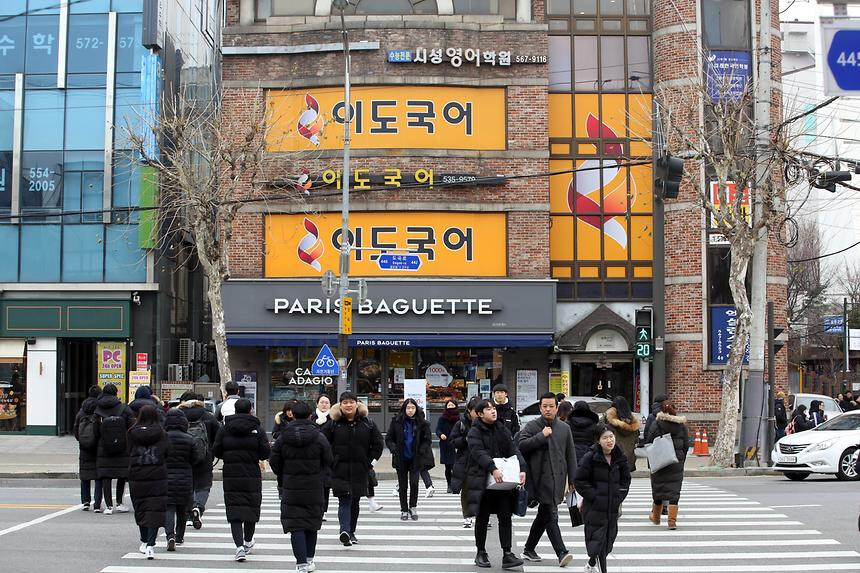
Seoul, South Korea – South Korea's relentless pursuit of academic excellence has driven private education expenditures to an unprecedented high, nearly reaching 30 trillion won (approximately $22 billion USD) in 2024. This surge occurs despite a shrinking student population, highlighting the stark failure of the Yoon Suk Yeol administration's policies to curb the nation's insatiable demand for private tutoring, or "hagwon."
Key Statistics Reveal Alarming Trends
According to Statistics Korea, the total private education spending for elementary, middle, and high school students reached 29.2 trillion won, marking a 7.7% increase from the previous year. When preschool and college retake exam preparation costs are included, the total surpasses the 30 trillion won threshold. This record expenditure is particularly concerning given the simultaneous 1.5% decrease (approximately 80,000 students) in the overall student population.
The data further reveals:
Increased Per-Student Spending: Despite fewer students, individual spending on private education has risen significantly.
Record Participation: The private education participation rate has hit an all-time high of 80%.
Widening Inequality: Notably, private education costs for low-income families increased by 12.3%, while those for high-income families saw a modest 0.8% rise, exacerbating educational inequality.
Early Start: The age at which children begin private education is decreasing, indicating a growing trend of early academic pressure.
Factors Driving the Surge
Several factors contribute to this alarming trend:
Uncertainty from Educational Reforms: The introduction of the high school credit system and the planned 2028 college entrance exam reforms have created significant anxiety among middle school students, driving them to seek private tutoring for perceived academic security.
Sudden Policy Changes: The government's abrupt decision to increase medical school admissions for the 2025 academic year has ignited fierce competition, leading to a surge in demand for specialized private tutoring.
"Killer Question" Controversy: Attempts to eliminate excessively difficult "killer questions" from the national college entrance exam have inadvertently expanded the scope of private education, as parents and students seek broader preparation.
Failed Public Initiatives: The "Neulbom School" policy, intended to provide extended after-school care and reduce reliance on private education for elementary students, has failed to deliver its intended results.
Lack of Policy Consistency: The rapid and inconsistent educational policies of the current administration have created a climate of uncertainty, forcing families to rely on private education for stability.
Government Policy Failures and Calls for Action
Critics argue that the government's policies have not only failed to curb private education costs but have also exacerbated educational inequality. The focus on policies such as education development special zones and AI digital textbooks has been criticized for potentially increasing, rather than decreasing, private education demand.
There are increasing calls for:
National-Level Measures: Urgent, comprehensive measures are needed to address the interconnected issues of low growth, low birth rates, and educational polarization.
Accountability: Demands for Education Minister Lee Ju-ho to take responsibility and apologize for the policy failures are growing.
Systemic Reforms: A fundamental overhaul of the education system is required to prioritize equity and reduce the reliance on private tutoring.
The Urgent Need for Systemic Change
South Korea's spiraling private education costs reflect a deep-seated societal anxiety and a failure of government policy. To address this crisis, the nation must pursue systemic reforms that prioritize equitable access to quality education, reduce the pressure on students, and restore public trust in the education system. Without such reforms, the cycle of inequality and excessive private education spending will continue to undermine the nation's future.
[Copyright (c) Global Economic Times. All Rights Reserved.]