![[등록] 2026-09-01 15:48:31](/support/_updata/banner2/tl181982910_6749.png)


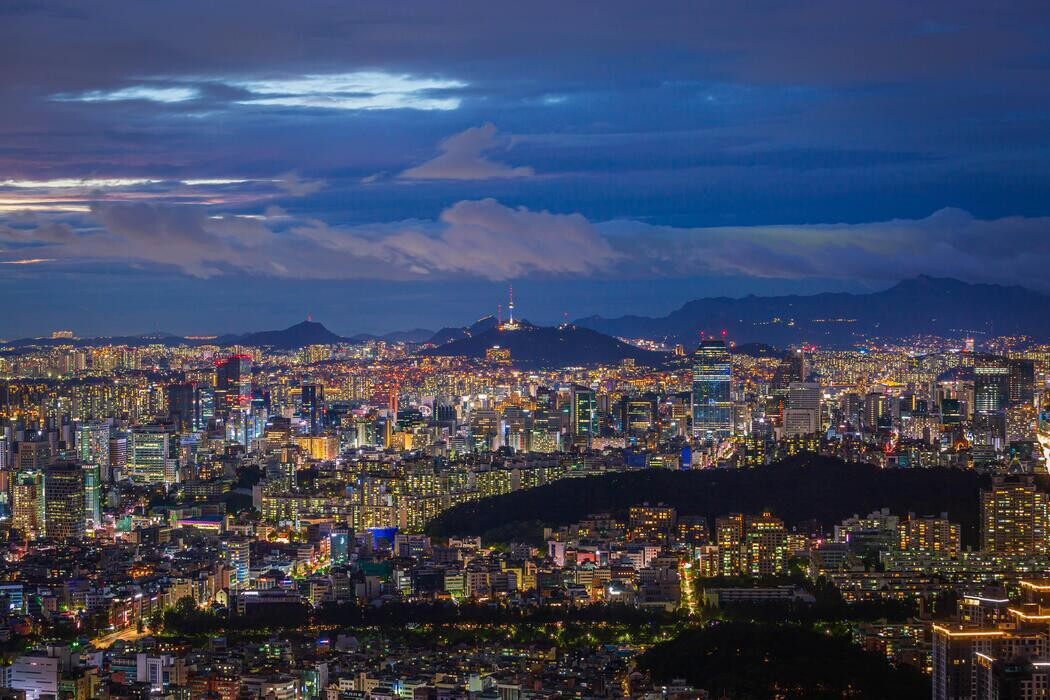
Uncertainties surrounding the government's recent tax reform proposals—centered on strengthening the tax burden for high-priced residential properties—have triggered a downturn across all three districts of Gangnam (Seocho, Gangnam, and Songpa), turning their apartment sales prices into a downward trend.
According to the weekly apartment price trend survey for the first week of September (as of September 7) released by the Korea Real Estate Board (REB) on September 10, overall apartment sales prices in Seoul rose by 0.20% compared to the previous week. However, the upward trajectory slowed slightly, with the growth rate contracting by 0.02 percentage points (p).
The Gangnam 3 districts, where high-value homes are heavily concentrated and where future tax burdens are projected to increase substantially, all shifted to a downward trend as Songpa joined Gangnam and Seocho in negative territory. Gangnam-gu dropped by 0.35%, showing a slight narrowing of its decline compared to the previous week (-0.41%), while Seocho-gu recorded a 0.30% drop, widening its downward margin by 0.07 percentage points. Songpa-gu (-0.02%) also turned downward for the first time in 21 weeks, marking its first decline since the third week of April.
The Korea Real Estate Board analyzed that lower-priced properties adjusted by owners have emerged in certain areas, leading to actual downward transactions. Nevertheless, Seoul as a whole maintained its upward momentum driven primarily by major apartment complexes with high market preference and proximity to subway stations.
Nam Hyuk-woo, a real estate researcher at Woori Bank, explained that key elements of the tax amendments—such as reductions in the long-term holding deduction rate and the establishment of new limits on long-term residency income deductions—focus heavily on actual residency. These factors continue to serve as major pressures encouraging owners of high-priced homes to put their properties on the market while simultaneously driving prospective buyers into a wait-and-see stance due to heavier capital gains tax burdens.
Despite the cooling in the prime districts, Seoul as a whole has maintained an upward streak for 83 consecutive weeks since the first week of February last year. The all-time record for the longest consecutive rising period stands at 85 weeks, recorded from the second week of June 2020 to the third week of January 2022.
Meanwhile, mid-to-low-priced regions continued to exhibit strong performance. Outlying and non-core areas such as Gangbuk-gu (0.45% → 0.46%), Dobong-gu (0.38% → 0.43%), and Seodaemun-gu (0.40% → 0.43%) expanded their upward margins compared to the previous week. Other districts like Seongbuk-gu (0.42%), Gwanak-gu (0.41%), and Jungnang-gu (0.40%) also sustained relatively high growth rates.
Industry experts note this divergence stems from the structural nature of the tax revisions, which impose heavier holding and transfer burdens selectively on high-end and multi-home properties rather than exerting uniform shock across all housing types. As affluent buyers in Gangnam hesitate and step back, housing demand has naturally deflected toward more affordable, mid-to-low-tier properties in Seoul's outer rings and commuter belts where entry barriers are lower.
In Gyeonggi Province (0.17%), Gwonseon-gu (0.48%) and Yeongtong-gu (0.47%) in Suwon, along with Hanam city (0.47%), showed strong growth trends. In Incheon, prices rose by 0.03% compared to the previous week, expanding the growth margin by 0.02 percentage points. The broader metropolitan capital region overall registered a 0.16% increase.
In non-metropolitan regions (0.01%), the four major metropolitan cities and seven provinces each grew by 0.01%, while South and North Jeolla (Gwangju area) rose by 0.03%, and Sejong City edged down by 0.02%. Nationwide, apartment sales prices recorded an average increase of 0.08%.
[Copyright (c) Global Economic Times. All Rights Reserved.]