![[등록] 2026-09-01 15:48:31](/support/_updata/banner2/tl181982910_6749.png)


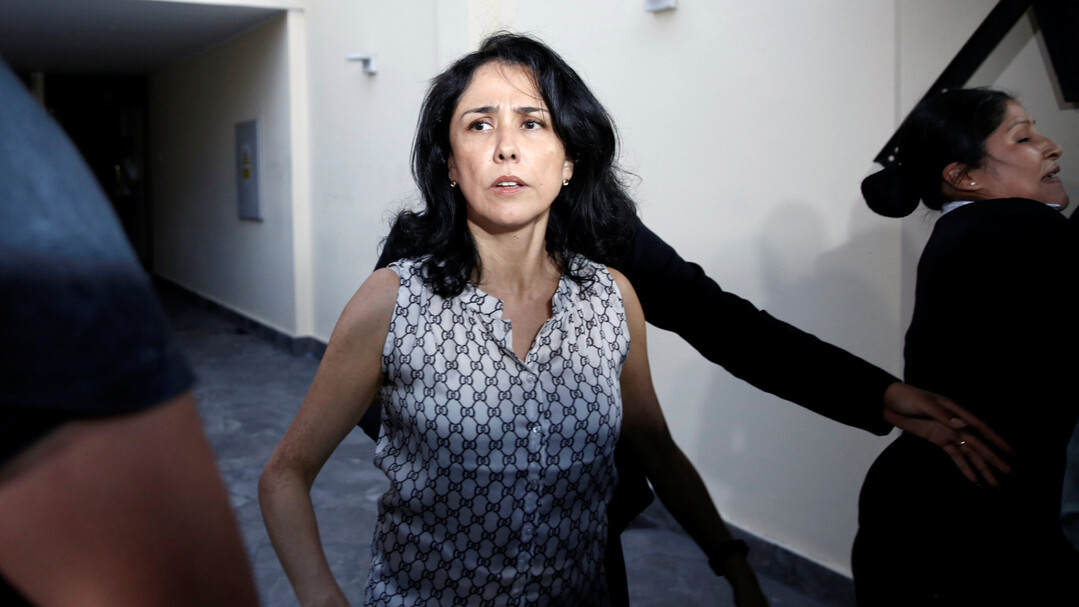
Peru's President Dina Boluarte approved diplomatic asylum in Brazil for former First Lady Nadine Heredia, who was convicted of corruption charges, on Tuesday night, June 15th. Heredia arrived at the Brasilia Air Force Base around noon on Wednesday, June 16th, via a Brazilian Air Force (FAB) aircraft. She is scheduled to travel to São Paulo afterward, but the exact time has not yet been disclosed.
The Peruvian Ministry of Foreign Affairs stated in a press release, "The Brazilian Embassy in Peru has reported its decision to grant diplomatic asylum to Nadine Heredia Alarcón and her minor son, Samin Malco Ollanta Humala Heredia, in accordance with the 1954 Convention on Diplomatic Asylum, to which both countries are signatories."
According to reports, Article 12 of the Convention on Diplomatic Asylum stipulates that the state from which the asylee wishes to depart must promptly grant the necessary safe-conduct to allow the departure of the asylee, upon request of the receiving state, except in cases of force majeure. The Peruvian Ministry of Foreign Affairs added, "The Peruvian government provided the necessary guarantees for the transfer of the two individuals and issued the corresponding safe-conduct."
Prior to this, the Peruvian judiciary sentenced Nadine Heredia and her husband, former President Ollanta Humala, to 15 years in prison each on June 15th for money laundering. They were accused of illegally receiving campaign funds for the 2011 and 2006 presidential elections from Brazilian construction company Odebrecht (now Novonor) and Venezuela. Heredia was also indicted for her role as a co-founder of the Nationalist Peruvian Party. The ruling came after more than three years of hearings against former President Humala, a center-left figure who governed Peru from 2011 to 2016.
This case is part of the Odebrecht corruption scandal that rocked South America, revealing that the giant construction company paid extensive bribes to secure public works contracts, shaking the Peruvian political scene. Former President Ollanta Humala was also detained in 2017 on charges of receiving illegal funds from Odebrecht, and his wife, Nadine Heredia, was also investigated for money laundering.
Immediately following the Peruvian judiciary's guilty verdict, Heredia requested diplomatic asylum at the Brazilian Embassy, which the Brazilian government accepted. Diplomatic asylum is an international legal mechanism that provides protection in a host country's embassy to foreigners facing political persecution or threats to their lives in their home country. The 1954 Convention on Diplomatic Asylum outlines the conditions for ensuring the safe passage of asylum seekers in such situations.
The Brazilian government's decision to grant diplomatic asylum could lead to diplomatic tensions with the Peruvian government. The Peruvian government may express displeasure at Brazil's decision to grant asylum to an individual convicted in its courts, potentially causing subtle ripples in bilateral relations.
Meanwhile, with Nadine Heredia's arrival in Brazil, attention is focused on her future legal status and the Peruvian government's response. The Brazilian government is obligated to grant and protect Heredia's asylum status in accordance with international law and diplomatic customs. The Peruvian government may demand Heredia's extradition, but since diplomatic asylum is a matter of sovereign state authority, forced extradition is expected to be difficult.
This case has once again exposed Peru's political instability and serious corruption problems to the international community. The unprecedented situation of a former presidential couple receiving heavy sentences and the defendant choosing diplomatic asylum could spark controversy over the Peruvian judicial system and is expected to significantly impact the future political landscape of Peru.
[Copyright (c) Global Economic Times. All Rights Reserved.]