• 2026.03.23 (Mon)
  • All articles
  • LOGIN
  • JOIN
Global Economic Times
fashionrunwayshow2026
  • Synthesis
  • World
  • Business
  • Industry
  • ICT
  • Distribution Economy
  • Well+Being
  • Travel
  • Eco-News
  • Education
  • Korean Wave News
  • Opinion
  • Arts&Culture
  • Sports
  • People & Life
    • International Student Report
    • With Ambassador
  • Column
    • Cho Kijo Column
    • Cherry Garden Story
    • Ko Yong-chul Column
    • Kim Seul-Ong Column
    • Lee Yeon-sil Column
  • Photo News
  • New Book Guide
MENU
 
Home > World

US Auto Industry Seeks Delay in Chinese Connected Car Restrictions

Pedro Espinola Special Correspondent / Updated : 2024-11-12 20:35:18
  • -
  • +
  • Print


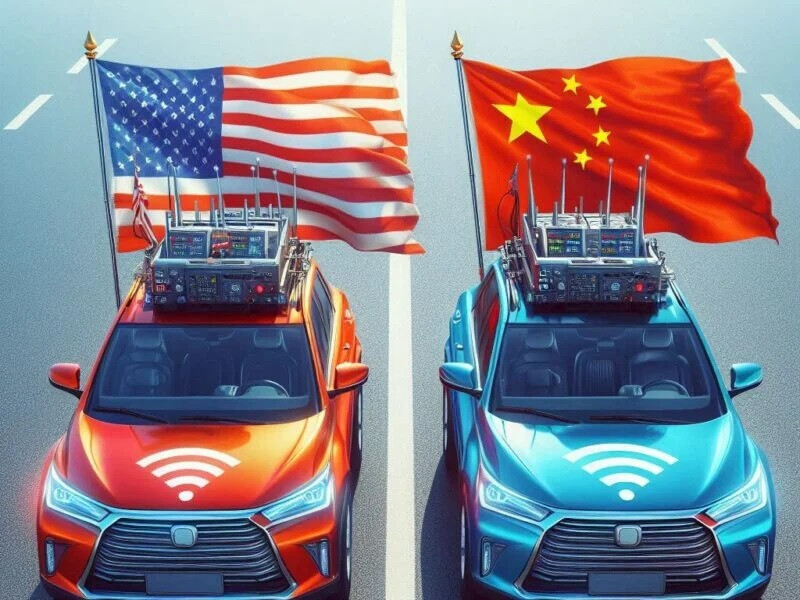
The American automotive industry is urging the U.S. government to delay the implementation of new regulations banning Chinese-made hardware and software in connected vehicles. The Automotive Innovation Alliance (AAI), representing major automakers like Hyundai, General Motors, Toyota, and Volkswagen, has requested a one-year extension on the compliance deadline.

Originally scheduled to take effect in 2027 for software and 2030 for hardware, the new rules, announced by the U.S. Commerce Department in late October, aim to prevent the transfer of sensitive vehicle data to China. The regulations are designed to address concerns about national security, as connected cars collect vast amounts of data on drivers, their vehicles, and their surroundings.

However, industry groups argue that the tight timeline for compliance could disrupt supply chains, increase costs, and hinder innovation. The AAI's John Bozella stated that while the provided lead-time would allow some automakers to make the necessary adjustments, it may be insufficient for others.

The U.S. Commerce Department has expressed concerns about the potential for sensitive data to be transferred to China, citing the risk of data breaches and intellectual property theft. Commerce Secretary Gina Raimondo emphasized the importance of protecting U.S. consumers from the potential misuse of their data.

Mexico, a major automotive manufacturing hub, has also voiced its opposition to the new regulations, arguing that they could disrupt regional supply chains and harm the North American automotive industry. The Mexican economy ministry has expressed concerns about potential trade barriers, supply chain disruptions, increased production costs, and job losses.

The proposed delay in implementation has ignited a debate over balancing national security concerns with the needs of the automotive industry. As the U.S. continues to grapple with the challenges posed by rapid technological advancements and geopolitical tensions, the outcome of this issue will have significant implications for the global automotive market.

[Copyright (c) Global Economic Times. All Rights Reserved.]

Pedro Espinola Special Correspondent

Popular articles

  • A New Era in The Hague: Rob Jetten Sworn In as Netherlands’ Youngest and First Openly Gay Prime Minister

  • Mexico on Edge: ‘King of Cocaine’ El Mencho Killed, Igniting Wave of Cartel Retaliation

  • The "Chicken-Sized" Dino: 900g Fossil Overturns Evolution Theory

I like it
Share
  • Facebook
  • X
  • Kakaotalk
  • LINE
  • BAND
  • NAVER
  • https://www.globaleconomictimes.kr/article/1065612851868731 Copy URL copied.
Comments >

Comments 0

Weekly Hot Issue

  • Coway Clinches Top Honor at "Water Taste Awards" for 7th Consecutive Year
  • HP Targets Korea as Strategic Hub for 'Edge AI' Expansion, Seeking Startup Partnerships
  • Pearl Abyss’s 'Crimson Desert' Shatters Records with 2 Million Copies Sold on Day One
  • "BTS Over Books?" Indian Academies Issue Emergency Notices as Students Plot Mass Absences for Comeback Live
  • Naver to Shut Down Men's Fashion Service 'MR.' to Launch Expanded AI-Driven Fashion Platform
  • JBNU and SKKU Researchers Achieve Breakthrough in "Dream Material" MXene, Setting New World Records in Performance

Most Viewed

1
An Open Letter to BTS On the Eve of a Historic Performance
2
From Industrial Capital to Tourism Mecca... Ulsan Makes a Bold Move with ‘Experiential Content’ in 2026
3
Ko Sang-goo, President of World Federation of Korean Associations, Elected as First Private Sector Chair of World Korean Community Leaders Convention
4
It is Time for BTS’s Fandom, ARMY, to Step Forward
5
Korean Stock Market Plunges: Circuit Breaker and Sidecar Triggered Amid Geopolitical Crisis
광고문의
임시1
임시3
임시2

Hot Issue

Vishay Unveils Ultra-Compact 0404 RGB LED with Independent Chip Control for Enhanced Color Precision

Coway Clinches Top Honor at "Water Taste Awards" for 7th Consecutive Year

AI Medical Ecosystem in Focus: KIMES 2026 Opens in Seoul as Global Healthcare Hub

Netanyahu Declares Decisive Blow to Iran’s Nuclear and Missile Programs, Signals Early End to War

Let’s recycle the old blankets in Jeju Island’s closet instead of incinerating them.

Global Economic Times
korocamia@naver.com
CEO : LEE YEON-SIL
Publisher : KO YONG-CHUL
Registration number : Seoul, A55681
Registration Date : 2024-10-24
Youth Protection Manager: KO YONG-CHUL
Singapore Headquarters
5A Woodlands Road #11-34 The Tennery. S'677728
Korean Branch
Phone : +82(0)10 4724 5264
#304, 6 Nonhyeon-ro 111-gil, Gangnam-gu, Seoul
Copyright © Global Economic Times All Rights Reserved
  • 에이펙2025
  • APEC2025가이드북TV
  • 독도는우리땅
Search
Category
  • All articles
  • Synthesis
  • World
  • Business
  • Industry
  • ICT
  • Distribution Economy
  • Well+Being
  • Travel
  • Eco-News
  • Education
  • Korean Wave News
  • Opinion
  • Arts&Culture
  • Sports
  • People & Life 
    • 전체
    • International Student Report
    • With Ambassador
  • Column 
    • 전체
    • Cho Kijo Column
    • Cherry Garden Story
    • Ko Yong-chul Column
    • Kim Seul-Ong Column
    • Lee Yeon-sil Column
  • Photo News
  • New Book Guide
  • Multicultural News
  • Jobs & Workers