• 2026.05.08 (Fri)
  • All articles
  • LOGIN
  • JOIN
Global Economic Times
fashionrunwayshow2026
  • Synthesis
  • World
  • Business
  • Industry
  • ICT
  • Distribution Economy
  • Well+Being
  • Travel
  • Eco-News
  • Education
  • Korean Wave News
  • Opinion
  • Arts&Culture
  • Sports
  • People & Life
    • International Student Report
    • With Ambassador
  • Column
    • Cho Kijo Column
    • Cherry Garden Story
    • Ko Yong-chul Column
    • Kim Seul-Ong Column
    • Lee Yeon-sil Column
  • Photo News
  • New Book Guide
MENU
 
Home > Synthesis

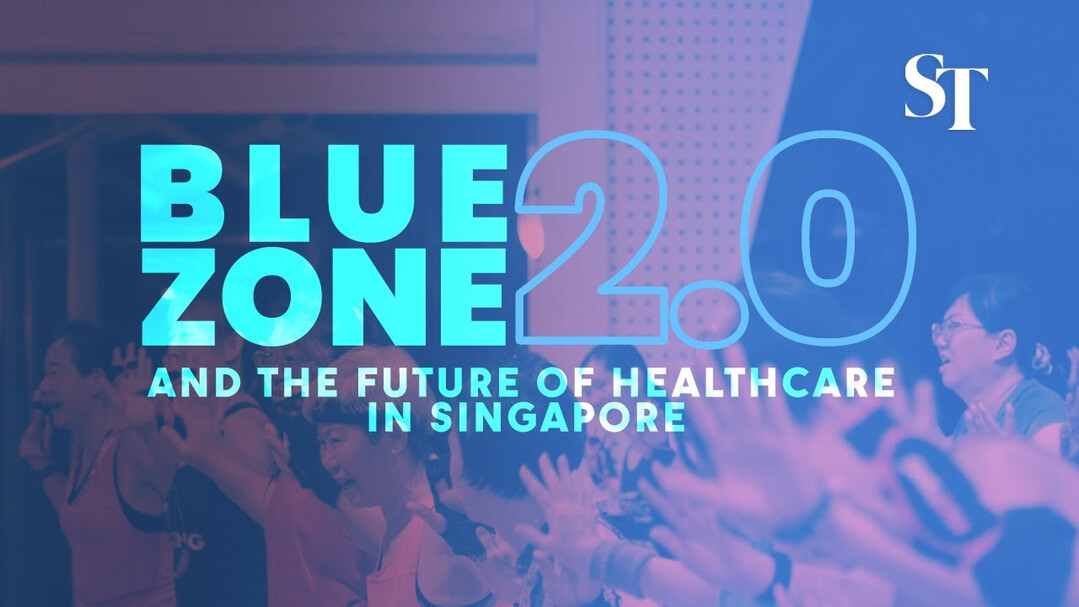
Singapore Ascends to 'Blue Zone 2.0': The Birth of an Engineered Longevity City

Graciela Maria Reporter / Updated : 2025-04-10 21:02:11
  • -
  • +
  • Print

Singapore – The term ‘Blue Zones’ refers to regions where people live exceptionally long lives, naturally characterized by physical activity, healthy diets, low stress, and strong social connections. These traits are not typically what one associates with Singapore.

However, in 2023, National Geographic journalist Dan Buettner, who co-created the term ‘Blue Zones’ two decades ago, dubbed Singapore ‘Blue Zone 2.0’, adding it to the list for the first time in over a decade, alongside the original five: Okinawa (Japan), Ikaria (Greece), Loma Linda (USA), Sardinia (Italy), and Nicoya (Costa Rica).

Buettner described Singapore as an “engineered longevity hot spot,” a sentiment echoed with delight by Health Minister Ong Ye Kung. In an interview with The Straits Times, Minister Ong said, “It’s not that Singaporeans are all that healthy. (But Buettner) recognized that our policies nudge us to be healthier, and because of that nudge, over time it becomes part of our culture.”

Singapore boasts one of the world's longest-living populations, with over 1,500 centenarians. Since its independence in 1965, the average lifespan in Singapore has surged from 65 years to 83 years in 2023, an impressive increase of three years every decade. This figure is over 10 years longer than the global average of 72 years.

Dan Buettner's designation of Singapore as ‘Blue Zone 2.0’ is not solely based on its high average life expectancy. Unlike the original Blue Zones, where longevity arises from natural environments and lifestyles, Singapore has ‘engineered’ a healthy living environment through proactive government policies and the establishment of social systems.

The Singaporean government has implemented multifaceted efforts to promote the health of its citizens. Key policies include:

Health Promotion Campaigns: Continuous campaigns emphasizing the importance of regular exercise and encouraging healthy eating habits.
Public Infrastructure Investment: Expanding and maintaining public infrastructure such as parks, walking trails, and cycling paths to facilitate physical activity.
Food Policies: Implementing food-related policies such as taxes on sugary drinks and improved access to healthy food options to guide citizens towards healthier diets.
Healthcare System: Establishing an efficient and universal healthcare system to strengthen disease prevention, early diagnosis, and treatment.
Community Support: Enhancing community-based health promotion programs and social networks to reduce isolation and improve mental well-being.
As Minister Ong Ye Kung mentioned, Singaporeans may not always spontaneously adopt healthy lifestyles. However, the government's consistent ‘nudge’ policies, or soft interventions, are gradually leading citizens to make healthier choices, and these behaviors are, over time, becoming ingrained in Singaporean society's culture, according to analysts.

Singapore's case presents a new model of longevity, distinct from traditional Blue Zones. It demonstrates the potential to create a healthy and long-living society not only through natural environments but also through proactive government policies and the establishment of social systems. The world is now watching how Singapore, as ‘Blue Zone 2.0’, will continue to generate sustained health outcomes.

[Copyright (c) Global Economic Times. All Rights Reserved.]

  • #globaleconomictimes
  • #한국
  • #중기청
  • #재외동포청
  • #외교부
  • #micorea
  • #mykorea
  • #newsk
  • #nammidonganews
  • #singaporenewsk
  • #타이완포스트
  • #김포공항
Graciela Maria Reporter

Popular articles

  • BRILS Establishes Michigan Subsidiary to Spearhead North American Robotics Supply Chain Expansion

  • IMO Chief Denounces Tolls on International Straits as "Illegal" and a "Dangerous Precedent"

  • British Schools Pilot AI Grading: Pursuit of Impartiality and Speed

I like it
Share
  • Facebook
  • X
  • Kakaotalk
  • LINE
  • BAND
  • NAVER
  • https://www.globaleconomictimes.kr/article/1065614499522517 Copy URL copied.
Comments >

Comments 0

Weekly Hot Issue

  • Samsung Electronics Shifts Strategy in China: Moving from Hardware Sales to Platform-Based Business
  • Banking War 2.0: South Korean Banks Race to Transition into 'AI-First' Institutions
  • Tesla Model Y Becomes First to Pass Grueling New U.S. Autonomous Safety Tests
  • Celltrion’s Zymfentra Sees Explosive 300% Growth, Hits Record Quarterly Prescriptions in the U.S.
  • BMW Korea Ignites May with Exclusive 9-Model Online Limited Edition Lineup
  • Hyundai Mobis Completes Independent EV 'Heart' Lineup: A Major Leap Toward Global Leadership in Power Electric Systems

Most Viewed

1
Iran Imposes Transit Fees on Strait of Hormuz Amid Escalating Maritime Tensions
2
Korea and Vietnam Forge Strategic Partnership in Science, Technology, and Innovation
3
80% of Enterprises Hit by 'AI Agent Anomalies': SailPoint Calls for Integrated Identity Governance
4
Kurly Abandons 'All-Paper' Packaging Strategy Amid Rising Cost Pressures
5
Tradition Meets the Public: Chungju’s Gugak Busking
광고문의
임시1
임시3
임시2

Hot Issue

Tensions Flare in Strait of Hormuz: U.S.-Iran Clashes Threaten Fragile Truce

Tesla Model Y Becomes First to Pass Grueling New U.S. Autonomous Safety Tests

U.S. Trade Court Strikes Down Trump’s ‘Global 10% Tariff,’ Citing Executive Overreach

Hyundai Motor Group Bets $700 Million on Mexico Amid Trade Policy Volatility

Fashion Runway Show 2026

Global Economic Times
korocamia@naver.com
CEO : LEE YEON-SIL
Publisher : KO YONG-CHUL
Registration number : Seoul, A55681
Registration Date : 2024-10-24
Youth Protection Manager: KO YONG-CHUL
Singapore Headquarters
5A Woodlands Road #11-34 The Tennery. S'677728
Korean Branch
Phone : +82(0)10 4724 5264
#304, 6 Nonhyeon-ro 111-gil, Gangnam-gu, Seoul
Copyright © Global Economic Times All Rights Reserved
  • 에이펙2025
  • APEC2025가이드북TV
  • 반달곰 프로젝트
Search
Category
  • All articles
  • Synthesis
  • World
  • Business
  • Industry
  • ICT
  • Distribution Economy
  • Well+Being
  • Travel
  • Eco-News
  • Education
  • Korean Wave News
  • Opinion
  • Arts&Culture
  • Sports
  • People & Life 
    • 전체
    • International Student Report
    • With Ambassador
  • Column 
    • 전체
    • Cho Kijo Column
    • Cherry Garden Story
    • Ko Yong-chul Column
    • Kim Seul-Ong Column
    • Lee Yeon-sil Column
  • Photo News
  • New Book Guide
  • Multicultural News
  • Jobs & Workers