![[등록] 2026-09-01 15:48:31](/support/_updata/banner2/tl181982910_6749.png)


- Joint initiatives suggested in energy, AI, and aging population challenges to overcome structural low growth.
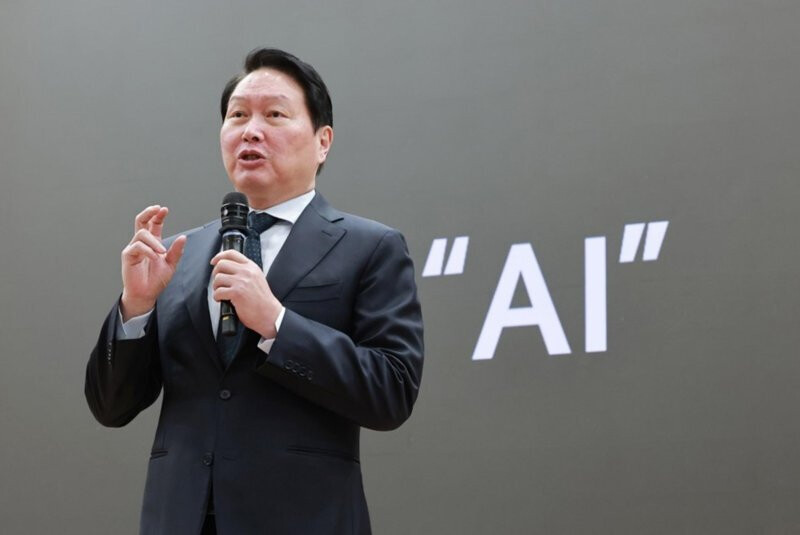
TOKYO — Chey Tae-won, Chairman of SK Group and Chairman of the Chey Institute for Advanced Studies, presented a bold blueprint for an economic alliance between South Korea and Japan, emphasizing that a bilateral partnership is no longer optional but a strategic imperative for mutual survival.
Speaking at the Nikkei Forum ‘Korea-Japan Special Session’ held at the Imperial Hotel in Tokyo on June 9, Chairman Chey declared, “As both nations face a myriad of social issues requiring significant national expenditure, a Korea-Japan economic alliance will drive a pivotal transition toward growth and a highly efficient, low-cost economic structure.” He added that such a partnership would serve as a crucial springboard for the two countries to leap forward as global 'rule makers' capable of reshaping the international economic order.
Driving Structural Cost Reduction via Energy and AI Collaboration
In his keynote remarks, Chairman Chey specifically highlighted energy security, Artificial Intelligence (AI), and the aging demographic crisis as the three primary areas ripe for immediate bilateral cooperation.
Regarding the energy sector, Chey proposed a unified approach to energy security. “Given that South Korea and Japan share highly similar energy consumption and industrial structures, closer cooperation across the entire supply chain—including procurement, imports, and strategic stockpiling—will substantially reduce the foundational social and logistical costs for both nations,” he explained.
Turning his attention to the tech sector, Chey underscored the urgency of creating a joint 'AI Factory' to counter the escalating technological hegemony between the United States and China. He emphasized that by combining resources, South Korea and Japan could secure critical economies of scale and stronger global bargaining power.
Chey identified semiconductors and AI as the core dual-engine strategy to reignite economic growth. He described South Korea's world-leading memory semiconductor capabilities and Japan's robust upstream semiconductor material, component, and equipment ecosystem as an "untouchable, invincible strategic weapon" if seamlessly integrated.
“We must expand the scope of Korea-Japan cooperation deeper into AI infrastructure, commercialize these joint technologies, and export them globally,” Chey stressed. “Fostering economic cooperation that structurally lowers costs across all sectors—from micro-components to macro-infrastructure—is the ultimate solution to overcoming current geopolitical vulnerabilities.”
A Resilient Solution to Overcome Compounding Global Crises
Chairman Chey noted that the necessity for a Korea-Japan economic bloc, which he first envisioned in 2024, has become indisputably clearer due to shifting global dynamics. He pointed out several critical structural headwinds currently facing both nations:
Demographic Decline: Low birth rates and rapidly aging societies driving structural low growth.
Trade Barriers: The erosion of the post-1995 rules-based free trade order due to rising tariff walls and export controls.
Energy Vulnerability: An exponential surge in power demand driven by the widespread adoption of AI, compounded by real-world energy supply chain disruptions, such as recent instabilities in the Strait of Hormuz.
To effectively navigate these challenges, Chey proposed the establishment of an official, permanent platform where the governments of both nations can consolidate cooperation agendas spanning businesses, academia, and the youth. This platform would serve to pre-emptively identify and resolve systemic bottlenecks hindering bilateral collaboration.
“If the economic alliance succeeds in unlocking up to $1 trillion in synergy on top of our combined baseline GDP of $6 trillion, creating a unified $7 trillion economic zone, it will offer newfound hope and opportunities to the younger generation living through this era of low growth,” Chey stated.
Broad Diplomatic and Corporate Consensus on Cross-Border Synergy
Following his presentation, Chairman Chey engaged in an in-depth panel discussion regarding the future trajectory of Korea-Japan relations amid complex international politics. The discussion featured prominent Japanese business leaders, including Tokura Masakazu, Senior Advisor to Sumitomo Chemical (and former Chairman of Keidanren), and Kato Masahiko, President and CEO of Mizuho Bank.
The high-profile event was hosted by Japan’s leading economic daily, Nikkei, and jointly organized by SK Group and the Chey Institute for Advanced Studies. Under the overarching theme of "Multifaceted Economic Cooperation Anchoring Robust Korea-Japan Relations," the forum drew an audience of over 300 dignitaries, including top political and business leaders from both nations.
Former Japanese Prime Minister Kishida Fumio and former South Korean National Assembly Speaker Kim Jin-pyo delivered congratulatory keynote speeches, reinforcing the vital importance of bilateral friendship. Additionally, Kawai Toshiki, CEO of Tokyo Electron, emphasized mutual economic prosperity through solidarity, while Yoo Hyuk, Seoul Representative of the Nomura Research Institute (NRI), proposed the creation of a 'Korea-Japan AI Economic Zone Cluster' as a core bilateral agenda item.
The forum also hosted comprehensive panel sessions exploring technical collaboration. Kim Wan-jong, CEO of SK AX; Kim Sang-bae, Professor of Political Science and International Relations at Seoul National University; Konishi Yoko, Senior Research Fellow at the Research Institute of Economy, Trade and Industry (RIETI); and Yanase Tadao, Executive Vice President of NTT, engaged in a vibrant debate on the challenges and necessities of Korea-Japan cooperation amid the fierce US-China AI hegemony race.
Reflecting on the forum's significance, Park Sang-kyu, President of SK Group’s Japan Operations, remarked, “Amid a rapidly changing global landscape, there is a growing, widespread consensus that a Korea-Japan economic alliance is a mandatory path for the survival of both nations. With the inauguration of this first Korea-Japan Special Session, we intend to pool our collective wisdom to formalize an economic bloc that enables future generations—who inherit the shared challenges of AI transformation, energy transitions, and low birth rates—to coexist and thrive together.”
[Copyright (c) Global Economic Times. All Rights Reserved.]