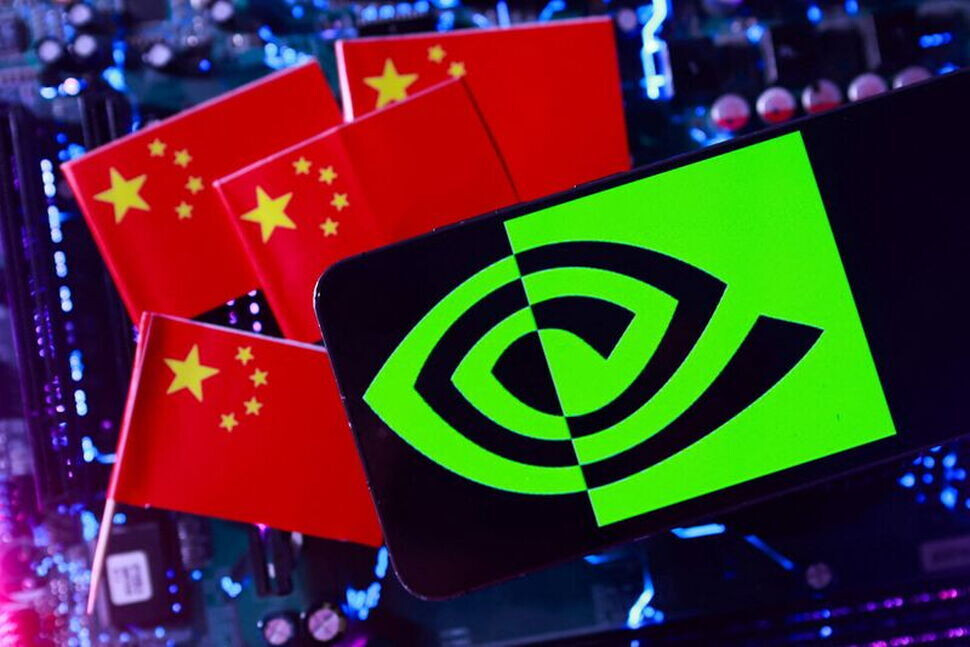
China’s artificial intelligence sector is confronting an acute bottleneck as Washington closes off overseas computing loopholes while leading American AI labs deploy technical barriers against model replication. Industry observers warn that the combination of soaring hardware costs and restricted access to frontier Western models threatens to stall China’s rapid AI catch-up.
Southeast Asian Computing Pipelines Dry Up
The latest shockwaves stem from new rules enacted on November 16 by the U.S. Commerce Department’s Bureau of Industry and Security (BIS). Under the directive, data centers housing advanced American processors are barred from offering remote cloud access to Chinese entities without explicit federal authorization. Washington also introduced strict licensing mandates for chip shipments to five nations—including Singapore and Malaysia—frequently used as transshipment or cloud-hosting hubs.
Following the policy shift, thousands of Nvidia’s flagship Blackwell B300 GPUs, previously in severe short supply, have reportedly flooded secondary markets as data center operators scramble to offload capacity originally earmarked for Chinese clients.
Nvidia has simultaneously moved to reinforce compliance across Southeast Asia. The chipmaker recently directed major server assemblers, including Dell and Super Micro Computer, to suspend deliveries to Malaysia, Singapore, Thailand, and Indonesia. The freeze has already disrupted regional infrastructure financing, halting a $500 million credit facility for Singapore-based cloud provider Aolani, which had planned to supply compute power to ByteDance.
Black Market Surge and Unsustainable Economics
With legitimate overseas cloud avenues narrowing, underground prices inside China have surged. In Shenzhen’s Huaqiangbei electronics hub, an eight-GPU B300 server—smuggled largely via Hong Kong—now commands between $3 million and $3.4 million, nearly double its price two months ago and up to six times the U.S. retail rate.
Yet paying steep black-market premiums clashes sharply with Chinese AI firms' monetization reality. Data from research consultancy Rhodium Group indicates that the combined annual subscription revenue of six leading Chinese AI players, including Alibaba and ByteDance, equals just a tenth of the revenue generated by OpenAI and Anthropic.
Development Setbacks and the "Distillation" Wall
The squeeze is forcing immediate strategic pivots:
Canceled Deals: Moonshot AI, creator of the Kimi K3 model, recently scrapped a $150 million agreement to tap Blackwell compute resources through Indonesia.
Domestic Pivot: MiniMax is accelerating a transition from Australian-hosted Nvidia chips to domestic processors from Huawei and Alibaba, though U.S. equipment sanctions continue to cap manufacturing yields at China’s top foundry, SMIC.
Software Locks: Since September, OpenAI and Anthropic have integrated safeguards to prevent "knowledge distillation"—a technique where smaller models train on the outputs of superior ones. Internal assessments by Chinese lab DeepSeek suggest that losing access to Western model distillation could widen the U.S.-China AI capability gap from roughly three-to-six months to as much as nine months.
Closing Past Regulatory Loopholes
Washington’s aggressive enforcement follows mounting political scrutiny over earlier export leaks. Congressional disclosures revealed that between late last year and May, BIS had cleared roughly 900,000 Nvidia and AMD chips for Chinese buyers, including tech giants and defense-linked firms. Meanwhile, the suspension of Biden-era global chip licensing rules in May last year had fueled an 18-month boom in Southeast Asian data center rentals alongside high-profile smuggling cases—including a $2.5 billion server trafficking indictment involving a Super Micro co-founder and recent trade blacklisting of Megaspeed, a firm tied to allegations of illicit chip access. Nvidia has since confirmed it has ceased shipments of its H200 processors to China.
[Copyright (c) Global Economic Times. All Rights Reserved.]