![[등록] 2026-09-01 15:48:31](/support/_updata/banner2/tl181982910_6749.png)


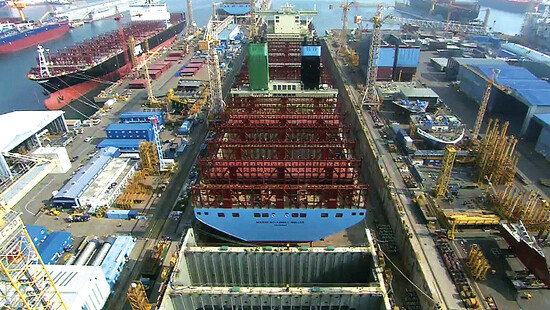
As the United States seeks to revitalize its shipbuilding industry, a strategic alliance with South Korea, a global powerhouse in shipbuilding, is emerging as a crucial element in ongoing trade negotiations. Prompted by a desire to bolster its naval capabilities and compete with China's dominance in the maritime sector, the US has been actively engaging with South Korean shipbuilding giants. This newfound interest has buoyed the South Korean shipbuilding industry, which views it as an affirmation of its global standing and a potential gateway to expanded orders and leverage in trade discussions.
Recent high-level interactions underscore the US commitment to this collaboration. Last Friday, US Trade Representative (USTR) Jamieson Greer met with Chung Kisun, Senior Vice President of HD Hyundai, and Kim Hee-chul, CEO of Hanwha Ocean, on Jeju Island. These meetings, reportedly at the behest of the US, saw the South Korean executives propose avenues for cooperation, including joint technology development, collaborative vessel construction, and the cultivation of skilled labor. Kim also discussed the potential for expanding shipbuilding infrastructure within the US, technology transfer initiatives, and supply chain adjustments.
This engagement follows a visit by US Secretary of the Navy John Phelan to HD Hyundai Heavy Industries in Ulsan and Hanwha Ocean's Geoje facilities late last month. These visits and subsequent discussions signal a concrete interest in leveraging South Korea's advanced shipbuilding capabilities.
The South Korean shipbuilding industry is optimistic about the potential benefits of this strategic partnership. Companies have publicly expressed their commitment to supporting the resurgence of the US shipbuilding sector. HD Hyundai stated its readiness to be a partner in realizing the revitalization of the US shipbuilding industry, while Hanwha Ocean affirmed its willingness to contribute to the US efforts in rebuilding its shipbuilding capabilities.
However, experts caution that a pragmatic approach is necessary to ensure tangible benefits. One industry insider noted that the current US engagement appears to be an initial assessment of South Korea's capabilities and investment intentions. While the US has indicated its priorities, such as workforce development, strengthening the supply chain for shipbuilding materials, and enhancing construction efficiency, the specifics of South Korean companies' involvement require careful consideration.
A significant hurdle in this potential collaboration is the Jones Act (and the Burns-Tollefson Amendment), a US law that restricts the domestic waterborne transportation of merchandise and the construction of vessels for US coastal trade and military purposes to US-built, US-flagged, and US-crewed vessels. Yang Jong-seo, a principal researcher at the Korea Eximbank's Overseas Economic Research Institute, emphasized the need for the US to establish a stable investment environment for its allies. He suggested that the South Korean government should urge the US to mitigate legal uncertainties and create a conducive investment landscape.
Similar sentiments of anticipation mixed with caution are echoed in Japan. Reports from NHK and the Mainichi Shimbun indicate that the Japanese government has proposed a "US-Japan shipbuilding golden age" plan to the US. This proposal outlines enhanced cooperation in ship repair and construction technologies, strengthening the US shipbuilding supply chain, and collaborating on icebreaker development for Arctic navigation, an area of interest for President Trump.
Despite these overtures, a source within Japan's Ministry of Defense expressed skepticism, stating that shipbuilding requires skilled personnel and established technology, areas where the US shipbuilding industry has faced significant decline, making substantial returns on investment uncertain.
Given South Korea's technological superiority in shipbuilding, industry cooperation is likely to serve as a vital bargaining chip in ongoing trade negotiations with the US. While South Korea's Minister of Trade, Industry and Energy Ahn Duk-geun stated that industrial cooperation is not a direct condition for tariff negotiations, experts believe it holds considerable sway.
Jang Sang-sik, head of the Korea International Trade Association's Institute for International Trade & Korea Trade Research Institute, suggested that the finalization of any tariff agreement hinges on balancing the overall interests of both nations. He argued that demonstrating South Korea's capacity to bolster the US supply chain and support its shipbuilding and energy sectors could provide leverage for Seoul to request tariff reductions and other concessions from Washington.
As the US navigates its strategy to revitalize its shipbuilding industry, the established expertise and capacity of South Korean shipbuilders position the nation as a key partner. The unfolding dynamics between the two countries suggest that shipbuilding cooperation will be an integral aspect of their future trade relationship, offering both opportunities and challenges that require careful navigation.
[Copyright (c) Global Economic Times. All Rights Reserved.]