
• 2026.08.21 (Fri)
  • All articles
  • LOGIN
  • JOIN
Global Economic Times
fashionrunwayshow2026
  • Synthesis
  • World
  • Business
  • Industry
  • ICT
  • Distribution Economy
  • Well+Being
  • Travel
  • Eco-News
  • Education
  • Korean Wave News
  • Opinion
  • Arts&Culture
  • Sports
  • People & Life
    • International Student Report
    • With Ambassador
  • Column
    • Cho Kijo Column
    • Cherry Garden Story
    • Ko Yong-chul Column
    • Kim Seul-Ong Column
    • Lee Yeon-sil Column
  • Photo News
  • New Book Guide
MENU
 
Home > Industry

Japan Eases Overtime Rules to Boost Industrial Competitiveness; Korea Remains Stuck in 52-Hour "Trap"

Global Economic Times Reporter / Updated : 2026-08-20 21:40:23
  • -
  • +
  • Print


TOKYO/SEOUL — Japan is taking bold steps to regain its footing in the global manufacturing arena, with the government announcing a significant easing of labor regulations. Starting next month, Japan will relax its guidance on overtime work, allowing companies to effectively increase monthly overtime hours from 45 to nearly 100 under specific labor-management agreements. This move marks a pivot toward greater labor market flexibility, standing in stark contrast to South Korea, where the rigid 52-hour workweek remains a persistent bottleneck for industrial growth. 

Japan’s Strategic Deregulation

Japan’s Ministry of Health, Labour and Welfare announced the shift to address structural labor shortages and the intensifying need for concentrated staffing in high-stakes sectors like semiconductors, robotics, and advanced R&D. While the legal baseline remains 45 hours per month, the "special provision" clause—previously restricted by stringent administrative guidance—will now be fully operational, allowing up to 100 hours of overtime per month provided that worker health protection measures are strictly implemented. 

Prime Minister Sanae Takaichi, who has prioritized "a strong Japan" as a core pillar of her administration, championed these reforms. The move directly reflects the demands of the Japan Business Federation (Keidanren), which has long argued that uniform, rigid overtime caps hinder corporate agility and international competitiveness. 

The Contrast: South Korea’s Regulatory Deadlock

While Japan is moving toward flexibility to support its industrial revival, South Korea’s labor policy remains caught in a state of confusion. The government’s attempt to introduce a "labor special zone" for the Honam semiconductor mega-project has struggled to gain traction, with conflicting messages from the Ministry of Industry, which advocates for flexibility (such as "white-collar exemptions"), and the Ministry of Employment and Labor, which emphasizes a cautious approach. 

Industry groups, including the Korea Enterprises Federation (KEF), have repeatedly proposed expanding the management unit of overtime work from the current one-week basis to monthly, quarterly, or annual units. They have also called for exempting R&D and core startup personnel from strict hour caps. However, these suggestions have yet to translate into policy. 

Kim Dong-hee of the KEF’s Labor Policy Team noted, "Japan is essentially raising its flexible overtime threshold to 100 hours, while Korea is stuck with a 12-hour overtime limit per week. The gap in industrial flexibility is widening rapidly."

Expert Warnings and Global Trends

Experts warn that South Korea’s rigid adherence to the 52-hour system, while originally designed to protect workers, is increasingly disconnected from the realities of the modern, high-tech manufacturing landscape. Professor Cho Dong-keun of Myongji University likened the situation to the "Procrustean bed," where businesses and workers are forced to fit into an arbitrary regulatory structure, regardless of the unique demands of their industries.

Global manufacturing trends suggest a shift toward more flexible, individualized working arrangements to accommodate technological breakthroughs and market volatility. Countries like the United States have no uniform weekly cap for adults, and European nations like Germany and France allow for highly elastic working-time systems based on collective bargaining. 

As Korea aims for a breakthrough in semiconductors and shipbuilding, economists suggest that the "52-hour trap" must be addressed. Without a shift toward a "global standard" that balances worker protection with the operational flexibility required by cutting-edge industries, Korea risks falling further behind its neighbors in the race for technological dominance.

[Copyright (c) Global Economic Times. All Rights Reserved.]

  • #globaleconomictimes
  • #micorea
  • #mykorea
  • #Lifeplaza
  • #nammidonganews
  • #singaporenewsk
  • #Taiwanpost
  • #Samsung
  • #Doosa
Global Economic Times Reporter
Reporter Page

Popular articles

  • Planting Hope: Ethiopia’s Green Legacy and the Power of National Transformation

  • KT and Amorepacific Complete ‘Data Highway’ Project, Unveiling AI-Specialized Research Platform

  • South Korea Unveils 'Productive Finance ISA' to Drive Wealth Creation for Youth and Boost Capital Markets

I like it
Share
  • Facebook
  • X
  • Kakaotalk
  • LINE
  • BAND
  • NAVER
  • https://www.globaleconomictimes.kr/article/1065616638106451 Copy URL copied.
Comments >

Comments 0

Weekly Hot Issue

  • "Afraid of the Food Bill, Staying In": How High Inflation is Severing the Ties of Human Connection
  • Genesis Unveils the GV90: A New Benchmark for Future Luxury Mobility 
  • The Sunset of an Era: 3G Network Fades into History
  • A New Chapter in Oncology: Moderna’s mRNA Cancer Vaccine Achieves Landmark Phase 3 Success 
  • Trump Shifts Strategy: Acknowledges North Korea’s Nuclear Status, Prioritizes Capability Limits over Denuclearization
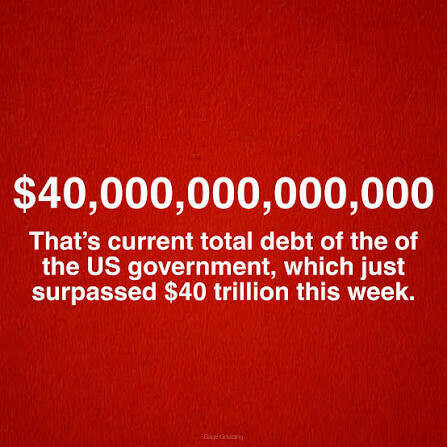
  • U.S. National Debt Crosses $40 Trillion Milestone, Raising Fiscal Alarm

Most Viewed

1
The 16th Ethiopia-gil World Festival & Meskel Festival
2
Goldman Sachs Maintains KOSPI Target at 12,000, Citing "Excessive Market Fear"
3
Nable Communications Secures 5G Private Network Upgrade Deal with LG Uplus
4
'Delisting Countdown' Becomes Reality as Mass Administrative Stock Designations Hit Listed Companies
5
TSMC Accelerates 3nm Capacity Expansion: Monthly Output Set to Exceed 180,000 Wafers by Year-End
광고문의
임시1
임시3
임시2

Hot Issue

"The Era of Automatic Alliance Protection is Over": South Korea’s New 'Four-Pillar' Survival Strategy

Korea Post to Issue Commemorative Stamps Marking 150th Birth Anniversary of Baekbeom Kim Gu 

Korean fintech expertise is making significant strides in the Vietnamese financial market, signaling a new era where "work records" serve as a foundation for credit.

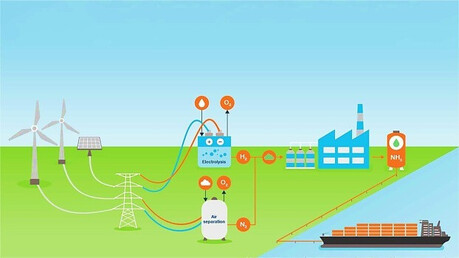
Advancing the Era of ‘Green Ammonia’: KIST Develops High-Efficiency Catalyst for Ambient Ammonia Production

Fashion Runway Show 2026

Global Economic Times
korocamia@naver.com
CEO : LEE YEON-SIL
Publisher : KO YONG-CHUL
Registration number : Seoul, A55681
Registration Date : 2024-10-24
Youth Protection Manager: KO YONG-CHUL
Singapore Headquarters
5A Woodlands Road #11-34 The Tennery. S'677728
Korean Branch
Phone : +82(0)10 4724 5264
#304, 6 Nonhyeon-ro 111-gil, Gangnam-gu, Seoul
Copyright © Global Economic Times All Rights Reserved
  • 향기네무료급식
  • BCB부천방송
  • 반달곰 프로젝트
Search
Category
  • All articles
  • Synthesis
  • World
  • Business
  • Industry
  • ICT
  • Distribution Economy
  • Well+Being
  • Travel
  • Eco-News
  • Education
  • Korean Wave News
  • Opinion
  • Arts&Culture
  • Sports
  • People & Life 
    • 전체
    • International Student Report
    • With Ambassador
  • Column 
    • 전체
    • Cho Kijo Column
    • Cherry Garden Story
    • Ko Yong-chul Column
    • Kim Seul-Ong Column
    • Lee Yeon-sil Column
  • Photo News
  • New Book Guide
  • Multicultural News
  • Jobs & Workers