• 2026.11.11 (Wed)
  • All articles
  • LOGIN
  • JOIN
Global Economic Times
[등록] 2026-09-01 15:48:31
  • Synthesis
  • World
  • Business
  • Industry
  • ICT
  • Distribution Economy
  • Well+Being
    • Pet Life
    • Halal Horizon
  • Travel
  • Eco-News
  • Education
  • Korean Wave News
  • Opinion
  • Arts&Culture
  • Sports
  • People & Life
    • International Student Report
    • With Ambassador
  • Column
    • Cho Kijo Column
    • Cherry Garden Story
    • Ko Yong-chul Column
    • Kim Bong-seon's Photo Column
    • Kim Seul-Ong Column
    • Lee Yeon-sil Column
  • Photo News
  • New Book Guide
MENU
 
Home > World

U.S. National Debt Crosses $40 Trillion Milestone, Raising Fiscal Alarm

Ana Fernanda Reporter / Updated : 2026-08-20 21:46:13
  • -
  • +
  • Print


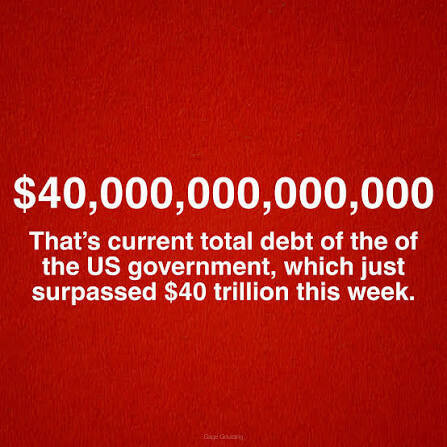
In a historic and concerning development, the total U.S. national debt has surpassed the $40 trillion mark for the first time. According to data released by the U.S. Treasury Department on August 19, 2026, the total public debt outstanding reached $40.047 trillion, a threshold that reflects a decade of rapid fiscal expansion and mounting economic pressure. 

A Decade of Rapid Accumulation

The scale of this debt growth is striking. The U.S. national debt first crossed the $30 trillion mark in January 2022, meaning an additional $10 trillion has been added in just over four years. Compared to the $19.95 trillion debt level in January 2017, when Donald Trump began his first term, the total has more than doubled in less than a decade. 

Analysts point to a convergence of factors fueling this surge. Major drivers include massive economic stimulus packages deployed to counter the COVID-19 pandemic, recurring tax reductions, and increased military expenditures. Furthermore, structural long-term pressures, such as the aging U.S. population and the rising costs of social security and healthcare programs, continue to strain the federal budget.

The "Vicious Cycle" of Debt and Interest

Perhaps the most alarming aspect of the current fiscal situation is the ballooning cost of servicing this debt. With higher interest rates and a larger principal balance, net interest payments have surged. In the first nine months of fiscal year 2026, the federal government recorded $827 billion in net interest payments, a figure that now exceeds the nation’s annual defense spending. 

This dynamic has created a "vicious cycle": as interest costs rise, they consume a larger portion of the federal budget, forcing the government to borrow more, which in turn leads to further interest accumulation. Financial experts warn that this trajectory is unsustainable. Maya MacGuineas, president of the Committee for a Responsible Federal Budget, emphasized that this $40 trillion figure is not merely a number on government ledgers; it is a burden that impacts the broader economy, potentially fueling inflation and squeezing out critical investments in other areas. 

Economic and Political Implications

The debt-to-GDP ratio has now risen above 100%, meaning the U.S. owes more to its creditors than its entire annual economic output. Economists from institutions like the Brookings Institution warn that persistently growing debt—specifically when it outpaces economic growth—threatens to crowd out private investment and lower the living standards for future generations. 

With the current statutory debt limit set at $41.1 trillion, Washington is bracing for a high-stakes political battle over fiscal policy. Lawmakers face the immediate challenge of addressing the debt ceiling while navigating a landscape where the cost of borrowing is reaching historically high levels.

As the U.S. moves deeper into the second half of 2026, the $40 trillion milestone serves as a stark reminder of the long-term fiscal challenges facing the nation. Without significant reforms to either revenue generation or spending priorities, the trend of unchecked debt growth poses a substantial risk to the nation’s long-term economic stability and global financial confidence.

[Copyright (c) Global Economic Times. All Rights Reserved.]

  • #globaleconomictimes
  • #micorea
  • #mykorea
  • #Lifeplaza
  • #nammidonganews
  • #singaporenewsk
  • #Taiwanpost
  • #Samsung
  • #Doosa
Ana Fernanda Reporter

Popular articles

  • US Army Conducts Rare Temporary Burial Drills to Prepare for Worst-Case Large-Scale War Scenarios

  • ISEF 2026: “Goodness for All” Paves the Way for Indonesia’s Islamic Economy and Finance

  • Stay in the U.S. Starting at $70K? "It Means Go Back to Your Country," Students Reeling from Shock

I like it
Share
  • Facebook
  • X
  • Kakaotalk
  • LINE
  • BAND
  • NAVER
  • https://www.globaleconomictimes.kr/article/1065616985300366 Copy URL copied.
Comments >

Comments 0

Weekly Hot Issue

  • Inha University Caught in Campus Culture Clash Over Proposed Rhee Syng-man Statue Revival
  • Honoring a Legacy: Poet Oh Dong-chun Recognized for Lifelong Dedication to Hangul and Sijo Poetry
  • Bongeunsa Temple to Host 2026 Patriotic Buddhism Cultural Festa
  • South Korea Confronts a Growing Health Crisis as Adult Obesity Rates Surge
  • Pain of Chosei Coal Mine Meets Japanese Readers: Moon Young-sook Publishes Japanese Edition of 'Black Sea'
  • Beyond the Trillion-Dollar Mark: China’s Trade Surplus and the Debate Over Global Economic Dominance

Most Viewed

1
US Army Conducts Rare Temporary Burial Drills to Prepare for Worst-Case Large-Scale War Scenarios
2
World Citizens are Flying Directly to Busan... The Era of 4 Million Foreigners is Just Around the Corner
3
Eating 100g of Baechu Kimchi Daily Linked to Lower High-Cholesterol Risks
4
Meeting Christmas Early!… Busan Dessert Sales Event "Daldal The Market" Held
5
November Shopping Festival Sparks Retail War in South Korea: Where to Find the Best Deals
체리가든 스토리
nutri huevos
로타리
동포저널

Hot Issue

Jensen Huang Faces Shareholder Class Action and Leadership Scrutiny Amid Espionage Allegations Involving Former Associate

Disgraced South Korean Scientist Hwang Woo-suk Becomes UAE Citizen

Is South Korea Heading Toward France's Path? Aging Population and Fiscal Pressures Looming Ahead

Fashion Runway Show 2026

Let’s recycle the old blankets in Jeju Island’s closet instead of incinerating them.

Global Economic Times
korocamia@naver.com
CEO : LEE YEON-SIL
Publisher : KO YONG-CHUL
Registration number : Seoul, A55681
Registration Date : 2024-10-24
Youth Protection Manager: KO YONG-CHUL
Singapore Headquarters
5A Woodlands Road #11-34 The Tennery. S'677728
Korean Branch
Phone : +82(0)10 4724 5264
#304, 6 Nonhyeon-ro 111-gil, Gangnam-gu, Seoul
Copyright © Global Economic Times All Rights Reserved
  • News K
  • 반달곰 프로젝트
  • 광고문의
Search
Category
  • All articles
  • Synthesis
  • World
  • Business
  • Industry
  • ICT
  • Distribution Economy
  • Well+Being 
    • 전체
    • Pet Life
    • Halal Horizon
  • Travel
  • Eco-News
  • Education
  • Korean Wave News
  • Opinion
  • Arts&Culture
  • Sports
  • People & Life 
    • 전체
    • International Student Report
    • With Ambassador
  • Column 
    • 전체
    • Cho Kijo Column
    • Cherry Garden Story
    • Ko Yong-chul Column
    • Kim Bong-seon's Photo Column
    • Kim Seul-Ong Column
    • Lee Yeon-sil Column
  • Photo News
  • New Book Guide
  • Overseas Koreans
  • Multicultural News