![[등록] 2026-09-01 15:48:31](/support/_updata/banner2/tl181982910_6749.png)


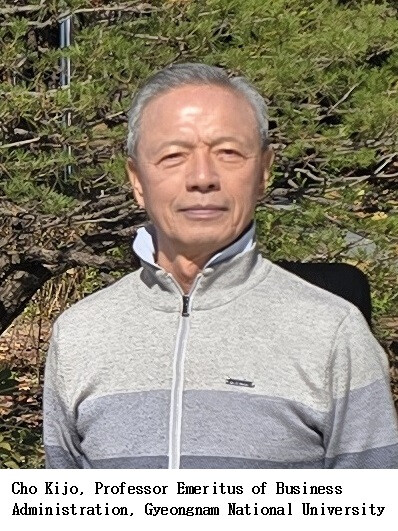
As the day to leave the training camp approaches, the intense heat of the grueling summer also becomes bearable as September sets in. The sambok (dog days of summer) have already passed. Cheoseo (處暑), the solar term marking the retreat of the heat, has gone, and Ipchu (立秋), announcing the threshold of autumn, is on September 7th this year. The day before, September 6th, is Baekjung (百中). It is the 15th day of the 7th lunar month, and Chuseok (Korean Thanksgiving) is just one month away. While it is increasingly forgotten in the cities, in the countryside, it is a day for a respite from the sweltering heat and hard farm work. After finishing the rice planting, weeding the rice paddies three times, and removing wild rice, the ears of grain are now emerging and the rice is ripening, so the only remaining task is to chase away flocks of sparrows. Scary and rugged-looking scarecrows must be erected, and radishes and cabbages must be planted.
On Baekjung, a feast was held where the entire village shared "a hundred kinds of namul (seasoned vegetables)." Although there are many wild greens, it is impossible to genuinely make a hundred kinds. So, they would pick unripe gourds and add eggplants to create various namul, calling them 'bakgaji' (박가지, gourd-eggplant) to fill the number. They would boil squash, which had grown as large as a watermelon, to make namul, and for a few slices of cucumber, cut diagonally and placed in a large basin with cold water, vinegar, and soy sauce, a few drops of sesame oil would make oinaengguk (cold cucumber soup). It was a summer when a bowl of barley rice with eggplant namul, lettuce, and a few green chili peppers tasted extraordinarily delicious.
Another important task around this time was 'hemp spinning' (sam samgi). It is the process of peeling the bark, splitting it, and twisting it into thread from the hemp that every household grew, perhaps not knowing it was cannabis. The thread thus made is woven into the warp and weft to become ramie cloth (sambae). The hemp stalks grow well over 2 meters. After harvesting the stalks, the leaves are stripped off with a bamboo knife, tied in bundles, and marked. The whole village gathers to dig a hole, put the hemp in, and cover it with earth. They light a fire below and pour water over it, steaming the hemp overnight to make the bark peel off easily. On this day, they would also butcher a pig and share makgeolli (rice wine), holding a village feast. Today, it is barely imitated under the name 'Samgut Nori' (Hemp Steaming Play).
The next day, the steamed hemp was cooled in a stream, the outer bark was removed, and only the tough inner bark was collected. This was split finely in a collective effort (a pumasi) and rubbed on the thigh to be joined into a long thread. The joined thread was coated with a glue made from crushing tdaejungnamu (styrax) berries in a mortar and boiled into a paste, then dried in the sun. Several strands for the warp were wound onto a warp beam (dotumari) and placed on the loom, and the weft was placed in the shuttle, and the women wove cloth until late at night. The backs of the women were thus bent.
The remaining stalks after spinning the hemp were called 'jaeryuk' (再陸). Jaeryuk, about 2 meters long and 1 centimeter in diameter, was dried and used as firewood or tied together to be used as torches. They lit the path when visiting neighbors at night and also broke the end into a triangle shape, smeared it with cobwebs, and used it to catch cicadas. When will I ever be able to catch a cicada again?
In Buddhism, Baekjung is called 'Ullanboneol' (盂蘭盆節). 'Ullanbon' (盂蘭盆) is a transliteration of the Sanskrit word 'ullambana', meaning 'hanging upside down.' In China, this was translated as 'dohyeon' (倒懸), or the suffering of being hung upside down. According to the Buddha Speaks the Ullambana Sutra, the disciple of the Buddha, Moggallana, followed the Buddha's teachings and made offerings to the monks to accumulate merit to save his mother suffering in the hungry ghost realm, which became the origin of Ullanboneol. Temples hold a 'Baekjung Prayer' (Baekjung gido) and a Yeongga cheondojae (靈駕薦度齋, rite for the repose of the soul) to comfort the spirits of the deceased and pray for their entry into the Pure Land.
Monks restrict their outside activities and stay in one place to focus on their training for certain periods in summer and winter. In summer, they observe Ha-angeo (夏安居, Summer Retreat) from the 15th day of the 4th lunar month to the 15th day of the 7th lunar month. They do not leave the mountain gate, so they do not perform alms rounds (takbal). This is a period of more intense practice because travel is difficult during the rainy season and they wish to avoid harming small creatures. The practitioners gather to resolve their practice, which is called 'gyeolje' (結制), and on the day before the end of the retreat (haeje, 解制), they hold a time of self-confession and questioning and answering called 'jaja' (自恣).
Nowadays, it is not difficult to get through the summer with just an air conditioner and watermelon hwachae (fruit punch), but I sometimes take care of my 'mind's retreat' (ma-eumui angeo). I don't set a specific date, but if there is something I must accomplish, I undertake a small retreat centered on that task. I don't do it too strictly, but I lightly walk around the neighborhood once and refrain from meetings to avoid losing my rhythm.
The writing I have done this way has reached 500 pieces. When I completed the first 100 pieces, I laughed and thought, 'I must have the talent of a bricklayer (jojeokgong).' Masonry (jojeok) is the work of laying bricks. After laying the bricks, plastering (mijang) is done, followed by painting or wallpapering. Just as masonry forms the building, life is built upon curiosity. Steadfastly (愚直하게, Ugikhage), I head toward a new 500 pieces. Why rush?
[Copyright (c) Global Economic Times. All Rights Reserved.]