• 2026.11.11 (Wed)
  • All articles
  • LOGIN
  • JOIN
Global Economic Times
[등록] 2026-09-01 15:48:31
  • Synthesis
  • World
  • Business
  • Industry
  • ICT
  • Distribution Economy
  • Well+Being
    • Pet Life
    • Halal Horizon
  • Travel
  • Eco-News
  • Education
  • Korean Wave News
  • Opinion
  • Arts&Culture
  • Sports
  • People & Life
    • International Student Report
    • With Ambassador
  • Column
    • Cho Kijo Column
    • Cherry Garden Story
    • Ko Yong-chul Column
    • Kim Bong-seon's Photo Column
    • Kim Seul-Ong Column
    • Lee Yeon-sil Column
  • Photo News
  • New Book Guide
MENU
 
Home > Eco-News

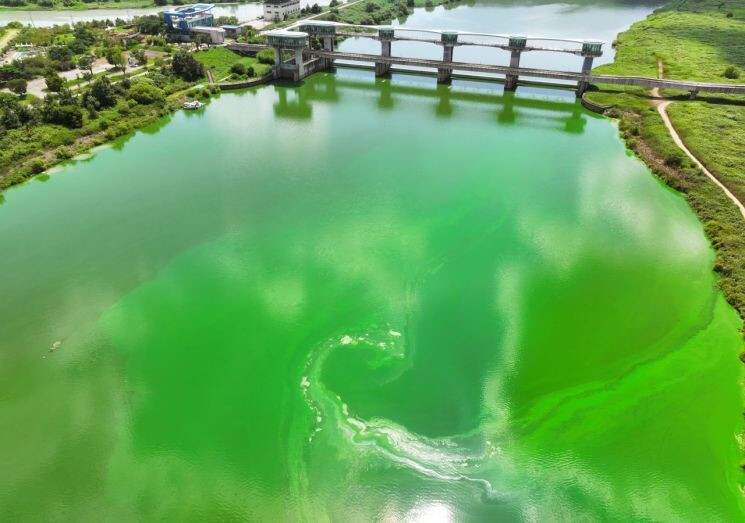
Algae Bloom Persists in Nakdong River Despite Autumn Weather; Gimhae Environmental Group Urges Opening of Weirs

Kim Young Min Reporter / Updated : 2026-10-22 22:09:01
  • -
  • +
  • Print


Even though the summer heat has subsided and autumn has arrived, toxic algae blooms continue to persist in the Nakdong River, prompting an environmental organization in Gimhae, South Gyeongsang Province, to call for the opening of the Nakdong River weirs.

According to the Nakdong River Basin Environmental Office on the 22nd, the concentration of harmful blue-green algae cells at the Mulgeum and Maeri sampling points reached 68,039 cells per milliliter (mL) on the 19th. On the same day, 73,818 cells per mL were recorded at the Haman Chilseo point.

These figures are 6.8 times and 7.4 times higher, respectively, than the "Alert" threshold for algae warnings (10,000 cells per mL).

Algae warnings were first issued at both locations in June. Since then, the warning levels have fluctuated, but were upgraded back to "Alert" in August and have remained in effect ever since.

In a statement released that day, the Gimhae Federation for Environmental Movement pointed out, "This demonstrates that algae blooms in the Nakdong River are no longer an issue confined to midsummer. The weirs constructed through the Four Rivers Project have stagnated the river flow, which, combined with high water temperatures driven by the climate crisis, has created an environment highly favorable for algae proliferation."

During a joint survey conducted in August by the Nakdong River Network and the Gimhae Federation for Environmental Movement, the concentration of blue-green algae cells reached 284,000 cells per mL at the Saengnim-myeon water intake facility and 267,000 cells per mL at the Hallim drainage pump station.

At the Saengnim-myeon water intake facility, microcystin—a toxin produced by blue-green algae—was detected at a level of 95.8 nanograms per mL (ng/mL), which is approximately 33 times higher than that of the Hallim drainage pump station (2.9 ng/mL).

The environmental group also argued that the deterioration of water quality in the Nakdong River is leading to an increased financial burden for water purification in Gimhae City.

According to data secured by the group through a public disclosure request, the annual water production of the Samgye and Myeongdong water purification plants surged by about 40%, rising from roughly 48.56 million cubic meters in 2010 to approximately 67.97 million cubic meters last year.

Over the same period, the power costs for operating the purification plants skyrocketed by 274%, from about 2.25 billion won to 8.41 billion won. The power cost per cubic meter of water produced also increased from about 46 won to 124 won.

The organization stated, "While there are other factors at play, such as rising electricity rates and changes in facility operations, and the entire increase cannot be attributed solely to algae treatment costs, it is safe to infer that substantial expenses are indeed going into algae response and riverbank filtration water intake."

They emphasized, "As the burden of water purification grows due to increases in algae and organic matter, the usage of chemicals such as coagulants and activated carbon, along with treatment costs, goes up. Thorough management is also necessary for disinfection byproducts like trihalomethanes, which are generated during the chlorination process."

The group concluded, "Relying on a temporary fix of spending more money to purify water every time an algae bloom occurs is nothing more than a stopgap measure. Gimhae City must formally demand that the central government open the weirs in order to restore the flow of the Nakdong River and reduce algae blooms."

[Copyright (c) Global Economic Times. All Rights Reserved.]
  • #Cherry Garden
  • #HalalFood
  • #Halal
  • #Petlife
  • #Halalhorizone
  • #Hormuz Impasse
  • #globaleconomictimes
  • #micorea
  • #mykor
Kim Young Min Reporter

Popular articles

  • Global Credit Spreads Widened to 17-Month High Amid AI Investment Concerns

  • Hollys Suffers Personal Information Leak… "Please Change Your Membership Password Immediately"

  • Jeonbuk Special Self-Governing Province Hosts Integrated Animal Healthcare Industry and Pet Culture Exposition

I like it
Share
  • Facebook
  • X
  • Kakaotalk
  • LINE
  • BAND
  • NAVER
  • https://www.globaleconomictimes.kr/article/1065618486235733 Copy URL copied.
Comments >

Comments 0

Weekly Hot Issue

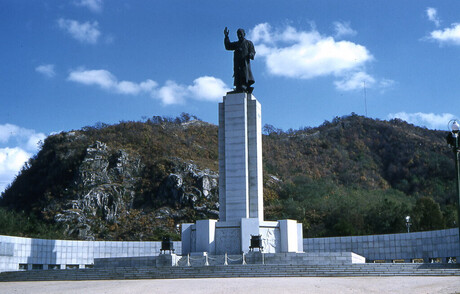
  • Inha University Caught in Campus Culture Clash Over Proposed Rhee Syng-man Statue Revival
  • Honoring a Legacy: Poet Oh Dong-chun Recognized for Lifelong Dedication to Hangul and Sijo Poetry
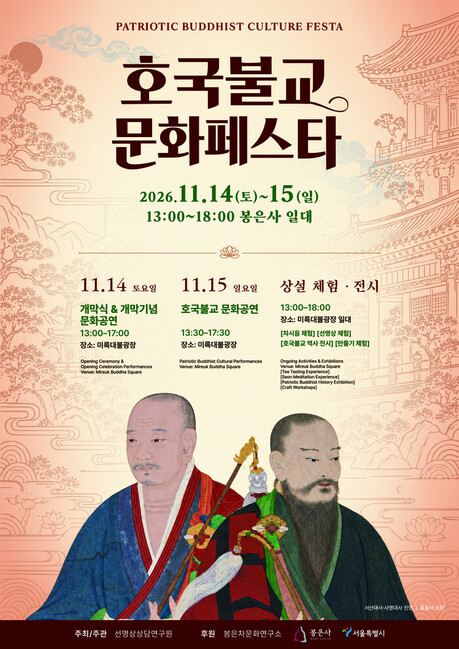
  • Bongeunsa Temple to Host 2026 Patriotic Buddhism Cultural Festa
  • South Korea Confronts a Growing Health Crisis as Adult Obesity Rates Surge
  • Pain of Chosei Coal Mine Meets Japanese Readers: Moon Young-sook Publishes Japanese Edition of 'Black Sea'
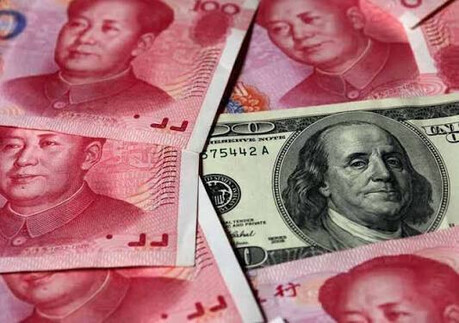
  • Beyond the Trillion-Dollar Mark: China’s Trade Surplus and the Debate Over Global Economic Dominance

Most Viewed

1
US Army Conducts Rare Temporary Burial Drills to Prepare for Worst-Case Large-Scale War Scenarios
2
World Citizens are Flying Directly to Busan... The Era of 4 Million Foreigners is Just Around the Corner
3
Eating 100g of Baechu Kimchi Daily Linked to Lower High-Cholesterol Risks
4
Meeting Christmas Early!… Busan Dessert Sales Event "Daldal The Market" Held
5
November Shopping Festival Sparks Retail War in South Korea: Where to Find the Best Deals
체리가든 스토리
nutri huevos
로타리
동포저널

Hot Issue

Jensen Huang Faces Shareholder Class Action and Leadership Scrutiny Amid Espionage Allegations Involving Former Associate

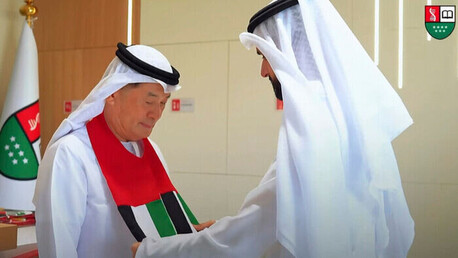
Disgraced South Korean Scientist Hwang Woo-suk Becomes UAE Citizen

Is South Korea Heading Toward France's Path? Aging Population and Fiscal Pressures Looming Ahead

Fashion Runway Show 2026

Let’s recycle the old blankets in Jeju Island’s closet instead of incinerating them.

Global Economic Times
korocamia@naver.com
CEO : LEE YEON-SIL
Publisher : KO YONG-CHUL
Registration number : Seoul, A55681
Registration Date : 2024-10-24
Youth Protection Manager: KO YONG-CHUL
Singapore Headquarters
5A Woodlands Road #11-34 The Tennery. S'677728
Korean Branch
Phone : +82(0)10 4724 5264
#304, 6 Nonhyeon-ro 111-gil, Gangnam-gu, Seoul
Copyright © Global Economic Times All Rights Reserved
  • News K
  • 반달곰 프로젝트
  • 광고문의
Search
Category
  • All articles
  • Synthesis
  • World
  • Business
  • Industry
  • ICT
  • Distribution Economy
  • Well+Being 
    • 전체
    • Pet Life
    • Halal Horizon
  • Travel
  • Eco-News
  • Education
  • Korean Wave News
  • Opinion
  • Arts&Culture
  • Sports
  • People & Life 
    • 전체
    • International Student Report
    • With Ambassador
  • Column 
    • 전체
    • Cho Kijo Column
    • Cherry Garden Story
    • Ko Yong-chul Column
    • Kim Bong-seon's Photo Column
    • Kim Seul-Ong Column
    • Lee Yeon-sil Column
  • Photo News
  • New Book Guide
  • Overseas Koreans
  • Multicultural News