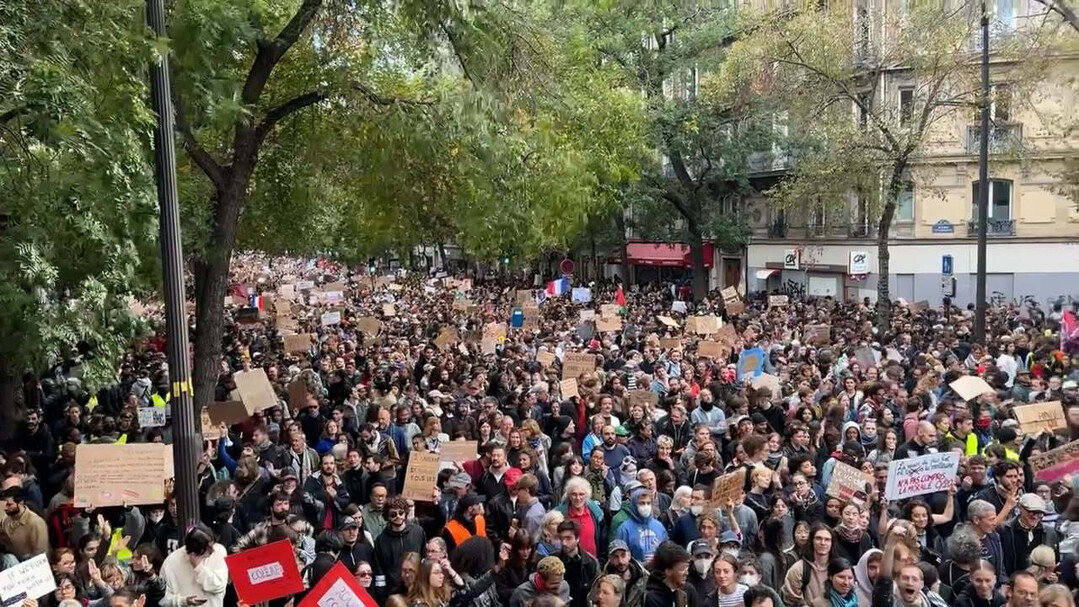
Protests led by French students reached the one-month mark on the 21st (local time). The participants have expanded from high school students to all generations, and the issues have broadened from education to general social problems. Violence is escalating tensions, with students losing eyesight and hands during crackdowns, city halls burning, and shops being looted. While the government fails to come up with solutions, a cry that started in a single high school has spread into a national crisis shaking the entire society.
The starting point was Saint-Exupéry High School in Créteil, in the southeastern outskirts of Paris. On the 17th of last month, when teachers went on strike demanding the recruitment of more teaching staff, students joined in. Hundreds of students blockaded the school on the 21st of that month and launched a protest. This soon turned into anger over overall poor educational environments. In just one week, students from 180 schools nationwide took to the streets.
Entering October, the protests spread across generations. On the 6th, university students, teachers, labor unions, parents, and retirees stood together in the streets. It has become routine for high school students' school blockades and sporadic protests to continue on weekdays, followed by large-scale protests combining all generations on weekends. With unions and supporters of the 2018 'Yellow Vests' movement joining in, the protest on the 17th recorded a scale of 550,000 people nationwide.
The slogans on the street also expanded from "More budget and resources for education" to protests over rising living costs and public service fiscal issues. Accumulated financial difficulties materialized as social and economic problems, influencing the expansion of the protests.
Clashes between protesters and public authorities also intensified. The government designated the 1st as the point when the protests turned into 'urban violence' and announced a hardline crackdown policy. When a 15-year-old student lost a hand to a protest suppression grenade four days later, anger against public authorities established itself as a major driving force of the protests. Although the government stopped using the grenade in question, it failed to calm the anger. Le Monde analyzed that the police's hardline crackdown accelerated the participation of the youth and middle-aged generations in the protests.
The looting and arson that occurred on the 17th changed the focus of the situation once again. As videos showing Limoges City Hall burning and shops being looted spread, the issue shifted toward tracking down the perpetrators and masterminds of the violent acts. Concerns arose that the essence of the protests could be pushed to the background as some violent acts were highlighted.
Many analyses suggest that the government's response contributed to the worsening situation. From the early stages of the protests, the government pointed to far-left forces as the masterminds and responded with a hardline approach, provoking backlash from students. Education Minister Édouard Geffray claimed on the 1st, "It has been incited by the radical left-wing party 'France Unbowed (LFI)' and is now controlled by far-left groups."
Although Prime Minister Sébastien Lecornu announced on the 7th that he would release the first countermeasures by the end of the month, it fell short of shifting into a dialogue phase. President Emmanuel Macron's national address on the 18th was also criticized for lacking concrete solutions. The French government began consultations with student and parent organizations on the 2nd, but no clear results have been produced.
Sociologist Stéphane Sirot said in an interview with the regional French media La Dépêche du Midi, "The Macron government has often responded to social movements with threats and pressure rather than dialogue. If the government refuses social dialogue, it is essentially encouraging people to seek radical forms of action."
[Copyright (c) Global Economic Times. All Rights Reserved.]