![[등록] 2026-09-01 15:48:31](/support/_updata/banner2/tl181982910_6749.png)


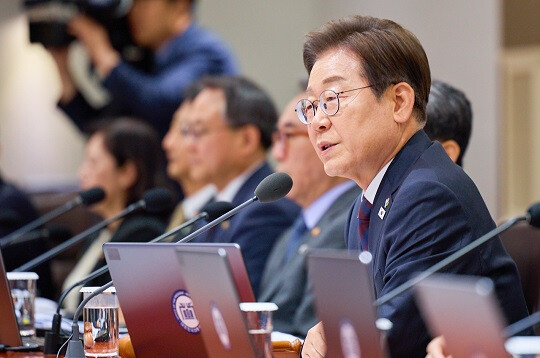
SEOUL, South Korea – In a significant move to counter prolonged domestic consumption stagnation and political uncertainty, the South Korean government today announced a massive supplementary budget, totaling 30.5 trillion won (approximately $22 billion USD), spearheaded by a nationwide "livelihood recovery consumption coupon" program. This ambitious initiative, approved at a cabinet meeting chaired by President Lee Jae-myung, aims to inject much-needed liquidity into the economy and encourage household spending.
The core of the stimulus package is the distribution of consumption coupons to an estimated 90% of the population. Most citizens are expected to receive a minimum of 250,000 won (around $180 USD) in the initial payout, with higher-income earners (top 10%) receiving 150,000 won ($108 USD). Residents in agricultural and fishing communities will receive an additional 20,000 won. A second round of payments is anticipated, potentially bringing the total per-person benefit to between 150,000 won and 500,000 won, depending on income. A middle-class family of four, for instance, could receive a total of 1 million won ($720 USD).
To maximize the impact on local businesses and traditional markets, the use of these coupons will likely be restricted. Large supermarkets, online platforms like Coupang and Baedal Minjok, and gambling or entertainment establishments are expected to be excluded from eligible usage. This targeted approach aims to directly support small and medium-sized enterprises (SMEs) and stimulate grassroots economic activity, which have been particularly hit by the downturn.
Driving Economic Rebound Amidst Challenges
The announcement of this supplementary budget comes barely two months after the first such budget of the year and a mere two weeks into the new administration's tenure. This urgency underscores the severity of South Korea's current economic climate, characterized by prolonged domestic consumption decline and a projected near-zero growth rate. Recent data from Statistics Korea shows that household spending in the first quarter of this year experienced its largest decline in over four years, excluding inflation. While income saw a modest rise, consumer spending remained sluggish due to persistent economic uncertainties and rising household debt.
The Korea Development Institute (KDI) recently issued a stark warning, projecting that South Korea's potential economic growth rate could fall to around 0% by the 2040s if significant structural reforms are not undertaken. This pessimistic outlook is primarily attributed to rapid demographic shifts, particularly a shrinking working-age population, which is expected to negatively impact labor input and overall growth.
The government's strategy with this new stimulus is multifaceted. Beyond direct consumer handouts, the 20.2 trillion won in new expenditure also includes significant support for vulnerable groups such as small business owners, temporary workers, and youth. The package allocates 0.9 trillion won for venture and SME support, and measures are in place to bolster youth employment through platforms, work experience opportunities, and vocational training.
Investment and Fiscal Concerns
The supplementary budget also allocates funds for public infrastructure projects, including railways and ports, and proposes measures to revitalize the struggling construction sector, such as the purchase of unsold housing units. This investment component aims to create jobs and stimulate demand in key industries.
President Lee Jae-myung emphasized the necessity of government intervention, stating, "The current downturn is too severe, necessitating the government's role. I believe a further supplementary budget is needed." This statement suggests the possibility of even larger fiscal injections in the future, depending on the economic trajectory and parliamentary discussions.
However, this substantial fiscal expansion comes at a cost. The government anticipates a revenue shortfall of over 10 trillion won this year, leading to a total need for 30.5 trillion won in new funds. The majority of this will be financed through deficit-covering national bonds, raising concerns about the nation's burgeoning debt. Forecasts indicate that South Korea's national debt will exceed 1,300 trillion won (approximately $940 billion USD) for the first time by the end of this year. The International Monetary Fund (IMF) has also projected that South Korea's national debt-to-GDP ratio will reach 54.5% this year, surpassing the average of 11 advanced economies without reserve currencies for the first time, signaling a potential long-term fiscal challenge. This growing national debt could be further exacerbated if the current administration continues to implement large-scale stimulus measures without corresponding revenue increases or fiscal consolidation.
The success of this supplementary budget will hinge on its ability to effectively stimulate consumption and catalyze broader economic recovery without unduly burdening future generations with escalating national debt. Policymakers face a delicate balancing act as they navigate the immediate need for economic stimulus against the imperative of long-term fiscal sustainability.
[Copyright (c) Global Economic Times. All Rights Reserved.]