• 2026.03.22 (Sun)
  • All articles
  • LOGIN
  • JOIN
Global Economic Times
fashionrunwayshow2026
  • Synthesis
  • World
  • Business
  • Industry
  • ICT
  • Distribution Economy
  • Well+Being
  • Travel
  • Eco-News
  • Education
  • Korean Wave News
  • Opinion
  • Arts&Culture
  • Sports
  • People & Life
    • International Student Report
    • With Ambassador
  • Column
    • Cho Kijo Column
    • Cherry Garden Story
    • Ko Yong-chul Column
    • Kim Seul-Ong Column
    • Lee Yeon-sil Column
  • Photo News
  • New Book Guide
MENU
 
Home > Column > Ko Yong-chul Column

President Shigeru Ishiba’s interpretation of Japanese politics and the future of Korea-Japan relations

Global Economic Times / Updated : 2024-10-17 18:25:43
  • -
  • +
  • Print


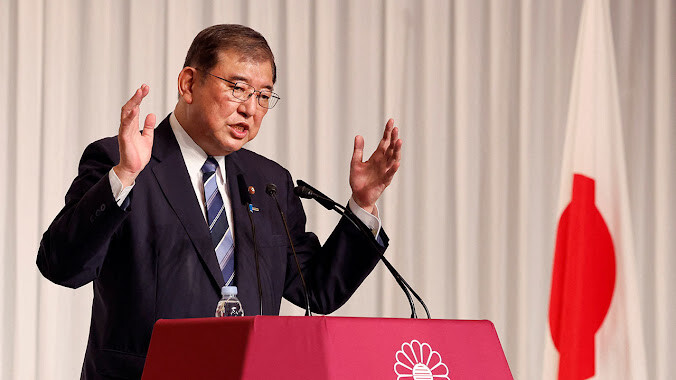
[GLOBAL ECONOMIC TIMES]  On the 27th, Shigeru Ishiba, who was elected president of the Liberal Democratic Party of Japan, was elected as Japan's 102nd prime minister. Governor Ishiba is known to Koreans as a conservative politician with expert insight into security issues, and is a person who has often expressed reasonable positions on historical issues, unlike his ‘political rival’, former Prime Minister Shinzo Abe.

This Liberal Democratic Party presidential election was held under dramatic circumstances with Prime Minister Fumio Kishida suddenly declaring that he would not run. As the politics of ‘Abe’s first power’ continued for 7 years and 8 months, political funding issues and various pending issues arose within the Liberal Democratic Party, and as a result, the election was mainly a battle over domestic issues. Korea-Japan relations or historical awareness were not much of an issue.

Interest in Korea was focused on Governor Ishiba’s plan for an ‘Asian version of the North Atlantic Treaty Organization (NATO).’ His pledge book contains the content, “An Asian version of NATO that forms international norms based on the rule of law and takes the lead in building a regional multilateral security system.” In particular, in a recent article he contributed to the Hudson Institute in the United States, he emphasized that “today’s Ukraine is tomorrow’s Asia,” and argued for the need for a collective security system in which all members must join forces to respond if a member country is invaded in Asia.

Such a plan is bound to cause controversy in Korea. Few Koreans would agree with the idea that Japan, which no longer apologizes or reflects on historical issues, should form a de facto military alliance with Korea while excluding China. If this issue becomes serious, friction between Korea and Japan appears inevitable.

In President Ishiba's book on historical issues, 'Conservative Politician Shigeru Ishiba - My Policy, My Manifesto', he said, "Building a true relationship of trust between Korea and Japan without understanding how much the merger hurt the pride and identity of the people of the other country." “It cannot be done,” he emphasized. For sustainable Korea-Japan relations, as President Ishiba said, a humble awareness of Japan's history is essential.

In the field of diplomacy, Prime Minister Kishida, a ‘master of diplomacy’, and Governor Ishiba, a ‘defense expert’ who served in defense politics three times, are expected to be more difficult counterparts for Korea. If the Ishiba administration takes a boldly forward-looking stance toward the past and proposes participation in a collective defense system, what choice should Korea make? Is it possible to solve the problems of the past and collective defense simultaneously? Can the United States, which stations US troops in Korea, accept this situation?

Korea is facing challenges on a different level than in the past. Taking advantage of the United States struggling on two fronts in Ukraine and the Middle East, Japan appointed as its leader a politician who advocated ‘building an Asian collective security system centered on the US-Japan alliance.’ In this complex situation, Korea is in a situation where it has no choice but the current government, which has a naive perception of Japan to the point of frowning, and the opposition party, which says, “Thank you to China, and thank you to Taiwan.” The public's anxiety over the political world's inability to even properly understand this situation is increasing. It is time for Korean politicians to take this reality seriously.

[Copyright (c) Global Economic Times. All Rights Reserved.]

Global Economic Times

Popular articles

  • The Coronation of a New Queen: Kim Gil-li Clinches Double Gold, While a Tearful Farewell Marks the End of an Era

  • US House Probes Coupang Over ‘Discriminatory’ Korean Regulations: Potential Catalyst for Section 301 Investigation?

  • South Korea’s Bakery Giants Slash Prices as Government Ramps Up Pressure on Food Inflation

I like it
Share
  • Facebook
  • X
  • Kakaotalk
  • LINE
  • BAND
  • NAVER
  • https://www.globaleconomictimes.kr/article/1065547109917530 Copy URL copied.
Comments >

Comments 0

Weekly Hot Issue

  • Coway Clinches Top Honor at "Water Taste Awards" for 7th Consecutive Year
  • HP Targets Korea as Strategic Hub for 'Edge AI' Expansion, Seeking Startup Partnerships
  • Pearl Abyss’s 'Crimson Desert' Shatters Records with 2 Million Copies Sold on Day One
  • "BTS Over Books?" Indian Academies Issue Emergency Notices as Students Plot Mass Absences for Comeback Live
  • Naver to Shut Down Men's Fashion Service 'MR.' to Launch Expanded AI-Driven Fashion Platform
  • JBNU and SKKU Researchers Achieve Breakthrough in "Dream Material" MXene, Setting New World Records in Performance

Most Viewed

1
An Open Letter to BTS On the Eve of a Historic Performance
2
From Industrial Capital to Tourism Mecca... Ulsan Makes a Bold Move with ‘Experiential Content’ in 2026
3
Ko Sang-goo, President of World Federation of Korean Associations, Elected as First Private Sector Chair of World Korean Community Leaders Convention
4
It is Time for BTS’s Fandom, ARMY, to Step Forward
5
Korean Stock Market Plunges: Circuit Breaker and Sidecar Triggered Amid Geopolitical Crisis
광고문의
임시1
임시3
임시2

Hot Issue

Vishay Unveils Ultra-Compact 0404 RGB LED with Independent Chip Control for Enhanced Color Precision

Coway Clinches Top Honor at "Water Taste Awards" for 7th Consecutive Year

AI Medical Ecosystem in Focus: KIMES 2026 Opens in Seoul as Global Healthcare Hub

Netanyahu Declares Decisive Blow to Iran’s Nuclear and Missile Programs, Signals Early End to War

Let’s recycle the old blankets in Jeju Island’s closet instead of incinerating them.

Global Economic Times
korocamia@naver.com
CEO : LEE YEON-SIL
Publisher : KO YONG-CHUL
Registration number : Seoul, A55681
Registration Date : 2024-10-24
Youth Protection Manager: KO YONG-CHUL
Singapore Headquarters
5A Woodlands Road #11-34 The Tennery. S'677728
Korean Branch
Phone : +82(0)10 4724 5264
#304, 6 Nonhyeon-ro 111-gil, Gangnam-gu, Seoul
Copyright © Global Economic Times All Rights Reserved
  • 에이펙2025
  • APEC2025가이드북TV
  • 독도는우리땅
Search
Category
  • All articles
  • Synthesis
  • World
  • Business
  • Industry
  • ICT
  • Distribution Economy
  • Well+Being
  • Travel
  • Eco-News
  • Education
  • Korean Wave News
  • Opinion
  • Arts&Culture
  • Sports
  • People & Life 
    • 전체
    • International Student Report
    • With Ambassador
  • Column 
    • 전체
    • Cho Kijo Column
    • Cherry Garden Story
    • Ko Yong-chul Column
    • Kim Seul-Ong Column
    • Lee Yeon-sil Column
  • Photo News
  • New Book Guide
  • Multicultural News
  • Jobs & Workers