• 2026.03.22 (Sun)
  • All articles
  • LOGIN
  • JOIN
Global Economic Times
fashionrunwayshow2026
  • Synthesis
  • World
  • Business
  • Industry
  • ICT
  • Distribution Economy
  • Well+Being
  • Travel
  • Eco-News
  • Education
  • Korean Wave News
  • Opinion
  • Arts&Culture
  • Sports
  • People & Life
    • International Student Report
    • With Ambassador
  • Column
    • Cho Kijo Column
    • Cherry Garden Story
    • Ko Yong-chul Column
    • Kim Seul-Ong Column
    • Lee Yeon-sil Column
  • Photo News
  • New Book Guide
MENU
 
Home > Business

Wearable Robots: The New Frontier for Winning Over South Korea’s ‘Young Old’ Industry Giants in Fashion and Finance Bet on Assistive Technology to Capture the Silver Market

Global Economic Times Reporter / Updated : 2026-01-06 03:14:16
  • -
  • +
  • Print

(C) Digital Watch Observatory

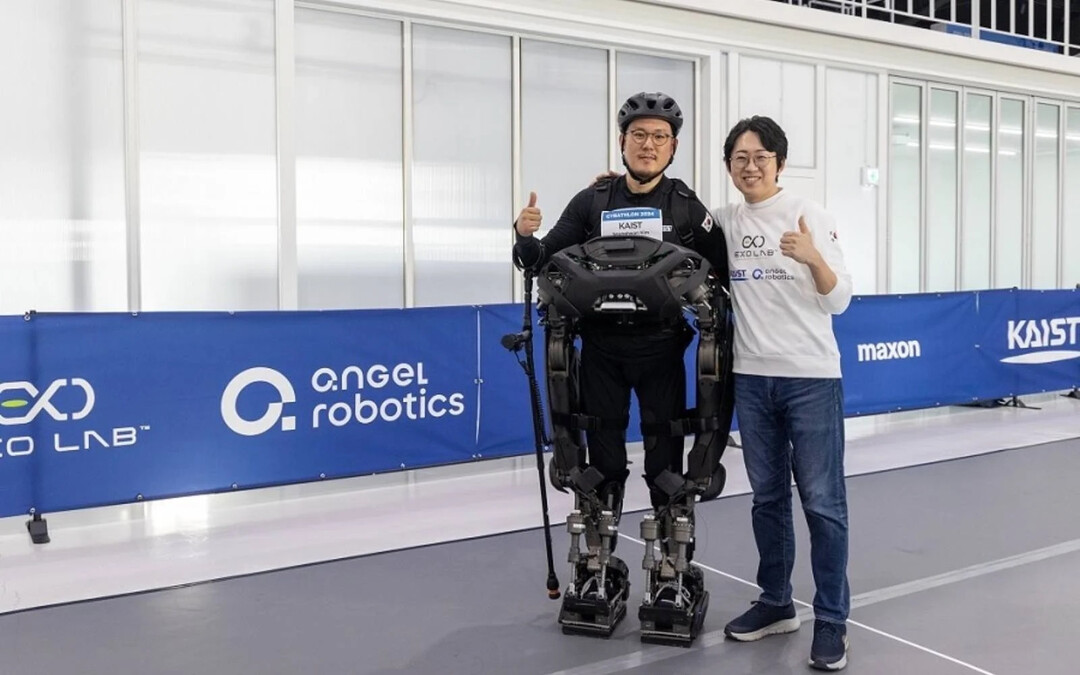
SEOUL – As South Korea officially enters a "super-aged society," where those aged 65 and older account for over 20% of the population, a new battlefield for innovation has emerged: wearable robotics. Companies that once focused on traditional sectors like fashion and banking are now pivoting toward AI-powered assistive suits to capture the "Young Old"—active, tech-savvy seniors with significant purchasing power.

Fashion Meets Robotics: Hyungji’s Strategic Pivot Leading the charge in the fashion industry is Fashion Group Hyungji. Known for its dominance in senior apparel with brands like Crocodile Ladies, the group is now integrating robotics into everyday wear. Its subsidiary, Hyungji Elite, recently signaled its official entry into the market by participating in the "RAAI 2025" (International Conference on Robotics, Automation, and AI) in Singapore.

The company has filed a trademark for "hyungjiROBOTICS," aiming to blend AI-based robotic tech with workwear and casual clothing. Their vision is to create "lifestyle wearable robots" that do not look like medical devices but rather stylish functional garments that reduce physical strain, allowing seniors to maintain an active social life.

Financial Sectors Join the Fray The banking industry is also recognizing that financial health for seniors is inextricably linked to physical mobility. Hana Bank recently made headlines by partnering with Angel Robotics to launch the "Hana The Next Wearable Robot Service."

This initiative goes beyond simple financing. Hana Bank plans to offer purchase benefits for wearable suits, expand robot-related financial consulting, and develop specialized insurance and savings products tailored for robot users. "We are building a future-oriented financial model that combines AI and robotics to enhance the quality of life for the elderly," a Hana Financial Group official stated.

From Rehabilitation to Daily Exercise Startups are providing the technical backbone for this transition. Wirobotics has gained significant traction with its "WIM S," an ultra-lightweight walking-assist robot. Unlike heavy industrial suits, the WIM S is designed for daily use, assisting hip and thigh movements to improve walking speed and balance.

To support this, Wirobotics opened South Korea’s first robotic gait exercise center. Here, seniors—particularly those recovering from surgery or suffering from muscle loss—receive personalized training. The robot syncs with a mobile app to analyze gait patterns and muscle strength in real-time, providing a comprehensive health management solution that appeals to the health-conscious "Young Old" demographic.

The Economic Engine of a Super-Aged Society The rapid adoption of wearable tech is driven by necessity. Statistics Korea reports that as of 2025, the elderly population has surpassed the 10-million mark. Market experts suggest that the "Silver Economy" is no longer a niche market but the primary driver of domestic consumption.

"The influence of the senior generation is expanding far beyond healthcare," said an industry analyst. "Whether it is fashion, finance, or leisure, the integration of AI and wearable tech is becoming the standard for any business that wants to remain relevant in an aging demographic."

As technology becomes more discreet and affordable, the sight of seniors wearing robotic assists in parks and shopping malls may soon become as common as seeing them with smartphones, marking a new era of "technological aging" in South Korea.

[Copyright (c) Global Economic Times. All Rights Reserved.]

  • #Globaleconomictimes
  • #Korea
  • #Seoul
  • #Samsung
  • #LG
  • #Bitcoin
  • #Meta
  • #Business
  • #Economic
  • #The Woori Bank
  • #Elon Musk
  • #C
Global Economic Times Reporter
Reporter Page

Popular articles

  • From Industrial Capital to Tourism Mecca... Ulsan Makes a Bold Move with ‘Experiential Content’ in 2026

  • A New Milestone for Ukraine’s Post-War Reconstruction: The Birth of ISVP

  • About mexican food 

I like it
Share
  • Facebook
  • X
  • Kakaotalk
  • LINE
  • BAND
  • NAVER
  • https://www.globaleconomictimes.kr/article/1065550376798546 Copy URL copied.
Comments >

Comments 0

Weekly Hot Issue

  • Appellate Court Begins Review of Kakao Founder’s Acquittal in SM Entertainment Stock Rigging Case
  • AI Supercycle Propels Global Semiconductor Market Toward $1 Trillion Milestone
  • Naver Suspends Election Comments to Combat Cyberbullying and Misinformation Ahead of June Polls
  • Lotte Town Myeongdong Lights Up with 'Welcome Light' to Greet Global K-Pop Fans
  • K-Beauty SMEs Join Forces with Distributors: A New Paradigm for Global Expansion through Strategic Consortiums
  • BMW ‘The New i3’ Next-Gen EV: 900km Range 

Most Viewed

1
An Open Letter to BTS On the Eve of a Historic Performance
2
From Industrial Capital to Tourism Mecca... Ulsan Makes a Bold Move with ‘Experiential Content’ in 2026
3
Ko Sang-goo, President of World Federation of Korean Associations, Elected as First Private Sector Chair of World Korean Community Leaders Convention
4
It is Time for BTS’s Fandom, ARMY, to Step Forward
5
Korean Stock Market Plunges: Circuit Breaker and Sidecar Triggered Amid Geopolitical Crisis
광고문의
임시1
임시3
임시2

Hot Issue

Netflix Declares BTS Comeback Live “ARIRANG” as the Year’s Biggest Global Event

AI Medical Ecosystem in Focus: KIMES 2026 Opens in Seoul as Global Healthcare Hub

Netanyahu Declares Decisive Blow to Iran’s Nuclear and Missile Programs, Signals Early End to War

Intel Announces 10% Price Hike on CPUs: PC Manufacturers Bracing for Massive Production Cost Spikes

Let’s recycle the old blankets in Jeju Island’s closet instead of incinerating them.

Global Economic Times
korocamia@naver.com
CEO : LEE YEON-SIL
Publisher : KO YONG-CHUL
Registration number : Seoul, A55681
Registration Date : 2024-10-24
Youth Protection Manager: KO YONG-CHUL
Singapore Headquarters
5A Woodlands Road #11-34 The Tennery. S'677728
Korean Branch
Phone : +82(0)10 4724 5264
#304, 6 Nonhyeon-ro 111-gil, Gangnam-gu, Seoul
Copyright © Global Economic Times All Rights Reserved
  • 에이펙2025
  • APEC2025가이드북TV
  • 독도는우리땅
Search
Category
  • All articles
  • Synthesis
  • World
  • Business
  • Industry
  • ICT
  • Distribution Economy
  • Well+Being
  • Travel
  • Eco-News
  • Education
  • Korean Wave News
  • Opinion
  • Arts&Culture
  • Sports
  • People & Life 
    • 전체
    • International Student Report
    • With Ambassador
  • Column 
    • 전체
    • Cho Kijo Column
    • Cherry Garden Story
    • Ko Yong-chul Column
    • Kim Seul-Ong Column
    • Lee Yeon-sil Column
  • Photo News
  • New Book Guide
  • Multicultural News
  • Jobs & Workers