• 2026.05.08 (Fri)
  • All articles
  • LOGIN
  • JOIN
Global Economic Times
fashionrunwayshow2026
  • Synthesis
  • World
  • Business
  • Industry
  • ICT
  • Distribution Economy
  • Well+Being
  • Travel
  • Eco-News
  • Education
  • Korean Wave News
  • Opinion
  • Arts&Culture
  • Sports
  • People & Life
    • International Student Report
    • With Ambassador
  • Column
    • Cho Kijo Column
    • Cherry Garden Story
    • Ko Yong-chul Column
    • Kim Seul-Ong Column
    • Lee Yeon-sil Column
  • Photo News
  • New Book Guide
MENU
 
Home > Distribution Economy

"Cashless Society" Accelerates: Monthly Cash Spending Drops to 320,000 Won

KO YONG-CHUL Reporter / Updated : 2025-12-29 03:42:52
  • -
  • +
  • Print

(C) Inside Small Business

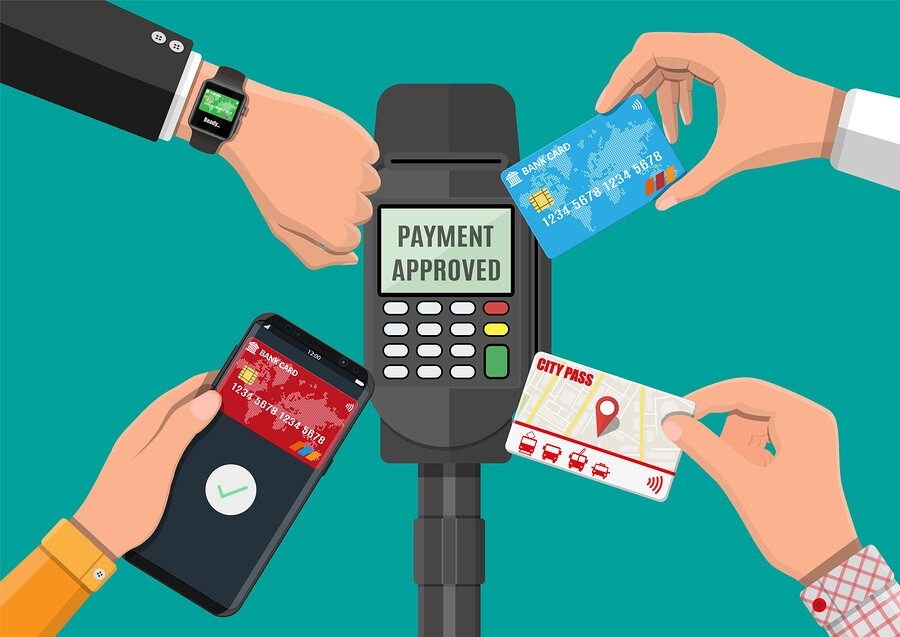
SEOUL — While the transition toward a "cashless society" is picking up pace in South Korea, a paradoxical trend is emerging: people are spending less cash but holding onto more of it for emergencies.

According to the "2025 Survey on Currency Usage by Economic Entities" released by the Bank of Korea (BOK) on the 28th, the average monthly cash expenditure per individual stood at 324,000 KRW. This marks a sharp 36% decline from the 506,000 KRW recorded in 2021. Cash now accounts for only 17.4% of total monthly spending, down from 21.6% four years ago.

The "Cash Paradox": Spending Less, Hoarding More

Despite the decline in daily transactions, the amount of cash kept in wallets and safes has surged. The average "transactional cash" held by individuals rose to 103,000 KRW, a 25.6% increase from 2021. More notably, "precautionary cash"—money kept for emergencies—jumped by 52.8% to an average of 541,000 KRW per person.

The corporate sector showed an even more dramatic shift. While average monthly cash spending by businesses plummeted from 9.11 million KRW to 1.12 million KRW, their cash holdings nearly doubled to 9.77 million KRW. Roughly 36% of companies cited "securing liquidity for emergencies" as their primary reason for holding cash.

A Growing Digital Divide

The shift away from cash is not uniform across all demographics. The survey highlighted a persistent reliance on paper money among vulnerable groups. Cash usage remains high for those in their 70s and older (32.4%) and for households with a monthly income under 1 million KRW (59.4%).

Public Skepticism Remains

Public sentiment regarding a fully cashless society remains wary. Approximately 45.8% of individuals expressed opposition to the transition, significantly outnumbering those in favor (17.7%). The primary concern cited by 39.1% of respondents was the "transaction difficulties faced by the financially underprivileged," such as the elderly who may struggle with digital payment systems.

"Economic uncertainty and interest rate fluctuations are heavily influencing the public's demand for physical cash," a BOK official stated. "While the convenience of digital payments is undeniable, the role of cash as a safe-haven asset remains strong."

[Copyright (c) Global Economic Times. All Rights Reserved.]

  • #Globaleconomictimes
  • #Korea
  • #Seoul
  • #Samsung
  • #LG
  • #Bitcoin
  • #Meta
  • #Business
  • #Economic
  • #The Woori Bank
  • #Elon Musk
KO YONG-CHUL Reporter
Reporter Page

Popular articles

  • President Lee’s Approval Rating Hits Record High of 67% for Second Consecutive Week: Gallup Korea

  • The AI Tsunami: Meta to Slash 10% of Workforce Amid Global Tech Purge

  • ElevenLabs Partners with Caring to Support ‘Senior Emotional Care’ via Voice AI

I like it
Share
  • Facebook
  • X
  • Kakaotalk
  • LINE
  • BAND
  • NAVER
  • https://www.globaleconomictimes.kr/article/1065552008634226 Copy URL copied.
Comments >

Comments 0

Weekly Hot Issue

  • South Korea’s KOSPI Surges to 7th in Global Market Cap, Overtaking Canada and UK
  • Global Pay Parity Demands Shaking Tech Giants: Samsung and SK Hynix Face Rising Labor Unrest in China
  • the 28th Overseas Koreans Literary Awards
  • Ambassador Hyuk-sang Sohn attended the "2026 Educational Community Sports Day" held at the Korean School of Paraguay on Friday, May 1.
  • Official Presentation of Credentials in Paraguay
  • U.S. World Cup "Host City Boom" Fizzles: Hotel Bookings Slump One Month Before Kickoff

Most Viewed

1
Korea and Vietnam Forge Strategic Partnership in Science, Technology, and Innovation
2
Iran Imposes Transit Fees on Strait of Hormuz Amid Escalating Maritime Tensions
3
80% of Enterprises Hit by 'AI Agent Anomalies': SailPoint Calls for Integrated Identity Governance
4
Kurly Abandons 'All-Paper' Packaging Strategy Amid Rising Cost Pressures
5
Tradition Meets the Public: Chungju’s Gugak Busking
광고문의
임시1
임시3
임시2

Hot Issue

Hyundai Motor Group Bets $700 Million on Mexico Amid Trade Policy Volatility

Honda Halts $15B Canada EV Plant Plans Amid Strategic Pivot to Hybrids

Digital Ghosts: The Rise of AI Ex-Partner Replicas and the Ethics of "Technological Mourning"

Kakao Hits Record Q1 Performance: Operating Profit Surges 66% as Focus Shifts to "Agentic AI"

Fashion Runway Show 2026

Global Economic Times
korocamia@naver.com
CEO : LEE YEON-SIL
Publisher : KO YONG-CHUL
Registration number : Seoul, A55681
Registration Date : 2024-10-24
Youth Protection Manager: KO YONG-CHUL
Singapore Headquarters
5A Woodlands Road #11-34 The Tennery. S'677728
Korean Branch
Phone : +82(0)10 4724 5264
#304, 6 Nonhyeon-ro 111-gil, Gangnam-gu, Seoul
Copyright © Global Economic Times All Rights Reserved
  • 에이펙2025
  • APEC2025가이드북TV
  • 반달곰 프로젝트
Search
Category
  • All articles
  • Synthesis
  • World
  • Business
  • Industry
  • ICT
  • Distribution Economy
  • Well+Being
  • Travel
  • Eco-News
  • Education
  • Korean Wave News
  • Opinion
  • Arts&Culture
  • Sports
  • People & Life 
    • 전체
    • International Student Report
    • With Ambassador
  • Column 
    • 전체
    • Cho Kijo Column
    • Cherry Garden Story
    • Ko Yong-chul Column
    • Kim Seul-Ong Column
    • Lee Yeon-sil Column
  • Photo News
  • New Book Guide
  • Multicultural News
  • Jobs & Workers