![[등록] 2026-09-01 15:48:31](/support/_updata/banner2/tl181982910_6749.png)


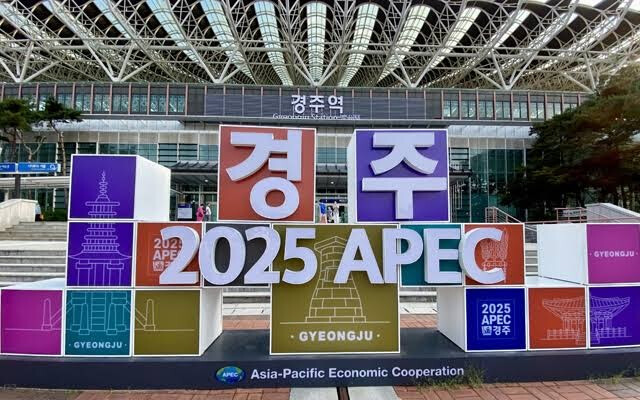
The Asia-Pacific Economic Cooperation (APEC) Economic Leaders' Week is set to commence on October 27 in Gyeongju, South Korea, culminating a year of intensive discussions across various sectors. The summit serves as the pivotal moment to finalize achievements and lay out the future vision for the Asia-Pacific region.
Despite a backdrop of heightened global uncertainty that challenges the principles of free and multilateral trade APEC has championed, this year's forum demonstrated the region's strong potential for cooperation. True to its nickname as an "incubator of ideas," APEC, operating on a consensus basis, has facilitated open dialogue among member economies, resulting in the successful adoption of joint statements in ministerial meetings covering a broad spectrum, including trade, digital economy, AI, and cultural industries. As the chair country, South Korea has demonstrated strong leadership in fostering constructive dialogue and is now focused on securing the leaders’ agreement to crown the year's efforts.
South Korea's Differentiated Contribution
This APEC gathering provides a crucial platform for South Korea to introduce its unique contributions to regional challenges. The nation has taken the lead by making AI transition and demographic shifts—such as low birth rates and aging populations—core agenda items, a first in APEC's history. As a country preparing to become a global AI powerhouse, South Korea intends to guide the region's AI transformation, positioning the technology as a new engine for regional innovation and growth.
Furthermore, recognizing the profound impact of population structure changes, Seoul is proposing cooperation initiatives focused on strengthening health and care services and enhancing the mobility of human resources. Leveraging its status as a cultural content giant, South Korea also spearheaded discussions on the creative industries as a dynamic force for economic growth, marking the first time culture has been formally included in the APEC agenda.
The Role of Public-Private Partnership
Sustainable development requires more than just government policy; it necessitates the synergy between governmental vision and private-sector creativity. The realization of APEC’s various outcomes hinges upon the active engagement and collaboration of the private sector. This is where APEC's tradition of public-private partnership becomes vital.
Since 1995, APEC has operated the APEC Business Advisory Council (ABAC) to ensure that the voice of the business community is integrated into the policy-making process. ABAC conducts four annual meetings, culminating in the "ABAC Dialogue with Leaders" during the Summit Week, where policy recommendations from business leaders are delivered directly to the heads of economy. Complementary events such as the CEO Summit, Future & Tech Forum, and the K-Tech Showcase further facilitate this crucial private-sector interaction.
A Stage for South Korea's Future
This APEC Economic Leaders' Meeting is the largest international event hosted by the current South Korean administration since its inauguration. APEC is a critical stage for the nation's diplomatic and economic future, as its members collectively account for 60% of global GDP and over 50% of world trade, with nine of South Korea's top ten trading partners being APEC members.
The country plans to maximize the opportunity by pursuing extensive bilateral meetings with other leaders to generate substantive outcomes, thereby realizing its foreign policy centered on national interest and pragmatism. Additionally, through a variety of cultural events, South Korea aims to showcase the essence of K-Culture to all delegations, deepening the appreciation for the nation’s cultural appeal.
As global trade tensions remain high, the world's attention is focused on Gyeongju. South Korea, in its role as chair, is fully committed to ensuring a smooth platform for exchange—optimizing infrastructure and protocol—so that this summit can be a truly impactful diplomatic forum that promotes cooperation and mutual prosperity throughout the region.
[Copyright (c) Global Economic Times. All Rights Reserved.]