![[등록] 2026-09-01 15:48:31](/support/_updata/banner2/tl181982910_6749.png)


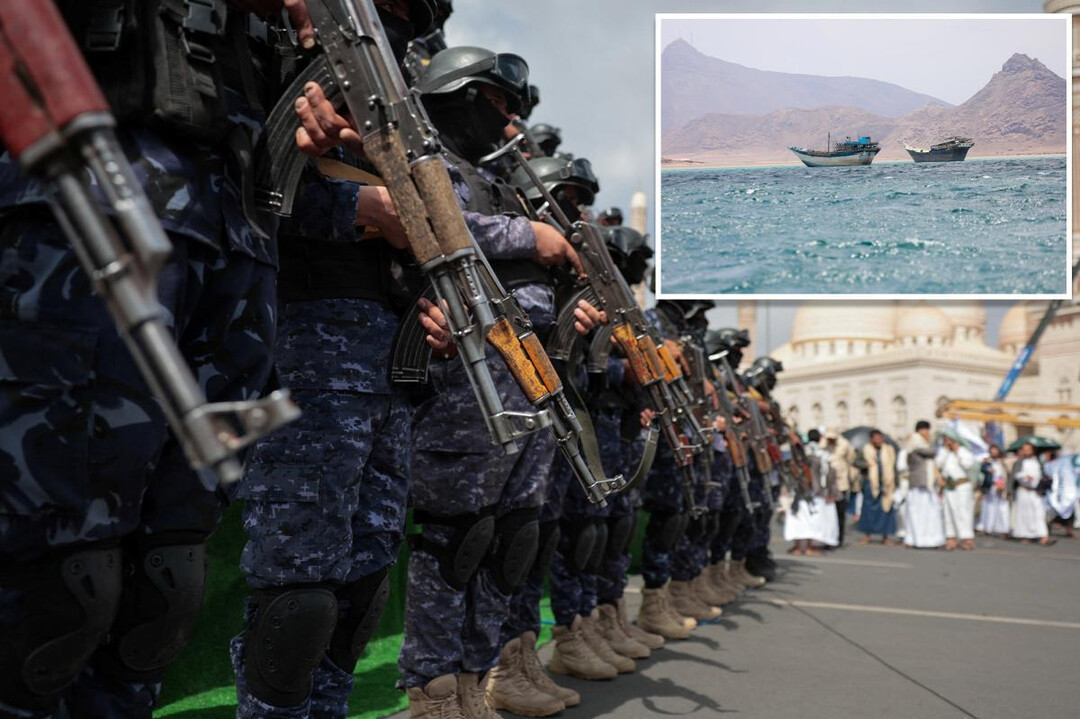
An analysis has emerged suggesting that the reason Saudi Arabia fails to effectively block missile and drone attacks from Yemen's Houthi rebels—despite spending the world's 8th largest military budget—stems from structural problems within its military organization rather than a lack of advanced weapons.
According to U.S. economic magazine Forbes on the 11th (local time), Professor Natasha Lindstaedt of the University of Essex pointed out in an opinion piece regarding recent massive casualties at King Khalid International Airport in Saudi Arabia's capital, Riyadh, due to Houthi attacks, that "because the Saudi military is organized with a primary focus on protecting the royal family and preventing coups, cooperation and information sharing between units are not functioning properly."
The Houthis declared the breakdown of a 2022 UN-brokered truce, escalating offensives targeting Saudi Arabia—which supports the government forces—spurred by Yemeni government airstrikes last July aimed at blocking an Iranian aircraft from landing at Sana'a International Airport.
Amidst these tensions, 13 people were killed and over 300 injured on the 10th at King Khalid Airport, which came under Houthi attack. This marked the third airport attack within a single week. On the 11th, a projectile also struck Terminal 4 of the airport, causing a fire and additional casualties.
According to the Stockholm International Research Institute (SIPRI), Saudi Arabia's military expenditure last year stood at $83.2 billion (approx. 112 trillion KRW), accounting for 6.5% of its gross domestic product (GDP). This represents the 8th largest amount in the world.
Saudi Arabia possesses advanced air defense assets including U.S.-made F-15 fighter jets and European Eurofighter Typhoons, alongside Patriot and THAAD (Terminal High Altitude Area Defense) systems. Last month, it also received approval from the U.S. government to purchase 48 F-35 stealth fighters. The deal, valued at approximately $24.3 billion (approx. 33 trillion KRW), awaits procedures such as U.S. congressional review.
However, Professor Lindstaedt explained that Saudi Arabia's massive military budget and advanced weapons have not translated into actual operational execution capabilities.
She drew attention to the fact that Saudi Arabia operates the National Guard and the Royal Guard separately from the regular military under the Ministry of Defense. While this organizational structure is advantageous for preventing power concentration in a specific military faction and reducing the risk of a coup against the royal family, it fosters inter-service rivalry and makes sharing information and operational plans difficult, thereby diminishing combat efficiency.
Reuters previously reported, citing diplomatic sources, that although the Houthis secretly assembled a force of about 100,000 troops, Saudi Arabia and other related nations failed to detect it in advance.
Differences in combat experience are also cited as a problem. Although the Saudi military is equipped with advanced capabilities, it relatively lacks experience in independently executing complex ground operations. In contrast, the Houthis have accumulated practical combat capabilities through prolonged civil conflict in Yemen.
Meanwhile, the Houthi rebels' armaments have advanced significantly. Once merely a regional militant group, the Houthis have grown into a military organization operating long-range ballistic missiles, cruise missiles, and attack drones, backed by weapons and technological support from Iran.
Professor Lindstaedt specifically pointed out that the Houthis do not need to defeat Saudi Arabia head-on to achieve a military victory. This is because repeatedly attacking core infrastructure such as airports and oil facilities with missiles and drones is enough to inflict massive economic and security costs on Saudi Arabia.
On the 5th of this month, Saudi Arabia mobilized 100 fighter jets to support a large-scale counteroffensive by Yemeni government forces.
While Yemeni government forces claimed to have recaptured parts of the area around the Bab el-Mandeb Strait—a strategic bottleneck connecting the Red Sea and the Gulf of Aden—through this effort, the Houthis still maintain control over major strongholds.
According to Professor Lindstaedt, the withdrawal of UAE forces from Yemen, driven by strained relations between Saudi Arabia and the United Arab Emirates (UAE), is also cited as a factor weakening local allied forces arrayed against the Houthis.
The continuous Houthi attacks are also placing a burden on Saudi Arabia's economic reform initiative, 'Vision 2030.' Crown Prince Mohammed bin Salman has been seeking to reduce oil dependency and foster foreign investment and the tourism industry, but repeated attacks on airports and energy facilities are shaking the country's image as a safe investment destination, according to the analysis.
In addition, even Saudi Arabia's 1,200-kilometer East-West pipeline—which has been utilized to bypass disruptions to oil transportation in the Strait of Hormuz since the outbreak of the Iran conflict—remains exposed to Houthi threats.
Professor Lindstaedt diagnosed that "even if the Houthis do not defeat the Saudi military on the battlefield, simply threatening core infrastructure and raising investor anxiety can impose a continuous burden on Saudi Arabia's national development strategy," adding that "massive investments in advanced weapons cannot compensate for a fractured command structure, lack of information sharing, and limited capabilities in responding to asymmetric threats."
[Copyright (c) Global Economic Times. All Rights Reserved.]