• 2026.10.16 (Fri)
  • All articles
  • LOGIN
  • JOIN
Global Economic Times
[등록] 2026-09-01 15:48:31
  • Synthesis
  • World
  • Business
  • Industry
  • ICT
  • Distribution Economy
  • Well+Being
  • Travel
  • Eco-News
  • Education
  • Korean Wave News
  • Opinion
  • Arts&Culture
  • Sports
  • People & Life
    • International Student Report
    • With Ambassador
  • Column
    • Cho Kijo Column
    • Cherry Garden Story
    • Ko Yong-chul Column
    • Kim Seul-Ong Column
    • Lee Yeon-sil Column
  • Photo News
  • New Book Guide
MENU
 
Home > Distribution Economy

"Lowering Interest Rates Alone Can’t Save the Economy"... The Solution Emphasized by the Nobel Laureate in Economics

KO YONG-CHUL Reporter / Updated : 2026-10-16 04:36:09
  • -
  • +
  • Print

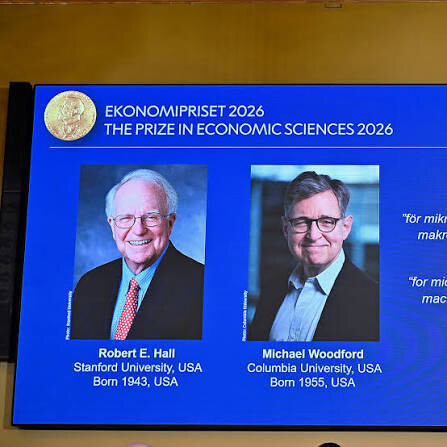
Michael Woodford, a professor at Columbia University and this year’s Nobel laureate in economics, emphasized 'forward guidance' (conditional benchmark interest rate projections) as a core policy instrument for economic stabilization. He explained that major economies, which failed to revive their economies despite slashing interest rates to zero during the 2008 global financial crisis, benefited from stabilizing their economies by pre-announcing future rate trajectories.

During a press conference following the announcement of the Nobel Prize in Economics on the 12th, Professor Woodford answered a question about instances where his research was applied to actual policy by stating, "The 2008 global financial crisis was a situation where traditional monetary policy tools alone were insufficient to restore economic activity."

He explained, "At the time, several countries, including the US and Sweden, rapidly cut interest rates so that short-term policy rates reached virtually zero by late 2008 and early 2009. Yet, unemployment remained high, and total spending across the economy fell far short of desired levels."

Professor Woodford explained that forward guidance was utilized as a new policy instrument in this scenario. Forward guidance is a monetary policy tool whereby a central bank influences market expectations by pre-announcing the future direction of its interest rate policy.

He evaluated, "Rather than relying solely on immediate additional rate cuts, clearly communicating the future direction of rate policy became a crucial policy response tool. Forward guidance contributed to economic stabilization from 2009 onward."

He added, "While it did not solve every problem like magic, it played an important role. Through new macroeconomic models, we were also able to better understand the effects of unprecedented interventions by central banks in financial markets at the time, such as asset purchases."

Thijs Bollwerk (Timo Boppart), a member of the prize committee for the Nobel Prize in Economics, also explained in an interview, "Compared to existing economic theories, the core of the new theory is that economic agents make decisions while looking ahead to the future. Based on this insight, new policy instruments such as forward guidance were developed and successfully utilized during the global financial crisis."

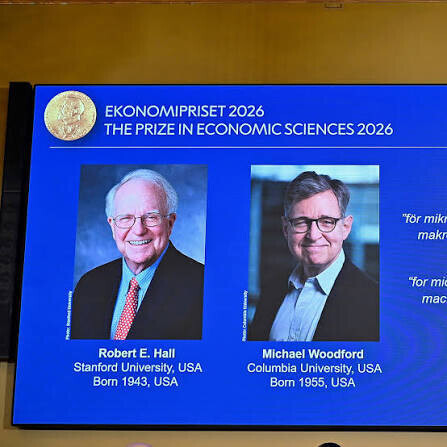
This year’s Nobel Prize in Economics was jointly awarded to Professor Woodford and Robert Hall, a professor at Stanford University. The two were recognized for advancing new macroeconomic models that analyze household and corporate economic decision-making to explain the impacts of monetary and fiscal policies on the economy.

Professor Woodford also emphasized central bank policy communication. He stated, "Governments should not treat economic stabilization as if it were controlling an economy by having a few policy officials operate a control stick. How market participants anticipate future economic policy has a decisive impact on policy effectiveness."

He added, "Creating a framework through which governments can explain to the public what policies they are implementing and why was also an important goal of the research."

Regarding the backdrop of this year's Nobel Prize honoring research developed between the 1970s and 2000s, Professor Boppart explained, "Since the new theoretical framework was developed, economic recessions have occurred only three times. Time was needed to evaluate and verify whether it actually works during real economic crises."

He emphasized, "The theories they developed are actually being utilized today by central banks and governments around the world in conducting monetary and fiscal policies."

[Copyright (c) Global Economic Times. All Rights Reserved.]

  • #Hormuz Impasse
  • #globaleconomictimes
  • #micorea
  • #mykorea
  • #nammidonganews
  • #singaporenewsk
  • #Samsung
  • #Daewoo
  • #Hyos
KO YONG-CHUL Reporter
Reporter Page

Popular articles

  • Guitarist Kim Ji-hee to Hold Storytelling Concert 'The Guitar is Happiness'

  • World-OKTA Supports Overseas Expansion of Domestic Carbon Enterprises Using Local Network in Shanghai

  • Hyundai Glovis Poised for Q3 Earnings Rebound Driven by Chinese Automakers and Easing Maritime Costs

I like it
Share
  • Facebook
  • X
  • Kakaotalk
  • LINE
  • BAND
  • NAVER
  • https://www.globaleconomictimes.kr/article/1065555306692332 Copy URL copied.
Comments >

Comments 0

Weekly Hot Issue

  • Mass Shooting in Pennsylvania: Head of Household Kills 8 Family Members and Acquaintances Before Committing Suicide
  • "No Rest Even After Work"… The 63 Million American Adults Trapped in an Endless Cycle of Caregiving
  • 'World's 8th Largest Defense Budget' Saudi Arabia Struggles Against Houthi Rebels: The Problem Is Not Weapons
  • "Expensive, Smelly, and Scary"... What Happened to the Once-Popular 'Honeymoon Mecca' Where Tourists Have Stopped Coming
  • Trump Unilaterally Announces: "South Korea Invests $50B, Taiwan $80B, Japan $21B"
  • Stay in the U.S. Starting at $70K? "It Means Go Back to Your Country," Students Reeling from Shock

Most Viewed

1
30% of Employees Replaced by AI Expected to Be Rehired by 2029, Predicts Gartner
2
US Deploys Third Carrier and 10,000 Troops to Middle East Amid Rising Tensions with Iran
3
Offshore Wind Orders Gaining Momentum: LS Marine Solution Responds with Major Wins and Fleet Investments
4
LG CNS Partners with General Atlantic to Co-Invest in Enterprise Software and AI
5
KT Expands Healthcare AX Business with New 'Medical Standard Model'
체리가든 스토리
nutri huevos
로타리
동포저널

Hot Issue

US Demands Enhanced Counter-Fire Capabilities, Including 'Chunmoo', Creating Hurdles for Wartime OPCON Transfer

"Lowering Interest Rates Alone Can’t Save the Economy"... The Solution Emphasized by the Nobel Laureate in Economics

Trump Unilaterally Announces: "South Korea Invests $50B, Taiwan $80B, Japan $21B"

Stay in the U.S. Starting at $70K? "It Means Go Back to Your Country," Students Reeling from Shock

Fashion Runway Show 2026

Global Economic Times
korocamia@naver.com
CEO : LEE YEON-SIL
Publisher : KO YONG-CHUL
Registration number : Seoul, A55681
Registration Date : 2024-10-24
Youth Protection Manager: KO YONG-CHUL
Singapore Headquarters
5A Woodlands Road #11-34 The Tennery. S'677728
Korean Branch
Phone : +82(0)10 4724 5264
#304, 6 Nonhyeon-ro 111-gil, Gangnam-gu, Seoul
Copyright © Global Economic Times All Rights Reserved
  • 향기네무료급식
  • BCB부천방송
  • 반달곰 프로젝트
Search
Category
  • All articles
  • Synthesis
  • World
  • Business
  • Industry
  • ICT
  • Distribution Economy
  • Well+Being
  • Travel
  • Eco-News
  • Education
  • Korean Wave News
  • Opinion
  • Arts&Culture
  • Sports
  • People & Life 
    • 전체
    • International Student Report
    • With Ambassador
  • Column 
    • 전체
    • Cho Kijo Column
    • Cherry Garden Story
    • Ko Yong-chul Column
    • Kim Seul-Ong Column
    • Lee Yeon-sil Column
  • Photo News
  • New Book Guide
  • Overseas Koreans
  • Multicultural News