• 2025.12.13 (Sat)
  • All articles
  • LOGIN
  • JOIN
Global Economic Times
APEC2025KOREA가이드북
  • Synthesis
  • World
  • Business
  • Industry
  • ICT
  • Distribution Economy
  • Well+Being
  • Travel
  • Eco-News
  • Education
  • Korean Wave News
  • Opinion
  • Arts&Culture
  • Sports
  • People & Life
  • Column
    • Cho Kijo Column
    • Lee Yeon-sil Column
    • Ko Yong-chul Column
    • Cherry Garden Story
  • Photo News
  • New Book Guide
MENU
 
Home > Column > Ko Yong-chul Column

South Korea's Ministry of Education Faces Backlash Over Handling of Medical Students' Strike

KO YONG-CHUL Reporter / Updated : 2024-11-05 04:53:15
  • -
  • +
  • Print


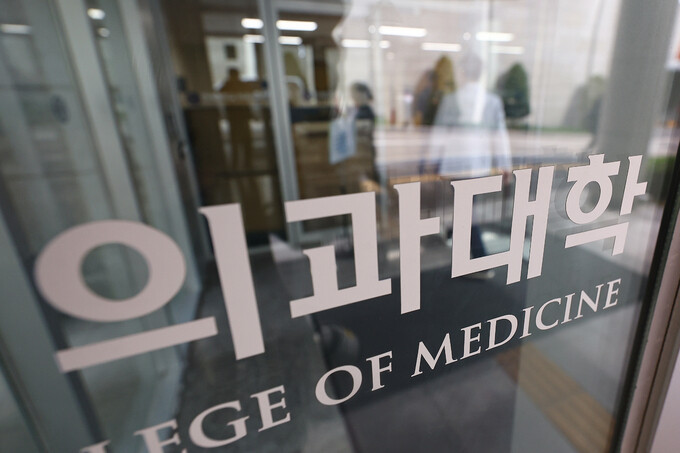
The South Korean Ministry of Education has come under fire for its handling of the ongoing medical students' strike, which has now lasted for eight months. After initially refusing to grant leaves of absence to striking students, the ministry has finally relented, leaving the decision to individual universities. However, critics argue that the ministry's decision is too little, too late, and that it has shifted the responsibility for addressing the crisis onto universities.

The ministry has maintained that it does not condone the students' strike, insisting that any leaves of absence granted must be for personal reasons. However, this stance is seen as hypocritical given the ministry's previous threats to take disciplinary action against universities that granted mass leaves of absence.

A more pressing concern is the ministry's lack of preparedness for the potential consequences of a mass leave of absence. Despite warnings from experts and universities, the ministry failed to develop a comprehensive plan to address the potential shortage of medical students and the impact on medical education. Instead, the ministry proposed short-term solutions, such as reducing the length of medical school programs, which were met with widespread criticism.

Critics argue that the ministry's handling of the crisis has been marked by inconsistency, lack of transparency, and a failure to take responsibility for its actions. By shifting the burden onto universities, the ministry has only exacerbated the problem and created further uncertainty.

To resolve the ongoing crisis, the ministry must take a more proactive and transparent approach. It should acknowledge the mistakes it has made and work collaboratively with universities, medical students, and other stakeholders to develop a long-term solution. Additionally, the ministry should engage in meaningful dialogue with medical associations to address the underlying issues that led to the strike.

The medical students' strike has highlighted deep-seated problems within South Korea's medical education system. It is imperative that the government and other relevant stakeholders work together to find sustainable solutions that address the concerns of both medical students and the public.

[Copyright (c) Global Economic Times. All Rights Reserved.]
KO YONG-CHUL Reporter
Reporter Page

Popular articles

  • A Garden Where the City's Rhythm Stops: Dongdaemun's 'Cherry Garden', Cooking Consideration and Diversity

  • Dayone Company Achieves Record Performance in Adult Education Market

  • Choi Bun-do, Chairman of PTV Group, Assumes Presidency of the Korean Chamber of Commerce and Industry in South Central Vietnam

I like it
Share
  • Facebook
  • X
  • Kakaotalk
  • LINE
  • BAND
  • NAVER
  • https://www.globaleconomictimes.kr/article/1065556309749554 Copy URL copied.
Comments >

Comments 0

Weekly Hot Issue

  • International Organizations Raise China's Growth Forecasts, Citing Stimulus and Exports
  • US-Japan Counteract Sino-Russian Drills with Joint Bomber Exercise in East Sea Airspace
  • Thailand-Cambodia Conflict Escalates: 22 Dead, Over 100 Injured as Border Clashes Spread
  • Swiss Economy Minister Guy Parmelin Poised to Lead as President in 2026
  • Russia Claims Downing Record 278 Ukrainian Drones Overnight, 40 Targeting Moscow Region
  • ZTE Faces Massive US Fine Over Alleged Foreign Bribery; Potential Settlement Could Exceed $2 Billion

Most Viewed

1
A Garden Where the City's Rhythm Stops: Dongdaemun's 'Cherry Garden', Cooking Consideration and Diversity
2
The Sudden Halt of Ayumi Hamasaki's Shanghai Concert: Unpacking the Rising Sino-Japanese Tensions
3
Choi Bun-do, Chairman of PTV Group, Assumes Presidency of the Korean Chamber of Commerce and Industry in South Central Vietnam
4
The Paradox of the 'Juvenile Offender' (Chokbeop Sonyeon): Impunity or Unfinished Rehabilitation?
5
South Korea Unveils 'K-Med': A Gigantic leap in Medical AI, Challenging Global Tech Giants
광고문의
임시1
임시3
임시2

Hot Issue

Mexico Hikes Tariffs on 'Strategic Goods' from South Korea, China, and Other Non-FTA Nations

Tech Tensions Flare: DeepSeek Allegedly Smuggles Banned NVIDIA Blackwell Chips for New AI Model

Netflix Stock Plummets 10% on Credit Downgrade Fears Following Blockbuster Warner Bros. Acquisition

LG Innotek Develops Eco-Friendly Next-Gen Smart IC Substrate, Reducing Carbon Emissions by Half

Let’s recycle the old blankets in Jeju Island’s closet instead of incinerating them.

Global Economic Times
korocamia@naver.com
CEO : LEE YEON-SIL
Publisher : KO YONG-CHUL
Registration number : Seoul, A55681
Registration Date : 2024-10-24
Youth Protection Manager: KO YONG-CHUL
Singapore Headquarters
5A Woodlands Road #11-34 The Tennery. S'677728
Korean Branch
Phone : +82(0)10 4724 5264
#304, 6 Nonhyeon-ro 111-gil, Gangnam-gu, Seoul
Copyright © Global Economic Times All Rights Reserved
  • 에이펙2025
  • APEC2025가이드북TV
  • 독도는우리땅
Search
Category
  • All articles
  • Synthesis
  • World
  • Business
  • Industry
  • ICT
  • Distribution Economy
  • Well+Being
  • Travel
  • Eco-News
  • Education
  • Korean Wave News
  • Opinion
  • Arts&Culture
  • Sports
  • People & Life
  • Column 
    • 전체
    • Cho Kijo Column
    • Lee Yeon-sil Column
    • Ko Yong-chul Column
    • Cherry Garden Story
  • Photo News
  • New Book Guide
  • Multicultural News
  • Jobs & Workers