• 2025.12.08 (Mon)
  • All articles
  • LOGIN
  • JOIN
Global Economic Times
APEC2025KOREA가이드북
  • Synthesis
  • World
  • Business
  • Industry
  • ICT
  • Distribution Economy
  • Well+Being
  • Travel
  • Eco-News
  • Education
  • Korean Wave News
  • Opinion
  • Arts&Culture
  • Sports
  • People & Life
  • Column
    • Cho Kijo Column
    • Lee Yeon-sil Column
    • Ko Yong-chul Column
    • Cherry Garden Story
  • Photo News
  • New Book Guide
MENU
 
Home > Column > Ko Yong-chul Column

King Yeongjo's reforms

KO YONG-CHUL Reporter / Updated : 2024-10-31 05:08:11
  • -
  • +
  • Print


[GLOBAL ECONOMIC TIMES]  Even a new car needs repairs after a few years. If you manage it well you can delay it a little, but in the end the number of repairs will increase. The institutions that make up society are no different. It is created by a certain system or by social needs and conditions at a specific time. As time passes and needs and conditions change, the system is no longer as efficient as it was at the beginning and causes unexpected problems. Just like cars, systems must be modified and used or removed.

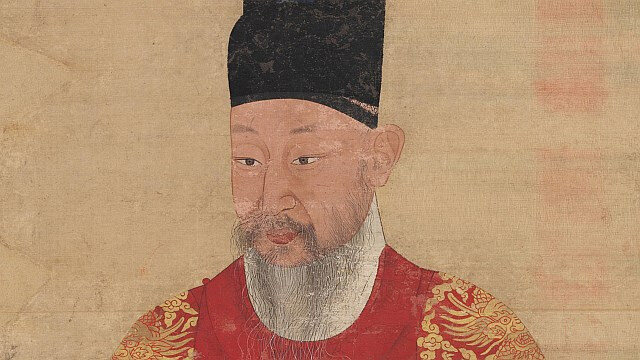
 King Yeongjo implemented the Gyunyeok Law, a tax reform, but that was not all he did. In 1741, the 17th year of his reign, he enacted the bureaucratic reform "Ijo Nangseon Lee Hyeok Jeolmok(吏曹郞選釐革節目)". A section is a law or regulation. Leejo(吏曹) refers to six groups, including Leejo, Byeongjo, and Hyeongjo. Nangseon(郞選) refers to "nanggwan selection(郎官)" and Lee Hyeok(釐革) means reform. If we interpret the name of the law, it means "the law reforming the Ijo Nangwan selection system."

Leejo Nanggwan is the common name for Jeongrang of the fifth rank and Jwarang of the sixth rank. In the Joseon Dynasty, public officials were stronger than military officers. This department was the department that had personnel authority over public officials. However, personnel management in the Joseon Dynasty was very different from what we imagine today. The person who held de facto authority in the personnel matters of public officials was not the king, nor was he a minister or deputy minister, equivalent to minister or deputy minister. The actual organizers were Leejo Jeong-rang and Jwa-rang. Not even Judge Leejo could intervene at will. Leejo Jeongrang and Jwarang were combined and called Ijo Jeonrang(銓郞). Jeon(銓) is a balance beam.

Leejo Jeonrang had several powers that were significantly different from other Article 6 officials. This was an authority unimaginable in general bureaucratic organizations. He had the "right of self-representation" to recommend his successor and the "right to listen" to officials below the rank of third rank Tonghundaebu.

 He also had the right to apply for the position he would move to after serving in the war. In fact, most government officials below Jeong's third rank were included, except for the highest-ranking government officials and some local chiefs who held some positions. 'Tongcheong' is the authority to judge which officials are suitable for powerful and honorable positions called Cheongjik(淸職) or Cheongyojik(淸要職) and recommend them as candidates. The incumbent Jeonrang argued with his predecessor Jeonrang and exercised his right to self-representation and hearing.

Leejo's warlord power was no less than Jeongseung's. Lee Jung-hwan wrote in his book <Taekri> (1751) that Jeonrang of the Joseon Dynasty said, “If there are no special accidents, he will rise to the rank of Jeongseung and Panseo as a law enforcement officer.” This means that if you go through the dynasty war when you are in your 20s or 30s, you quickly become prime minister and magistrate. Jeonrang's authority was possible in the social atmosphere and administrative situation of Joseon at the time when Sarim emerged in the late 15th century. At that time, Sarim was a righteous being who opposed vested interests. When the sarim policy was established in the 16th century, the right to war was established as a personal practice at the royal court. The Jeonranggwon long functioned as a device to prevent the arbitrariness of power in the government.


[Copyright (c) Global Economic Times. All Rights Reserved.]
  • #leejo
  • #King Yeongjo
  • #Gyunyeok Law
  • #Leejo Jeonrang
  • #Cheongjik
  • #Cheongyojik
  • #Taekri
KO YONG-CHUL Reporter
Reporter Page

Popular articles

  • Takaichi Affirms Commitment to Historical Apologies, Signaling Policy Continuity

  • First Lady Kim Keon-hee Faces Fourth Charge: Alleged Promise of Proportional Representation Seat to Unification Church

  • Drug-Laced 'Tea' Packages Wash Ashore on Jeju, Triggering Emergency Search

I like it
Share
  • Facebook
  • X
  • Kakaotalk
  • LINE
  • BAND
  • NAVER
  • https://www.globaleconomictimes.kr/article/1065556911423392 Copy URL copied.
Comments >

Comments 0

Weekly Hot Issue

  • JAPAN’S RISING PREDICAMENT: RECORD BEAR ATTACKS STRIKE FEAR ACROSS NATION
  • Trump NSS Declares Europe Faces 'Civilizational Erasure,' Vows to Aid Anti-Immigration Right-Wing Parties
  • Meta's Strategic U-Turn: The AI Race Re-Elevates Real-Time News
  • Gapyeong's Petit France and Italian Village Illuminate Winter with 'Starlight Festival'
  • Grand Opening: Gwangju Museum's Ceramics Culture Center Offers Comprehensive Look at Ceramic History
  • Choi Bun-do, Chairman of PTV Group, Assumes Presidency of the Korean Chamber of Commerce and Industry in South Central Vietnam

Most Viewed

1
Korean War Ally, Reborn as an 'Economic Alliance' Across 70 Years: Chuncheon's 'Path of Reciprocity,' a Strategic
2
A Garden Where the City's Rhythm Stops: Dongdaemun's 'Cherry Garden', Cooking Consideration and Diversity
3
The Sudden Halt of Ayumi Hamasaki's Shanghai Concert: Unpacking the Rising Sino-Japanese Tensions
4
Farewell to a Legend: South Korea Mourns the Passing of Esteemed Actor Lee Soon-jae
5
Poll Reveals Mixed Japanese Reaction to PM Takaichi’s Taiwan Intervention Remarks
광고문의
임시1
임시3
임시2

Hot Issue

EU Unveils €90 Billion Ukraine Aid Plan Backed by Frozen Russian Assets

Seoul's 'Insane Rent' Warning: Why $30,000 Monthly Rent is a Looming Threat Residential Crisis Deepens as Tourist Housing Conversion Hits Supply

Seo Min-kyu Wins Gold at Junior Grand Prix Final... First Korean Since Kim Yuna 20 Years Ago

2026 Overseas Koreans Agency Budget Confirmed at 112.7 Billion Won... 5.3% Increase Year-on-Year

Let’s recycle the old blankets in Jeju Island’s closet instead of incinerating them.

Global Economic Times
korocamia@naver.com
CEO : LEE YEON-SIL
Publisher : KO YONG-CHUL
Registration number : Seoul, A55681
Registration Date : 2024-10-24
Youth Protection Manager: KO YONG-CHUL
Singapore Headquarters
5A Woodlands Road #11-34 The Tennery. S'677728
Korean Branch
Phone : +82(0)10 4724 5264
#304, 6 Nonhyeon-ro 111-gil, Gangnam-gu, Seoul
Copyright © Global Economic Times All Rights Reserved
  • 에이펙2025
  • APEC2025가이드북TV
  • 세종시
Search
Category
  • All articles
  • Synthesis
  • World
  • Business
  • Industry
  • ICT
  • Distribution Economy
  • Well+Being
  • Travel
  • Eco-News
  • Education
  • Korean Wave News
  • Opinion
  • Arts&Culture
  • Sports
  • People & Life
  • Column 
    • 전체
    • Cho Kijo Column
    • Lee Yeon-sil Column
    • Ko Yong-chul Column
    • Cherry Garden Story
  • Photo News
  • New Book Guide
  • Multicultural News
  • Jobs & Workers