• 2026.03.22 (Sun)
  • All articles
  • LOGIN
  • JOIN
Global Economic Times
fashionrunwayshow2026
  • Synthesis
  • World
  • Business
  • Industry
  • ICT
  • Distribution Economy
  • Well+Being
  • Travel
  • Eco-News
  • Education
  • Korean Wave News
  • Opinion
  • Arts&Culture
  • Sports
  • People & Life
    • International Student Report
    • With Ambassador
  • Column
    • Cho Kijo Column
    • Cherry Garden Story
    • Ko Yong-chul Column
    • Kim Seul-Ong Column
    • Lee Yeon-sil Column
  • Photo News
  • New Book Guide
MENU
 
Home > World

UK and Norway Form Joint Naval Fleet to Counter Rising Russian Submarine Threat

Eugenio Rodolfo Sanabria Reporter / Updated : 2025-12-05 05:05:46
  • -
  • +
  • Print

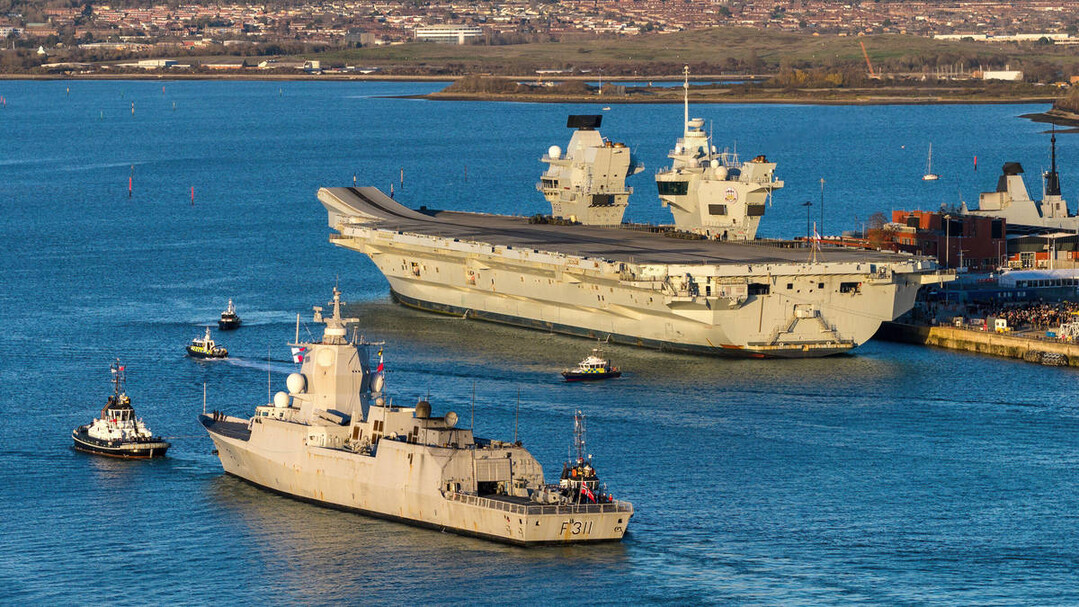
(C) LBC


LONDON — The United Kingdom and Norway have signed a pivotal defense agreement to operate a joint naval fleet in the North Atlantic, explicitly tasked with tracking Russian submarines and safeguarding critical underwater infrastructure. This collaboration marks a significant escalation in allied efforts to secure the strategically vital sea lanes and communications cables connecting Europe.

The agreement, formally signed on December 4th, comes in response to a tangible increase in Russian naval activity in the region. According to the UK Ministry of Defence (MoD), Russian vessel incursions into UK waters have surged by 30% over the past two years. Recent incidents, including the penetration of British waters by the Russian vessel Yantar, suspected by European intelligence of being a spy ship, have heightened security alerts and accelerated the push for stronger joint defense capabilities.

This new accord builds upon the foundation laid by a £10 billion (approximately $12.5 billion USD) naval shipbuilding pact signed in September. Under the expanded terms, the two nations will jointly manage and operate a fleet of anti-submarine warfare (ASW) vessels, which will include the construction of Type 26 frigates at British shipyards.

The joint fleet's initial composition will see at least five ASW vessels contributed by Norway and at least eight by the UK. This combined force will operate primarily in the crucial maritime area bounded by Greenland, Iceland, and the UK—often referred to as the GIUK Gap—a key chokepoint for monitoring Russian naval movements. The fleet's core mission is multifaceted: to conduct surveillance of Russian sea activity and to actively protect vulnerable undersea cables and energy pipelines, which are essential to Western economies and communications.

Cooperation will extend beyond joint patrols. The agreement outlines plans for wider collaborative initiatives, including combined war games, the utilization of UK-manufactured torpedoes, and the training of British Royal Marines in Norway's challenging Arctic environments. Furthermore, the partners will develop unmanned systems for mine clearance and work together on motherships designed to support advanced undersea combat systems.

UK Prime Minister Keir Starmer and his Norwegian counterpart, Jonas Gahr Støre, met in London at 10 Downing Street for official talks before jointly visiting a Royal Air Force base in Scotland to underscore the strategic importance of the collaboration.

Prime Minister Støre emphasized the gravity of the pact, calling it a "hugely important agreement concerning defense cooperation and integration." He stated that the initiative is driven by a shared "recognition of the current situation in Europe, and what we must do for future security."

This united front is a clear signal from London and Oslo that the security of the North Atlantic and its critical infrastructure is paramount. By pooling resources and coordinating patrols, the UK and Norway aim to establish a robust and permanent defense posture against the escalating subsurface threat posed by the Russian Federation, ensuring stability in a region vital to NATO’s northern flank. The integration of advanced ASW capabilities and shared training regimens is set to redefine the allied naval presence in the high north.

[Copyright (c) Global Economic Times. All Rights Reserved.]

  • #Globaleconomictimes
  • #Korea
  • #Seoul
  • #Samsung
  • #LG
  • #Hanhwa
  • #ElonMusk
  • #Business
  • #Economic
  • #Rusia
  • #UK
  • #Norway
Eugenio Rodolfo Sanabria Reporter

Popular articles

  • Florida Legislature Passes Bill to Rename Palm Beach Airport After Donald J. Trump

  • BMW CEO Warns: Ignoring China Threatens the Future of German Automakers

  • China’s Strategic Gold Rush: Beijing Amasses Reserves for 16th Straight Month Amid Dollar Uncertainty

I like it
Share
  • Facebook
  • X
  • Kakaotalk
  • LINE
  • BAND
  • NAVER
  • https://www.globaleconomictimes.kr/article/1065556986171098 Copy URL copied.
Comments >

Comments 0

Weekly Hot Issue

  • Appellate Court Begins Review of Kakao Founder’s Acquittal in SM Entertainment Stock Rigging Case
  • AI Supercycle Propels Global Semiconductor Market Toward $1 Trillion Milestone
  • Naver Suspends Election Comments to Combat Cyberbullying and Misinformation Ahead of June Polls
  • Lotte Town Myeongdong Lights Up with 'Welcome Light' to Greet Global K-Pop Fans
  • K-Beauty SMEs Join Forces with Distributors: A New Paradigm for Global Expansion through Strategic Consortiums
  • BMW ‘The New i3’ Next-Gen EV: 900km Range 

Most Viewed

1
An Open Letter to BTS On the Eve of a Historic Performance
2
From Industrial Capital to Tourism Mecca... Ulsan Makes a Bold Move with ‘Experiential Content’ in 2026
3
Ko Sang-goo, President of World Federation of Korean Associations, Elected as First Private Sector Chair of World Korean Community Leaders Convention
4
It is Time for BTS’s Fandom, ARMY, to Step Forward
5
Korean Stock Market Plunges: Circuit Breaker and Sidecar Triggered Amid Geopolitical Crisis
광고문의
임시1
임시3
임시2

Hot Issue

Netflix Declares BTS Comeback Live “ARIRANG” as the Year’s Biggest Global Event

AI Medical Ecosystem in Focus: KIMES 2026 Opens in Seoul as Global Healthcare Hub

Netanyahu Declares Decisive Blow to Iran’s Nuclear and Missile Programs, Signals Early End to War

Intel Announces 10% Price Hike on CPUs: PC Manufacturers Bracing for Massive Production Cost Spikes

Let’s recycle the old blankets in Jeju Island’s closet instead of incinerating them.

Global Economic Times
korocamia@naver.com
CEO : LEE YEON-SIL
Publisher : KO YONG-CHUL
Registration number : Seoul, A55681
Registration Date : 2024-10-24
Youth Protection Manager: KO YONG-CHUL
Singapore Headquarters
5A Woodlands Road #11-34 The Tennery. S'677728
Korean Branch
Phone : +82(0)10 4724 5264
#304, 6 Nonhyeon-ro 111-gil, Gangnam-gu, Seoul
Copyright © Global Economic Times All Rights Reserved
  • 에이펙2025
  • APEC2025가이드북TV
  • 독도는우리땅
Search
Category
  • All articles
  • Synthesis
  • World
  • Business
  • Industry
  • ICT
  • Distribution Economy
  • Well+Being
  • Travel
  • Eco-News
  • Education
  • Korean Wave News
  • Opinion
  • Arts&Culture
  • Sports
  • People & Life 
    • 전체
    • International Student Report
    • With Ambassador
  • Column 
    • 전체
    • Cho Kijo Column
    • Cherry Garden Story
    • Ko Yong-chul Column
    • Kim Seul-Ong Column
    • Lee Yeon-sil Column
  • Photo News
  • New Book Guide
  • Multicultural News
  • Jobs & Workers