![[등록] 2026-09-01 15:48:31](/support/_updata/banner2/tl181982910_6749.png)


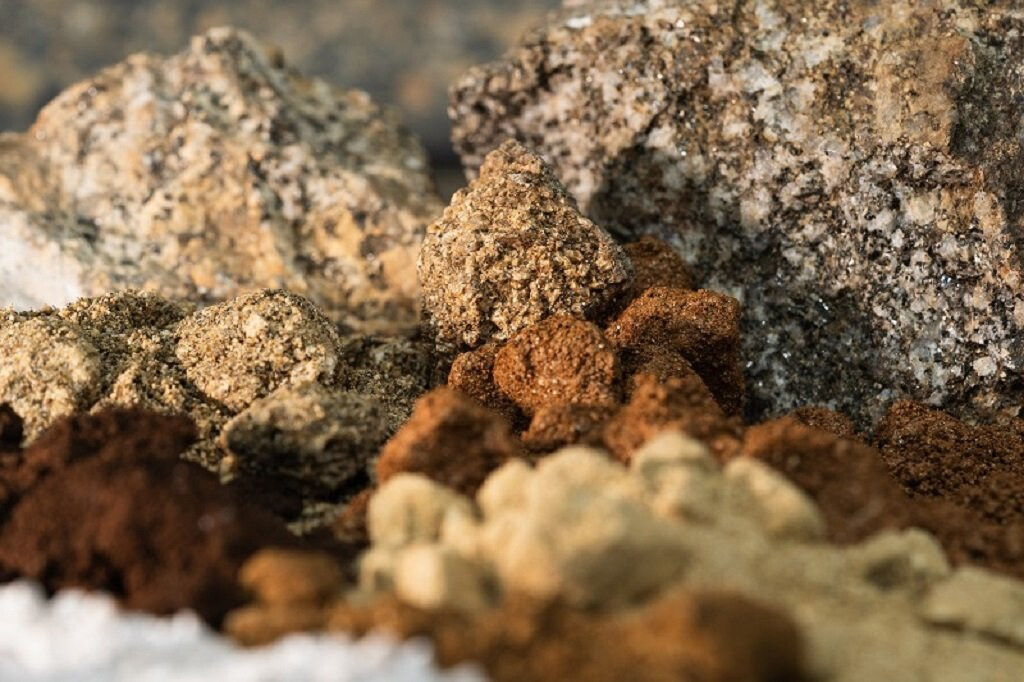
A geological curiosity first unearthed in a Swedish quarry in 1787 has evolved into the most potent geopolitical weapon of the 21st century. Rare earth elements (REEs)—a group of 17 chemically distinct minerals—are the indispensable components of modern technology, from smartphones and electric vehicles to advanced fighter jets. Their supply, however, is almost entirely controlled by a single power: China.
China’s strategic dominance is the result of decades of visionary planning. Recognizing the strategic value, former leader Deng Xiaoping famously declared, “The Middle East has oil, China has rare earths.” Leveraging cheap labor and loose environmental regulations, China systematically built an unrivaled global infrastructure centered around its massive Bayan Obo mine in Baotou, Inner Mongolia. This allowed Beijing to undercut global rivals, forcing facilities like the U.S. Mountain Pass mine to shutter due to economic and environmental pressures.
Environmental Cost and the U.S. Dilemma
While REEs are not geologically scarce, their extraction and, crucially, their refinement are exceptionally dirty processes. The separation of individual elements is chemically complex, generating massive amounts of toxic and radioactive waste that contaminates land and groundwater—a fact that earned the former U.S. production sites the moniker "poison lands."
This dire environmental consequence is the fundamental barrier to the U.S. and its allies rapidly rebuilding their supply chains. Despite renewed national security initiatives to diversify supply, the sheer cost, complexity, and public resistance to such polluting industries make breaking China's monopoly a formidable, long-term challenge.
Dysprosium: The Weapon of Choice
China's control is most pronounced over the critical processing stage, controlling an estimated 85-90% of global refining capacity and over 90% of high-performance rare earth magnet manufacturing. Beijing has increasingly weaponized this leverage through strategic export controls.
Of particular concern is Dysprosium (Dy), one of the "heavy rare earths." Used to maintain magnetic properties at high temperatures, Dysprosium is essential for the powerful magnets in electric vehicle motors, wind turbines, CT scanners, and advanced U.S. defense systems like precision-guided missiles and fighter jet avionics. China is estimated to produce over 90% of the world's processed Dysprosium, giving it immense leverage over the military and clean energy transitions of competing nations.
This strategic stranglehold forces global high-tech industries to operate under Beijing's threat. China's ability to restrict the export of just one of the 17 elements has the potential to paralyze global semiconductor and electronics manufacturing.
The Geopolitical Tightrope
The leverage of rare earths has dramatically influenced global political dynamics, most notably in the U.S.-China trade war. When the U.S. has imposed tariffs, China has repeatedly retaliated with the threat of supply cuts. This strategic resource manipulation has forced the U.S. and its allies, including South Korea, to confront their extreme supply chain vulnerability.
For nations like South Korea, whose economy is heavily reliant on semiconductors and high-tech manufacturing, the escalating trade conflict creates a precarious tightrope walk. Caught between the demands of the U.S. to align against Beijing and the existential threat of a Chinese rare earth export ban, Seoul is left vulnerable to the whims of global power play.
As China solidifies its "assassin's mace" over this critical global resource, the urgent need for international cooperation—through "friend-shoring" and massive joint investment in non-Chinese mining, refining, and recycling capacity—has never been greater. The stability of the global high-tech economy and, indeed, the future of military power, now hangs in the balance.
[Copyright (c) Global Economic Times. All Rights Reserved.]