• 2026.03.22 (Sun)
  • All articles
  • LOGIN
  • JOIN
Global Economic Times
fashionrunwayshow2026
  • Synthesis
  • World
  • Business
  • Industry
  • ICT
  • Distribution Economy
  • Well+Being
  • Travel
  • Eco-News
  • Education
  • Korean Wave News
  • Opinion
  • Arts&Culture
  • Sports
  • People & Life
    • International Student Report
    • With Ambassador
  • Column
    • Cho Kijo Column
    • Cherry Garden Story
    • Ko Yong-chul Column
    • Kim Seul-Ong Column
    • Lee Yeon-sil Column
  • Photo News
  • New Book Guide
MENU
 
Home > World

The Deadly Math of the Iran War: A Race to the Bottom of Missile Stockpiles

Global Economic Times Reporter / Updated : 2026-03-05 05:46:04
  • -
  • +
  • Print

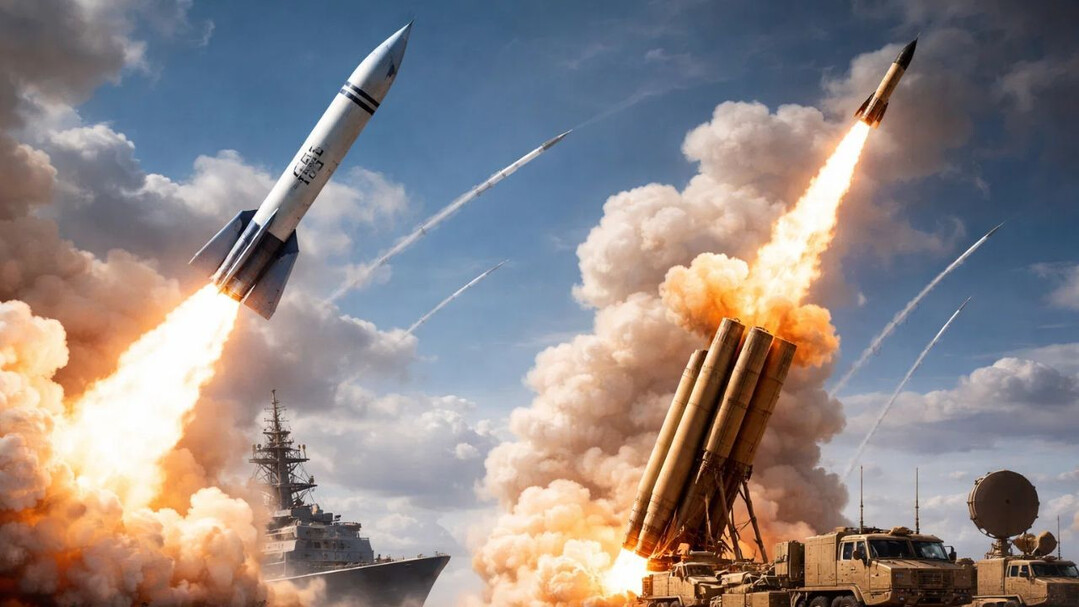
(C) State Mirror Hindi


SEOUL – As the conflict ignited by the U.S. and Israeli strikes on Iran enters its second week, military analysts warn that the "winner" will not be decided by tactical brilliance alone, but by a grueling "salvo competition"—a race to see whose arsenal empties first.

Since the operation commenced on February 28, 2026, Iran and its proxies have launched over 1,000 strikes using missiles and drones, targeting a vast 2,000km radius across a dozen neighboring countries. While the U.S. and Israel have successfully neutralized hundreds of Iranian command centers and launch sites, the sheer volume of Iran’s "cheap" weaponry is beginning to strain the world’s most advanced defense systems.

A Financial and Material Imbalance The economic disparity of the war is staggering. According to Bloomberg and military experts, the U.S. and its allies are often forced to use interceptor missiles costing upwards of $4 million to take down Iranian drones that cost as little as $20,000.

"It’s a strategy of 'death by a thousand cuts,'" said Kelly Grieco, an analyst at the Stimson Center. "Iran knows that while their individual strikes might be intercepted, they are winning the war of attrition by exhausting the limited supply of high-end Western interceptors."

Allies on the Brink The pressure is most palpable among Persian Gulf allies. While nations like the UAE and Qatar have reported high interception rates—destroying over 90% of incoming threats—the consumption of munitions is unsustainable. Fabian Hoffmann of the University of Oslo warned that at the current rate of fire, these nations could exhaust their air defense inventories in less than a week. If the shields fail, critical infrastructure—including desalination plants, power grids, and oil facilities—becomes defenseless.

Washington’s Response The White House is moving to address the looming shortage. Reports suggest the Pentagon is drafting a $50 billion emergency budget to ramp up production at defense giants like Lockheed Martin and RTX (formerly Raytheon). Despite this, President Donald Trump maintained an optimistic tone in a recent interview with the New York Times, asserting that U.S. ammunition supplies remain "extraordinary" and that sustaining the offensive will "not be difficult."

However, the reality on the ground suggests a more complex calculation. If the "interceptor gap" continues to widen, Middle Eastern allies may soon pressure Washington to seek a diplomatic compromise with Tehran to prevent total regional destabilization.

[Copyright (c) Global Economic Times. All Rights Reserved.]

  • #Korea
  • #Seoul
  • #Hallyu
  • #USA
  • #Economy
  • #Busoness
  • #Global
  • #World
  • #Consumer
  • #Export
  • #Import
  • #Hanguel
  • #Travel
  • #Tour
  • #Food
Global Economic Times Reporter
Reporter Page

Popular articles

  • From Industrial Capital to Tourism Mecca... Ulsan Makes a Bold Move with ‘Experiential Content’ in 2026

  • A New Milestone for Ukraine’s Post-War Reconstruction: The Birth of ISVP

  • About mexican food 

I like it
Share
  • Facebook
  • X
  • Kakaotalk
  • LINE
  • BAND
  • NAVER
  • https://www.globaleconomictimes.kr/article/1065558221110881 Copy URL copied.
Comments >

Comments 0

Weekly Hot Issue

  • Appellate Court Begins Review of Kakao Founder’s Acquittal in SM Entertainment Stock Rigging Case
  • AI Supercycle Propels Global Semiconductor Market Toward $1 Trillion Milestone
  • Naver Suspends Election Comments to Combat Cyberbullying and Misinformation Ahead of June Polls
  • Lotte Town Myeongdong Lights Up with 'Welcome Light' to Greet Global K-Pop Fans
  • K-Beauty SMEs Join Forces with Distributors: A New Paradigm for Global Expansion through Strategic Consortiums
  • BMW ‘The New i3’ Next-Gen EV: 900km Range 

Most Viewed

1
An Open Letter to BTS On the Eve of a Historic Performance
2
From Industrial Capital to Tourism Mecca... Ulsan Makes a Bold Move with ‘Experiential Content’ in 2026
3
Ko Sang-goo, President of World Federation of Korean Associations, Elected as First Private Sector Chair of World Korean Community Leaders Convention
4
It is Time for BTS’s Fandom, ARMY, to Step Forward
5
Korean Stock Market Plunges: Circuit Breaker and Sidecar Triggered Amid Geopolitical Crisis
광고문의
임시1
임시3
임시2

Hot Issue

Netflix Declares BTS Comeback Live “ARIRANG” as the Year’s Biggest Global Event

AI Medical Ecosystem in Focus: KIMES 2026 Opens in Seoul as Global Healthcare Hub

Netanyahu Declares Decisive Blow to Iran’s Nuclear and Missile Programs, Signals Early End to War

Intel Announces 10% Price Hike on CPUs: PC Manufacturers Bracing for Massive Production Cost Spikes

Let’s recycle the old blankets in Jeju Island’s closet instead of incinerating them.

Global Economic Times
korocamia@naver.com
CEO : LEE YEON-SIL
Publisher : KO YONG-CHUL
Registration number : Seoul, A55681
Registration Date : 2024-10-24
Youth Protection Manager: KO YONG-CHUL
Singapore Headquarters
5A Woodlands Road #11-34 The Tennery. S'677728
Korean Branch
Phone : +82(0)10 4724 5264
#304, 6 Nonhyeon-ro 111-gil, Gangnam-gu, Seoul
Copyright © Global Economic Times All Rights Reserved
  • 에이펙2025
  • APEC2025가이드북TV
  • 독도는우리땅
Search
Category
  • All articles
  • Synthesis
  • World
  • Business
  • Industry
  • ICT
  • Distribution Economy
  • Well+Being
  • Travel
  • Eco-News
  • Education
  • Korean Wave News
  • Opinion
  • Arts&Culture
  • Sports
  • People & Life 
    • 전체
    • International Student Report
    • With Ambassador
  • Column 
    • 전체
    • Cho Kijo Column
    • Cherry Garden Story
    • Ko Yong-chul Column
    • Kim Seul-Ong Column
    • Lee Yeon-sil Column
  • Photo News
  • New Book Guide
  • Multicultural News
  • Jobs & Workers