![[등록] 2026-09-01 15:48:31](/support/_updata/banner2/tl181982910_6749.png)


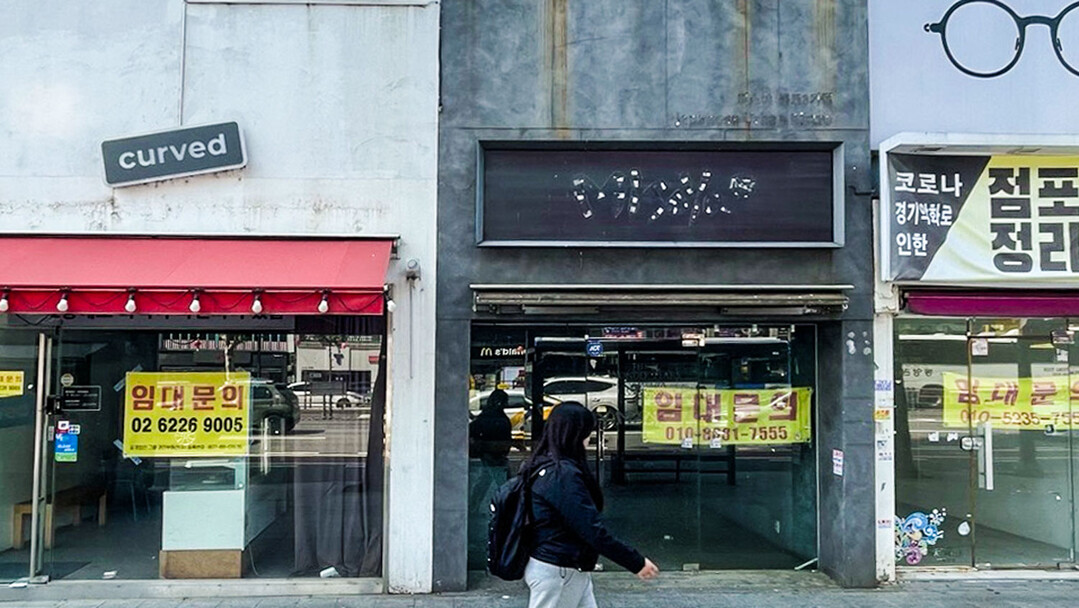
(C) Nikkei Asia
SEOUL — The financial stability of South Korea’s self-employed sector has reached a critical breaking point. According to recent government data, loan delinquency rates among sole proprietors have surged to their highest levels since record-keeping began, more than doubling the figures seen during the height of the COVID-19 pandemic. The combination of prolonged high interest rates and sluggish domestic consumption has created a "perfect storm," pushing small business owners toward insolvency.
A Historic Peak in Financial Distress
According to the "2024 Sole Proprietor Debt Statistics" released by the National Data Agency on December 22, the delinquency rate for business loans (based on outstanding balance) hit 0.98% last year. This represents a sharp increase of 0.33 percentage points from the previous year, marking the highest point since the statistical series was established in 2017.
The crisis is even more pronounced when viewed by the number of borrowers. The proportion of individuals who are more than three months overdue on principal or interest payments reached 2.32%. This indicates that more than two out of every 100 self-employed borrowers are currently unable to service their debt. The fact that the borrower-based delinquency rate exceeds the balance-based rate suggests that the crisis is hitting micro-businesses and small-scale vendors—who typically hold smaller loans—disproportionately hard.
The Widening Gap: Non-Bank Vulnerability
The data highlights a dangerous divergence between traditional banks and non-bank financial institutions (the secondary financial sector). While the delinquency rate at commercial banks stood at a relatively stable 0.19%, the rate at non-bank institutions, such as savings banks and community credit cooperatives, skyrocketed to 2.1%—an elevenfold difference.
Experts point out that many sole proprietors, unable to meet the strict collateral or credit requirements of top-tier banks, have been forced to turn to high-interest secondary lenders. As the "bottom-of-the-pyramid" economy fails to recover, these vulnerable borrowers are becoming trapped in a cycle of debt. "Many business owners are barely surviving by 'rolling over' loans," a government official noted. "However, finding a fundamental solution is becoming increasingly difficult."
Structural Risks and the "Credit Inflation" Paradox
The report also raised concerns regarding "credit score inflation." Despite the rising delinquencies, the proportion of "ultra-high credit" individuals has increased. However, the growth rate of loan delinquencies among this top-tier group is reportedly five times faster than the national average. This phenomenon is casting doubt on the reliability of current credit evaluation systems, as high scores may no longer accurately reflect a borrower’s actual ability to repay in a volatile market.
For many, the pressure has become unbearable. "I took out a 100-million-won loan for interior costs and operations, but with business so slow, I couldn't even cover the monthly interest," said Mr. Choi, who recently shuttered his 10-year-old noodle shop in Seodaemun-gu. "With rent and interest rising simultaneously, I had no choice but to close."
Outlook and Policy Challenges
The government suggests that the only sustainable way to mitigate this risk is to improve the overall labor market. By increasing the total volume of stable jobs, the administration hopes to reduce the influx of people forced into precarious self-employment. Without such structural shifts, the mounting debt of the nation’s self-employed remains a potential "detonator" for a broader financial crisis.
[Copyright (c) Global Economic Times. All Rights Reserved.]