• 2026.03.22 (Sun)
  • All articles
  • LOGIN
  • JOIN
Global Economic Times
fashionrunwayshow2026
  • Synthesis
  • World
  • Business
  • Industry
  • ICT
  • Distribution Economy
  • Well+Being
  • Travel
  • Eco-News
  • Education
  • Korean Wave News
  • Opinion
  • Arts&Culture
  • Sports
  • People & Life
    • International Student Report
    • With Ambassador
  • Column
    • Cho Kijo Column
    • Cherry Garden Story
    • Ko Yong-chul Column
    • Kim Seul-Ong Column
    • Lee Yeon-sil Column
  • Photo News
  • New Book Guide
MENU
 
Home > Industry

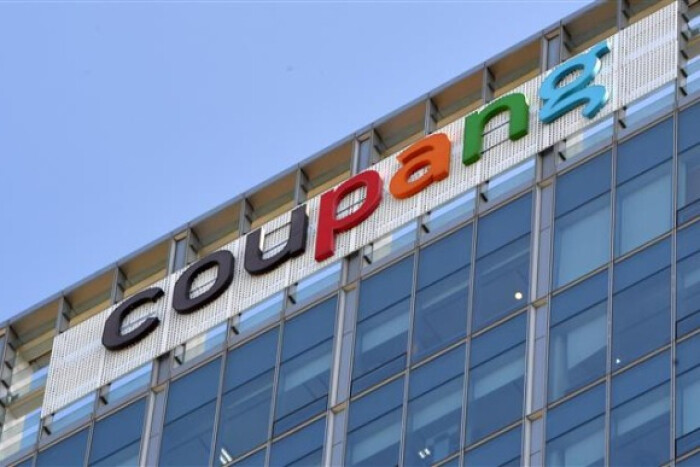
Coupang’s Dominance Drives Food Giants into a Corner: The High Price of "Rocket Delivery"

Global Economic Times Reporter / Updated : 2026-01-01 06:10:46
  • -
  • +
  • Print


SEOUL — In the rapidly evolving landscape of South Korea’s e-commerce market, Coupang has cemented its status as an undisputed titan. However, its "Rocket Delivery" success story is increasingly being overshadowed by allegations of heavy-handed negotiation tactics. Major food manufacturers, once the "Goliaths" of the industry, now claim they are being forced into unfavorable contracts, succumbing to Coupang’s demands to protect their market share.

The Leverage of Direct Purchase
At the heart of the dispute is Coupang’s direct purchase (first-party) business model. Unlike open markets where platforms merely provide a storefront, Coupang buys inventory in bulk from suppliers. While this allows for lightning-fast delivery and lower consumer prices, it grants Coupang absolute control over pricing and profit margins.

According to industry sources on December 31, 2025, several large-scale food manufacturers struggled until the final hours of the year to reach agreements on margin rates for 2026. "We held out as long as possible, but in the end, we will likely have to yield," a representative from a major food firm lamented. "If margins exceed 35%, we are essentially selling at a loss."

The Controversy of "Dynamic Pricing"
The most contentious issue is Coupang’s "Dynamic Pricing" policy. Suppliers allege that Coupang monitors the lowest prices across the web—including those from competitors like Naver, Gmarket, or even niche sellers of near-expiry goods—and automatically matches them.

The friction arises when Coupang demands that the manufacturers compensate for the resulting loss in profit. Suppliers claim they are pressured to cover these gaps through "advertising fees" or "incentives." Furthermore, if a manufacturer runs a short-term promotion with a different retailer, Coupang often demands the same low price while insisting on its guaranteed profit margin.

Standard Contracts vs. Practical Coercion
While the Fair Trade Commission (FTC) provides Standardized Supply Agreements to prevent unfair trade, industry insiders suggest these are easily bypassed. Coupang has reportedly sent official notices to suppliers stating that if new terms are not met, contracts will be terminated due to "changing market conditions"—a justification critics call too vague.

"Beyond the standard contract, there are often side agreements or verbal demands for 'sales incentives' during promotional periods," an e-commerce insider explained. "Because Coupang’s purchase volume is so massive, their bargaining power is incomparable to other platforms."

A Global Shift in Power
Some analysts argue that this tension is a natural byproduct of a global shift in the retail power balance. Much like Amazon in the U.S., the "Retailer-Led" era means manufacturers must often sacrifice margins to maintain access to a platform’s vast customer base.

A retail industry official noted, "In events like Black Friday, manufacturers globally accept losses to secure shelf space. The power of the manufacturer is structurally declining."

However, Coupang maintains a different stance, stating that extreme margin demands are outliers and that most adjustments are modest, 1-percentage-point increases that reflect inflation and rising operational costs.

[Copyright (c) Global Economic Times. All Rights Reserved.]

  • #Globaleconomictimes
  • #Korea
  • #Seoul
  • #Samsung
  • #LG
  • #Bitcoin
  • #Meta
  • #Business
  • #Economic
  • #The Woori Bank
  • #Elon Musk
Global Economic Times Reporter
Reporter Page

Popular articles

  • From Industrial Capital to Tourism Mecca... Ulsan Makes a Bold Move with ‘Experiential Content’ in 2026

  • A New Milestone for Ukraine’s Post-War Reconstruction: The Birth of ISVP

  • About mexican food 

I like it
Share
  • Facebook
  • X
  • Kakaotalk
  • LINE
  • BAND
  • NAVER
  • https://www.globaleconomictimes.kr/article/1065560986944017 Copy URL copied.
Comments >

Comments 0

Weekly Hot Issue

  • Appellate Court Begins Review of Kakao Founder’s Acquittal in SM Entertainment Stock Rigging Case
  • AI Supercycle Propels Global Semiconductor Market Toward $1 Trillion Milestone
  • Naver Suspends Election Comments to Combat Cyberbullying and Misinformation Ahead of June Polls
  • Lotte Town Myeongdong Lights Up with 'Welcome Light' to Greet Global K-Pop Fans
  • K-Beauty SMEs Join Forces with Distributors: A New Paradigm for Global Expansion through Strategic Consortiums
  • BMW ‘The New i3’ Next-Gen EV: 900km Range 

Most Viewed

1
An Open Letter to BTS On the Eve of a Historic Performance
2
From Industrial Capital to Tourism Mecca... Ulsan Makes a Bold Move with ‘Experiential Content’ in 2026
3
Ko Sang-goo, President of World Federation of Korean Associations, Elected as First Private Sector Chair of World Korean Community Leaders Convention
4
It is Time for BTS’s Fandom, ARMY, to Step Forward
5
Korean Stock Market Plunges: Circuit Breaker and Sidecar Triggered Amid Geopolitical Crisis
광고문의
임시1
임시3
임시2

Hot Issue

Netflix Declares BTS Comeback Live “ARIRANG” as the Year’s Biggest Global Event

AI Medical Ecosystem in Focus: KIMES 2026 Opens in Seoul as Global Healthcare Hub

Netanyahu Declares Decisive Blow to Iran’s Nuclear and Missile Programs, Signals Early End to War

Intel Announces 10% Price Hike on CPUs: PC Manufacturers Bracing for Massive Production Cost Spikes

Let’s recycle the old blankets in Jeju Island’s closet instead of incinerating them.

Global Economic Times
korocamia@naver.com
CEO : LEE YEON-SIL
Publisher : KO YONG-CHUL
Registration number : Seoul, A55681
Registration Date : 2024-10-24
Youth Protection Manager: KO YONG-CHUL
Singapore Headquarters
5A Woodlands Road #11-34 The Tennery. S'677728
Korean Branch
Phone : +82(0)10 4724 5264
#304, 6 Nonhyeon-ro 111-gil, Gangnam-gu, Seoul
Copyright © Global Economic Times All Rights Reserved
  • 에이펙2025
  • APEC2025가이드북TV
  • 독도는우리땅
Search
Category
  • All articles
  • Synthesis
  • World
  • Business
  • Industry
  • ICT
  • Distribution Economy
  • Well+Being
  • Travel
  • Eco-News
  • Education
  • Korean Wave News
  • Opinion
  • Arts&Culture
  • Sports
  • People & Life 
    • 전체
    • International Student Report
    • With Ambassador
  • Column 
    • 전체
    • Cho Kijo Column
    • Cherry Garden Story
    • Ko Yong-chul Column
    • Kim Seul-Ong Column
    • Lee Yeon-sil Column
  • Photo News
  • New Book Guide
  • Multicultural News
  • Jobs & Workers