![[등록] 2026-09-01 15:48:31](/support/_updata/banner2/tl181982910_6749.png)


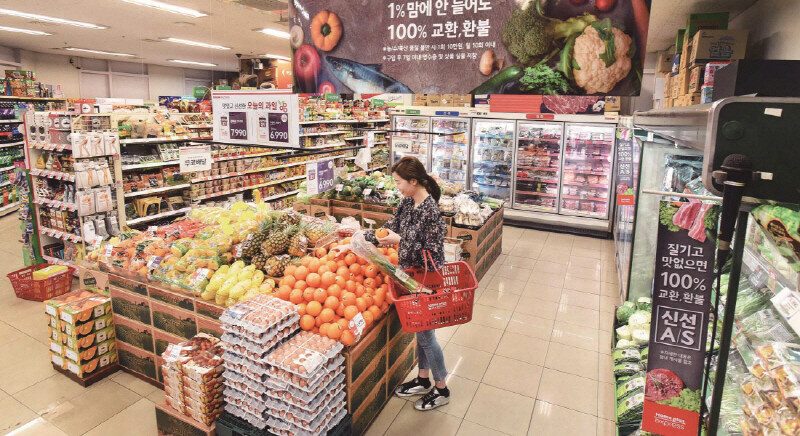
Seoul, South Korea – In a stark departure from the long-held emphasis on "value for money," South Korean retailers, spanning convenience stores to hypermarkets, are aggressively pivoting towards an "ultra-low price" strategy. This dramatic shift reflects the deepening impact of economic headwinds on consumer behavior, with shoppers increasingly prioritizing the absolute lowest price point, even down to the single won. As recessionary pressures persist, this intense price competition is reshaping the retail landscape, forcing businesses to fundamentally rethink their pricing and production models.
The driving force behind this ultra-low price war is the heightened price sensitivity of South Korean consumers. Faced with rising inflation and stagnant wage growth, shoppers are meticulously scrutinizing every purchase, seeking out the slightest cost savings. This behavior is clearly illustrated in recent data from global consumer intelligence firm NIQ's "2025 Consumer Outlook," which reveals that "low price" has become the paramount factor influencing purchasing decisions for a significant 45% of consumers. A parallel trend sees consumers gravitating towards larger pack sizes and bulk purchases, also cited by 45% of respondents, as a means to maximize value and reduce per-unit costs.
To effectively compete in this new era of extreme price consciousness, retailers are increasingly adopting a sophisticated approach known as "reverse price engineering." Unlike traditional product development where costs are calculated after design and production, reverse price engineering begins with a predetermined target selling price – the price point deemed most attractive and competitive in the current market. Once this ceiling is established, companies meticulously work backward, optimizing every aspect of the product, from raw material sourcing and manufacturing processes to features and quality, to ensure profitability within the stringent price constraint.
This methodology often necessitates innovative cost-cutting measures. Retailers are strategically engaging in "advance purchasing" of raw materials, capitalizing on periods of lower commodity prices to secure inventory at a reduced cost. Furthermore, many are willing to absorb significant reductions in their own profit margins, betting on increased sales volume driven by ultra-competitive pricing to offset lower per-unit earnings. As one industry insider noted, the focus is not solely on slashing prices but also on maintaining, and even improving, product quality within these tight cost structures. This delicate balancing act requires meticulous supply chain management and operational efficiency.
The convenience store sector provides a compelling snapshot of this ultra-low price battleground. CU, a major player operated by BGF Retail, has explicitly announced a strategic expansion of its sub-1,000 won product offerings. Their recent summer campaign features popular beverages like Americano coffee priced at a mere 990 won, often bundled with a free ice cup – a price point roughly half that of competing brands. Similarly, their introduction of low-sugar ice cream at 800 won represents a dramatic 70% price reduction. This aggressive pricing strategy has already demonstrated tangible results, with earlier sub-1,000 won initiatives like the "990 Won Hot Bar" achieving impressive sales figures.
Rival GS25 has adopted a "reverse price trend" with its private label "Real Price Chicken Breast," strategically lowering the price by over 20% from 2,300 won to 1,800 won. This counter-intuitive move has yielded remarkable success, driving a substantial 43% year-on-year sales increase in March, followed by an even more staggering 370% surge in the subsequent month. GS25's temporary discount on its "Cafe25" hot Americano to 1,000 won has also proven highly effective, boosting sales by 45% during the March-April period.
The intensity of the ultra-low price competition is equally evident in the hypermarket segment. Major players like Lotte Mart, Emart, and Homeplus have engaged in direct price wars, particularly in staple categories like imported and domestic pork. Lotte Mart's unprecedented offering of Canadian and US pork belly and shoulder for under 900 won per 100 grams to loyalty program members marked a historic low for the retailer. Emart responded with even more aggressive pricing during its "Gorae It Festa Spring Magic Sale," selling imported pork belly for a mere 779 won per 100 grams, a price point rarely seen in recent years. Homeplus joined the fray with its anniversary sale, offering pork belly starting at 790 won per 100 grams, further incentivizing purchases with membership discounts.
The implications of this aggressive ultra-low pricing strategy are multifaceted. While consumers undoubtedly benefit from immediate cost savings, the long-term sustainability of this approach raises concerns for retailers. Thin profit margins leave little room for error and can make businesses vulnerable to fluctuations in raw material costs and supply chain disruptions. Furthermore, an excessive focus on price could potentially lead to a "race to the bottom," where quality is compromised in the pursuit of ever-lower prices.
However, in the current economic climate, Professor Lee Eun-hee of Inha University argues that this price-centric approach is not merely a short-term tactic but a necessary adaptation to a prolonged period of low growth and high inflation. She emphasizes that with limited prospects for significant income growth, consumers are compelled to prioritize price in their purchasing decisions. Even with a potential economic recovery, the underlying structural challenges of low growth suggest that retailers will need to continue offering compelling price advantages to capture consumer attention and loyalty.
The era of "cost-effectiveness," where consumers weighed both price and performance, appears to be giving way to an era where price reigns supreme. South Korean retailers are betting that volume driven by ultra-low prices can compensate for razor-thin margins. The ultimate success of this strategy will depend on their ability to maintain operational efficiency, navigate volatile market conditions, and, crucially, avoid alienating consumers with perceived compromises in product quality. As the ultra-low price war intensifies, the South Korean retail landscape is poised for further transformation, with the biggest winners likely being those who can most effectively cater to the price-sensitive consumer without sacrificing long-term viability.
[Copyright (c) Global Economic Times. All Rights Reserved.]