• 2026.03.02 (Mon)
  • All articles
  • LOGIN
  • JOIN
Global Economic Times
fashionrunwayshow2026
  • Synthesis
  • World
  • Business
  • Industry
  • ICT
  • Distribution Economy
  • Well+Being
  • Travel
  • Eco-News
  • Education
  • Korean Wave News
  • Opinion
  • Arts&Culture
  • Sports
  • People & Life
    • International Student Report
    • With Ambassador
  • Column
    • Cho Kijo Column
    • Cherry Garden Story
    • Ko Yong-chul Column
    • Kim Seul-Ong Column
    • Lee Yeon-sil Column
  • Photo News
  • New Book Guide
MENU
 
Home > Distribution Economy

BOK Expands Foreign Currency Loan Scope to Include Working Capital for Exporters

Global Economic Times Reporter / Updated : 2026-03-01 06:27:44
  • -
  • +
  • Print


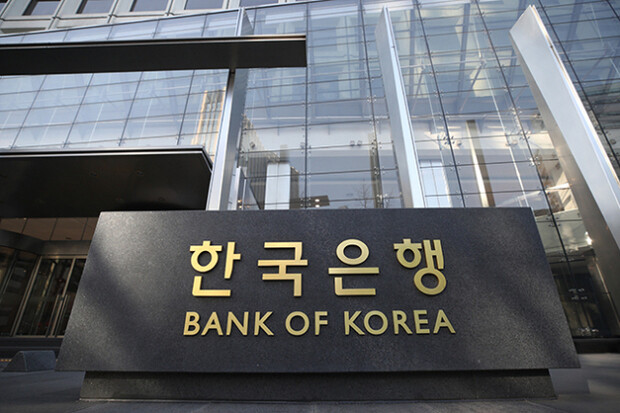
SEOUL — The Bank of Korea (BOK) announced that effective February 27, 2026, export-oriented companies will be permitted to take out foreign currency-denominated loans for domestic working capital. This marks a significant departure from long-standing regulations that prioritized "real demand" for overseas transactions.

Broadening the Scope of Liquidity
Previously, foreign currency loans were strictly limited to international transactions—such as paying for imported raw materials, purchasing overseas machinery, or funding foreign direct investment. However, following a policy shift in February 2023 that allowed loans for domestic facility investments, the BOK is now opening the doors for general operating funds.

Under the new guidelines, exporters can borrow foreign currency from domestic banks based on their export performance over the past year or their projected performance for the current year.

Strategic Market Stabilization
The BOK’s primary objective is to alleviate the upward pressure on the KRW/USD exchange rate. When exporters borrow in USD to fund domestic operations—such as payroll or domestic supplier payments—they must sell those dollars for Korean Won. This increased supply of dollars in the local market acts as a natural stabilizer for the exchange rate.

"This measure provides a dual benefit," a BOK official stated. "It offers companies more diverse financing options to lower borrowing costs while simultaneously addressing imbalances in foreign exchange supply and demand."

Impact on Financial Institutions
For commercial banks, this deregulation opens a new revenue stream. By expanding the loan portfolio for exporters, banks can diversify their interest income and strengthen relationships with high-performing corporate clients. Analysts suggest that this move will improve the overall liquidity environment for the manufacturing sector, which has been grappling with high won-based interest rates.

[Copyright (c) Global Economic Times. All Rights Reserved.]

  • #Korea
  • #Seoul
  • #Hallyu
  • #USA
  • #Economy
  • #Busoness
  • #Global
  • #World
  • #Consumer
  • #Export
  • #Import
  • #Hanguel
  • #Travel
  • #Tour
  • #Food
Global Economic Times Reporter
Reporter Page

Popular articles

  • A New Milestone for Ukraine’s Post-War Reconstruction: The Birth of ISVP

  • War Memorial Association Launches Youth Education Program Idea Contest

  • Population Issues

I like it
Share
  • Facebook
  • X
  • Kakaotalk
  • LINE
  • BAND
  • NAVER
  • https://www.globaleconomictimes.kr/article/1065561979323816 Copy URL copied.
Comments >

Comments 0

Weekly Hot Issue

  • Samsung’s 5-Year Obsession with Clarity: The Dawn of the ‘Privacy Display’
  • Thinking Twice: KAIST Unveils Brain-Inspired AI That Predicts Its Own Mistakes
  • President Lee Embarks on State Visit to Singapore and Philippines, Aiming to Expand AI Cooperation
  • South Korea’s Daily Exports Hit Record $3.5B as AI Semiconductor Boom Fuels 13th Month of Surplus
  • Homeplus Rehabilitation Triggers Structural Shift in Korea's Retail "Big 3"
  • Samsung Electronics Unveils Vision for 'AI-Driven Factories' by 2030: A Paradigm Shift in Global Manufacturing

Most Viewed

1
2026, The Grand Year of Hangeul Celebration — The River of History Where Five Streams Converge
2
A New Milestone for Ukraine’s Post-War Reconstruction: The Birth of ISVP
3
Mexican currency and the powerful history behind its designs
4
Revised and Expanded Edition of ‘Failure of Negotiations with North Korea: Truth and Solutions’ Published
5
Commentary That Douses the Joy of Victory: A Twisted Perspective
광고문의
임시1
임시3
임시2

Hot Issue

President Lee Embarks on State Visit to Singapore and Philippines, Aiming to Expand AI Cooperation

Buffett’s Final Report Card: Berkshire Hathaway Operating Profits Plunge Amid Asset Write-downs

Samsung Electronics Unveils Vision for 'AI-Driven Factories' by 2030: A Paradigm Shift in Global Manufacturing

Oil Hits $130 Amid Prolonged Hormuz Blockade: How Will Global Markets React?

Let’s recycle the old blankets in Jeju Island’s closet instead of incinerating them.

Global Economic Times
korocamia@naver.com
CEO : LEE YEON-SIL
Publisher : KO YONG-CHUL
Registration number : Seoul, A55681
Registration Date : 2024-10-24
Youth Protection Manager: KO YONG-CHUL
Singapore Headquarters
5A Woodlands Road #11-34 The Tennery. S'677728
Korean Branch
Phone : +82(0)10 4724 5264
#304, 6 Nonhyeon-ro 111-gil, Gangnam-gu, Seoul
Copyright © Global Economic Times All Rights Reserved
  • 에이펙2025
  • APEC2025가이드북TV
  • 독도는우리땅
Search
Category
  • All articles
  • Synthesis
  • World
  • Business
  • Industry
  • ICT
  • Distribution Economy
  • Well+Being
  • Travel
  • Eco-News
  • Education
  • Korean Wave News
  • Opinion
  • Arts&Culture
  • Sports
  • People & Life 
    • 전체
    • International Student Report
    • With Ambassador
  • Column 
    • 전체
    • Cho Kijo Column
    • Cherry Garden Story
    • Ko Yong-chul Column
    • Kim Seul-Ong Column
    • Lee Yeon-sil Column
  • Photo News
  • New Book Guide
  • Multicultural News
  • Jobs & Workers