• 2026.02.04 (Wed)
  • All articles
  • LOGIN
  • JOIN
Global Economic Times
APEC2025KOREA가이드북
  • Synthesis
  • World
  • Business
  • Industry
  • ICT
  • Distribution Economy
  • Well+Being
  • Travel
  • Eco-News
  • Education
  • Korean Wave News
  • Opinion
  • Arts&Culture
  • Sports
  • People & Life
  • Column
    • Cho Kijo Column
    • Lee Yeon-sil Column
    • Ko Yong-chul Column
    • Cherry Garden Story
  • Photo News
  • New Book Guide
MENU
 
Home > Column > Ko Yong-chul Column

South Korea’s 2026 Economic Paradox: Record Exports Mask Deepening Structural Crises

KO YONG-CHUL Reporter / Updated : 2025-12-23 06:46:08
  • -
  • +
  • Print

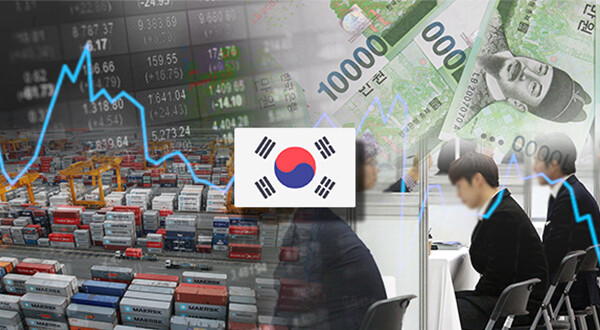
As 2026 approaches, a profound disconnect has emerged between South Korea’s macroeconomic indicators and the actual economic sentiment on the ground. Despite record-breaking semiconductor exports and historically high employment rates, the market’s evaluation remains bleak. The KRW/USD exchange rate is persistently threatening the 1,500 level, signaling growing skepticism regarding the fundamental strength of the Korean economy.

The primary issue lies in the "leakage" of growth; the semiconductor-led boom is failing to stimulate domestic consumption. According to the Korea Development Institute (KDI), the semiconductor industry generates only 2.1 jobs per 1 billion KRW of output—a mere fifth of the cross-industry average of 10.1. Furthermore, its value-added inducement coefficient stands at 0.09, significantly lower than automobiles (0.49) or shipbuilding (0.45). Consequently, the surge in exports does not translate into household income or broader corporate investment, stifling the vitality of domestic industries. This over-reliance is also a volatility risk, as semiconductors now account for 28% of total exports.

The labor market presents another facade. While the headline employment rate is high, youth employment is in a state of decay. The number of employed individuals aged 15–29 has declined for 37 consecutive months, and the "economically inactive" population in their 30s has reached record highs. Paradoxically, the government’s push for "AI Transformation (AX)" is exacerbating this trend. As AI replaces entry-level tasks such as data organization and basic analysis, firms are pivoting toward experienced professionals or specialized AI talent, effectively dismantling the ladder for new entrants and eroding long-term growth potential.

Current currency instability is a cumulative result of these structural vulnerabilities. However, the government’s response remains fixated on short-term liquidity management and verbal interventions. To restore market confidence, the economic policy for the new year must prioritize fundamental restructuring.

First, the government must design incentives that link semiconductor profits to the domestic ecosystem. Tax credits should be provided to firms that invest in local supply chains for materials and equipment or involve domestic SMEs in back-end processes. Simultaneously, competitiveness must be bolstered in non-semiconductor sectors—enhancing productivity in automotive and shipbuilding while facilitating restructuring and deregulation in traditional industries like steel and petrochemicals.

Second, a radical shift in youth employment policy is required. To prevent AX from becoming a barrier, the government should invest heavily in university reforms to produce AI-collaborative talent and subsidize training costs for new hires to reduce the burden on corporations. Strengthening support for startups, which have a higher capacity for job creation than established firms, is also essential for restoring economic dynamism.

The current high exchange rate is a "red light" for an economy reaching its structural limits. Complacency toward superficial data is no longer an option. The government must treat the upcoming year as a critical window to overhaul the nation’s economic constitution.

[Copyright (c) Global Economic Times. All Rights Reserved.]

  • #Globaleconomictimes
  • #Korea
  • #Seoul
  • #Samsung
  • #LG
  • #Bitcoin
  • #Meta
  • #Business
  • #Economic
  • #The Woori Bank
  • #Elon Musk
KO YONG-CHUL Reporter
Reporter Page

Popular articles

  • 22-Hour Blitz: Reconstructing Operation 'Resolute Resolve' and the Capture of Maduro

  • Crisis in Hypermarkets: Structural Shifting and the Impact of Homeplus Closures

  • Hanwha Ocean Aims for 100% Robotic Welding by 2030: Accelerating the AX Revolution in Shipbuilding

I like it
Share
  • Facebook
  • X
  • Kakaotalk
  • LINE
  • BAND
  • NAVER
  • https://www.globaleconomictimes.kr/article/1065563083768045 Copy URL copied.
Comments >

Comments 0

Weekly Hot Issue

  • U.S. Launches $12 Billion ‘Project Vault’ to Stockpile Critical Minerals and Break Dependence on China
  • Musk Announces SpaceX Acquisition of xAI: A $1.25 Trillion "Interstellar Engine"
  • South Korea’s Inflation Hits 5-Month Low at 2.0% in January, but Grocery Costs Remain High
  • The Return of the King: Lee Soo-man to Relaunch K-Pop Career as Non-Compete Clause Expires
  • Wall Street Rebounds on AI Optimism and Earnings; Gold and Silver Continue Sharp Decline
  • Long-term Exposure to Cell Phone Radiation Shows No Link to Cancer, Joint Study Finds

Most Viewed

1
From Serene Tables to Absolute Chaos: Lee Hee-jun’s ‘Rectangle, Triangle’
2
Secretary General Oh Jin-Ki: “2026 Taean International Horticultural Healing Expo will deliver ‘Mental Recovery’ beyond spectacular sights”
3
Top Japanese Actress Ryoko Yonekura Referred to Prosecutors Over Drug Use Allegations
4
The Cruelty Behind the Mask of the Rule of Law: Condemning Unconstitutional Crackdowns by U.S. State Governments and ICE
5
Jeju Air Implements Total Ban on In-Flight Power Bank Usage Amid Fire Concerns
광고문의
임시1
임시3
임시2

Hot Issue

Musk Announces SpaceX Acquisition of xAI: A $1.25 Trillion "Interstellar Engine"

AI Boom Ignites Memory Super Cycle: DRAM and NAND Prices Set to Skyrocket

Wall Street Rebounds on AI Optimism and Earnings; Gold and Silver Continue Sharp Decline

The Return of the King: Lee Soo-man to Relaunch K-Pop Career as Non-Compete Clause Expires

Let’s recycle the old blankets in Jeju Island’s closet instead of incinerating them.

Global Economic Times
korocamia@naver.com
CEO : LEE YEON-SIL
Publisher : KO YONG-CHUL
Registration number : Seoul, A55681
Registration Date : 2024-10-24
Youth Protection Manager: KO YONG-CHUL
Singapore Headquarters
5A Woodlands Road #11-34 The Tennery. S'677728
Korean Branch
Phone : +82(0)10 4724 5264
#304, 6 Nonhyeon-ro 111-gil, Gangnam-gu, Seoul
Copyright © Global Economic Times All Rights Reserved
  • 에이펙2025
  • APEC2025가이드북TV
  • 독도는우리땅
Search
Category
  • All articles
  • Synthesis
  • World
  • Business
  • Industry
  • ICT
  • Distribution Economy
  • Well+Being
  • Travel
  • Eco-News
  • Education
  • Korean Wave News
  • Opinion
  • Arts&Culture
  • Sports
  • People & Life
  • Column 
    • 전체
    • Cho Kijo Column
    • Lee Yeon-sil Column
    • Ko Yong-chul Column
    • Cherry Garden Story
  • Photo News
  • New Book Guide
  • Multicultural News
  • Jobs & Workers