• 2026.03.22 (Sun)
  • All articles
  • LOGIN
  • JOIN
Global Economic Times
fashionrunwayshow2026
  • Synthesis
  • World
  • Business
  • Industry
  • ICT
  • Distribution Economy
  • Well+Being
  • Travel
  • Eco-News
  • Education
  • Korean Wave News
  • Opinion
  • Arts&Culture
  • Sports
  • People & Life
    • International Student Report
    • With Ambassador
  • Column
    • Cho Kijo Column
    • Cherry Garden Story
    • Ko Yong-chul Column
    • Kim Seul-Ong Column
    • Lee Yeon-sil Column
  • Photo News
  • New Book Guide
MENU
 
Home > Synthesis

Will Highway Rest Area Food Prices Drop in the New Year?

Min Gyu Mi Reporter / Updated : 2026-01-02 06:56:25
  • -
  • +
  • Print
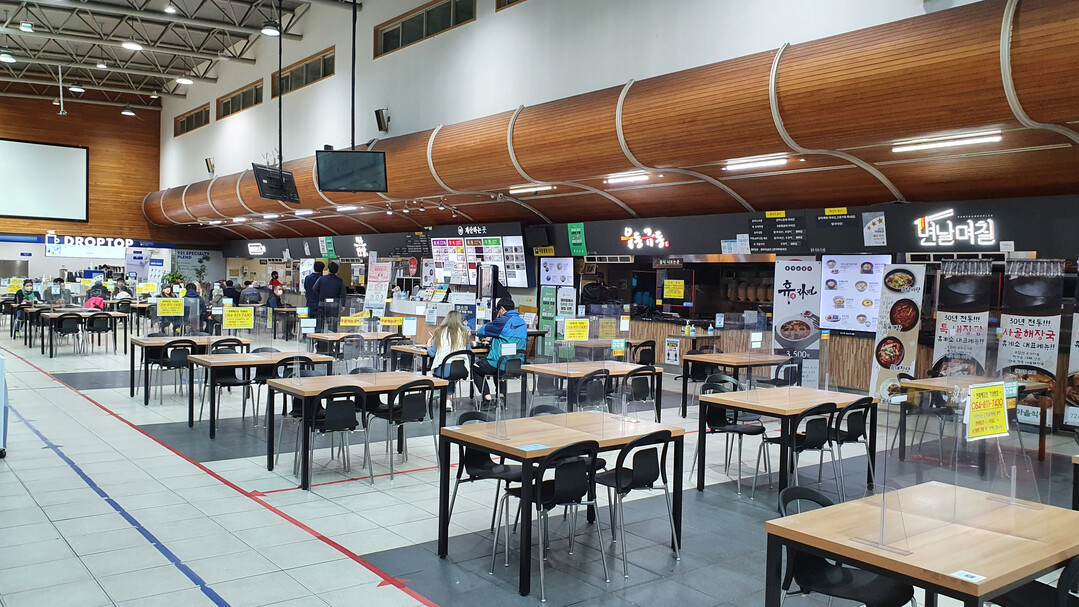
Government pushes to re-nationalize management to curb rising costs, but skepticism remains over structural rent issues.


(C) Fishing Camping Tour

SEOUL — As the South Korean government moves to regain control over highway rest area operations to address public grievances over high food prices, industry experts warn that without addressing the underlying rent structure, the initiative may result in more bureaucracy than actual savings for consumers.

A Return to the Past
The Presidential Office recently announced a plan to re-establish the "Korea Highway Management Corporation" under the Korea Expressway Corporation (KEC). This marks a significant shift back to a state-run system, nearly 28 years after the original entity was dissolved in 2002 during the post-IMF privatization wave.

The move follows direct orders from President Lee Jae-myung, who recently urged the Ministry of Land, Infrastructure, and Transport to accelerate reforms, citing that "rest area food is overpriced and lacks quality."

The Profitability Myth
Despite the high price tags on popular items like tonkatsu or gukbap, financial data suggests that private operators are not reaping excessive profits.

Analysis of major players in the sector shows surprisingly thin margins. Daebo Distribution, a long-standing veteran in the industry, maintains an operating profit margin of only 3–4%. Similarly, BGF HumanNet, which operates several rest areas including those in Seosan, reported an operating profit margin of just 3.4% as of the third quarter of 2025.

Industry insiders point to high overhead costs as the primary culprit. Rest areas must operate 24 hours a day, leading to substantial labor costs. Furthermore, the cost of ingredients (COGS) for a typical operator accounts for more than half of their total revenue.

The "Rent Trap" by Korea Expressway Corporation
The most significant factor driving up prices is the rental structure imposed by the KEC. Rent is typically calculated as a percentage of total sales. In some cases, an "excess profit-sharing system" is applied, where the commission rate increases once sales surpass a certain threshold (e.g., 10% up to 10 billion won, and 15% for any amount exceeding that).

Market analysts estimate that for every 10,000 won spent on a meal, approximately 1,400 to 1,600 won goes directly to the KEC as rent. While rest area operators are often criticized for charging sub-tenants (individual food stalls) commissions exceeding 40%, a large portion of that revenue is ultimately funneled back to the KEC. In a single year, the KEC collects an estimated 180 billion won in rental income from nearly 200 locations nationwide.

Efficiency Concerns
Critics of the re-nationalization plan point to the history of the former Highway Management Corporation, which was shuttered in 2002 after being labeled an inefficient "haven for retired KEC executives."

There are growing concerns that simply expanding the government’s organizational footprint without reforming the KEC’s rent-seeking behavior will fail to lower food prices. Instead, it may lead to an increase in public spending and a return to the operational inefficiencies of the past. As the new state-run system begins its rollout this year, the public remains watchful of whether the government can truly deliver a cheaper menu or if taxpayers will end up footing a more expensive bill.

[Copyright (c) Global Economic Times. All Rights Reserved.]

  • #Globaleconomictimes
  • #Korea
  • #Seoul
  • #Samsung
  • #LG
  • #Bitcoin
  • #Meta
  • #Business
  • #Economic
  • #The Woori Bank
  • #Elon Musk
Min Gyu Mi Reporter
Min Gyu Mi Reporter

Popular articles

  • ‘Culture Day’ Expanded to Every Wednesday; New Policy Set to Begin Next Month

  • Don't Toss Your Sweaty Gym Clothes Straight into the Washer: Here’s Why

  • S. Korea to Launch 'Disabled-Friendly Hospitals' Under First National Health Master Plan

I like it
Share
  • Facebook
  • X
  • Kakaotalk
  • LINE
  • BAND
  • NAVER
  • https://www.globaleconomictimes.kr/article/1065563650713938 Copy URL copied.
Comments >

Comments 0

Weekly Hot Issue

  • Appellate Court Begins Review of Kakao Founder’s Acquittal in SM Entertainment Stock Rigging Case
  • AI Supercycle Propels Global Semiconductor Market Toward $1 Trillion Milestone
  • Naver Suspends Election Comments to Combat Cyberbullying and Misinformation Ahead of June Polls
  • Lotte Town Myeongdong Lights Up with 'Welcome Light' to Greet Global K-Pop Fans
  • K-Beauty SMEs Join Forces with Distributors: A New Paradigm for Global Expansion through Strategic Consortiums
  • BMW ‘The New i3’ Next-Gen EV: 900km Range 

Most Viewed

1
An Open Letter to BTS On the Eve of a Historic Performance
2
From Industrial Capital to Tourism Mecca... Ulsan Makes a Bold Move with ‘Experiential Content’ in 2026
3
Ko Sang-goo, President of World Federation of Korean Associations, Elected as First Private Sector Chair of World Korean Community Leaders Convention
4
It is Time for BTS’s Fandom, ARMY, to Step Forward
5
Korean Stock Market Plunges: Circuit Breaker and Sidecar Triggered Amid Geopolitical Crisis
광고문의
임시1
임시3
임시2

Hot Issue

Netflix Declares BTS Comeback Live “ARIRANG” as the Year’s Biggest Global Event

AI Medical Ecosystem in Focus: KIMES 2026 Opens in Seoul as Global Healthcare Hub

Netanyahu Declares Decisive Blow to Iran’s Nuclear and Missile Programs, Signals Early End to War

Intel Announces 10% Price Hike on CPUs: PC Manufacturers Bracing for Massive Production Cost Spikes

Let’s recycle the old blankets in Jeju Island’s closet instead of incinerating them.

Global Economic Times
korocamia@naver.com
CEO : LEE YEON-SIL
Publisher : KO YONG-CHUL
Registration number : Seoul, A55681
Registration Date : 2024-10-24
Youth Protection Manager: KO YONG-CHUL
Singapore Headquarters
5A Woodlands Road #11-34 The Tennery. S'677728
Korean Branch
Phone : +82(0)10 4724 5264
#304, 6 Nonhyeon-ro 111-gil, Gangnam-gu, Seoul
Copyright © Global Economic Times All Rights Reserved
  • 에이펙2025
  • APEC2025가이드북TV
  • 독도는우리땅
Search
Category
  • All articles
  • Synthesis
  • World
  • Business
  • Industry
  • ICT
  • Distribution Economy
  • Well+Being
  • Travel
  • Eco-News
  • Education
  • Korean Wave News
  • Opinion
  • Arts&Culture
  • Sports
  • People & Life 
    • 전체
    • International Student Report
    • With Ambassador
  • Column 
    • 전체
    • Cho Kijo Column
    • Cherry Garden Story
    • Ko Yong-chul Column
    • Kim Seul-Ong Column
    • Lee Yeon-sil Column
  • Photo News
  • New Book Guide
  • Multicultural News
  • Jobs & Workers