• 2026.06.27 (Sat)
  • All articles
  • LOGIN
  • JOIN
Global Economic Times
fashionrunwayshow2026
  • Synthesis
  • World
  • Business
  • Industry
  • ICT
  • Distribution Economy
  • Well+Being
  • Travel
  • Eco-News
  • Education
  • Korean Wave News
  • Opinion
  • Arts&Culture
  • Sports
  • People & Life
    • International Student Report
    • With Ambassador
  • Column
    • Cho Kijo Column
    • Cherry Garden Story
    • Ko Yong-chul Column
    • Kim Seul-Ong Column
    • Lee Yeon-sil Column
  • Photo News
  • New Book Guide
MENU
 
Home > World

The U.S. Finalizes 15% Tariffs on European, Japanese Cars, Leaving South Korea at 25%

Hwang Sujin Reporter / Updated : 2025-09-25 07:09:52
  • -
  • +
  • Print


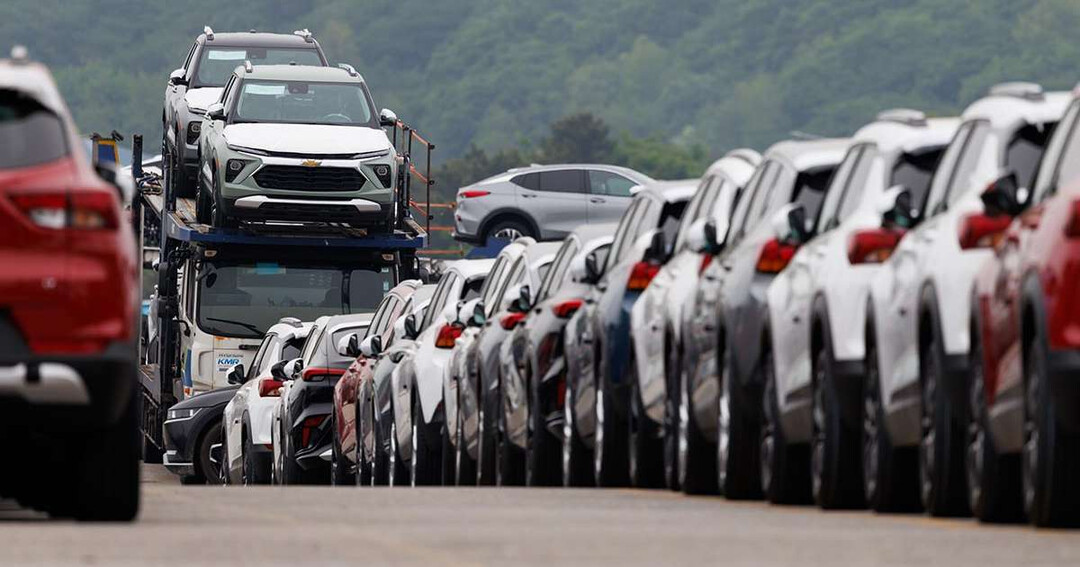
NEW YORK — The Trump administration has finalized a deal to lower tariffs on automobiles and auto parts from Europe to 15%, matching the rate previously set for Japan. This decision, which is retroactive to August 1, puts South Korean automakers like Hyundai at a significant disadvantage, as they remain subject to a 25% tariff on their exports to the U.S. market.

According to reports from Bloomberg and Reuters on September 24, the U.S. Commerce Department and the Office of the U.S. Trade Representative (USTR) announced the agreement with the European Union. The deal lowers the previous 27.5% tariff on European cars and parts to 15%. This comes after the EU committed to preparing legislation that would eliminate tariffs on some U.S. manufactured goods and provide preferential market access for certain American agricultural and seafood products.

The shift marks a dramatic change in the global automotive trade landscape. Just a few months ago, South Korean companies benefited from a favorable position under a free trade agreement (FTA), which granted them zero tariffs. However, since the Trump administration initiated a trade war and began applying tariffs in April, the terms of that FTA have been effectively nullified, leaving South Korean exports at a competitive disadvantage.

A Steep Price for Seoul 

The high 25% tariff on South Korean vehicles stems from a breakdown in negotiations between the U.S. and South Korea. While the two countries had tentatively agreed to a reciprocal tariff reduction, including a cut on auto tariffs from 25% to 15%, subsequent talks stalled. The Trump administration reportedly made several demanding conditions, including a massive cash investment from South Korea to the U.S., with 90% of the profits from the investment to be returned to the U.S.

In an interview with Reuters on September 22, South Korean President Lee Jae-myung expressed serious concerns about the U.S.'s demands. "If we were to invest $350 billion in cash as the U.S. is demanding, without a currency swap, South Korea would face a situation similar to the 1997 foreign exchange crisis," President Lee stated.

This situation highlights the immense pressure on the South Korean government and its automotive industry. While major global competitors like Japan and the EU have secured more favorable terms, South Korean companies are left to navigate the U.S. market with a much higher tariff burden. The ongoing stalemate threatens to undermine the competitiveness of South Korean brands and could have broader implications for the nation’s economy. The outcome of these negotiations will be closely watched, as it will determine the future of South Korea's relationship with a key trading partner and its position in the global market.

[Copyright (c) Global Economic Times. All Rights Reserved.]

  • #globaleconomictimes
  • #micorea
  • #mykorea
  • #Lifeplaza
  • #nammidonganews
  • #singaporenewsk
  • #Samsung
  • #Daewoo
  • #Hyosung
  • #A
Hwang Sujin Reporter

Popular articles

  • Samsung Electro-Mechanics Shifts Focus to AI Servers and Automotive Sectors, Boosting High-Value Components Business

  • South Korea’s Top Five Automakers Suffer Broad May Sales Decline Amid Weakening Domestic Demand and Global Headwinds

  • L&F Plus Secures KRW 220 Billion from National Growth Fund to Anchor South Korea’s First Mass LFP Cathode Production

I like it
Share
  • Facebook
  • X
  • Kakaotalk
  • LINE
  • BAND
  • NAVER
  • https://www.globaleconomictimes.kr/article/1065564479726261 Copy URL copied.
Comments >

Comments 0

Weekly Hot Issue

  • BYD Unveils First Plug-in Hybrid ‘Sealion 6’ in Korea, Targeting Eco-Friendly Market at 37.5 Million Won 
  • Kia’s Strategic Pivot: Accelerating Electrification Through SDV, PBV, and EREV Innovation
  • Devastating Twin Earthquakes Strike Venezuela: Death Toll Rises Amid Humanitarian Crisis
  • Hyundai Motor Prioritizes "Customer Experience" Over Pricing: Aiming for Lifelong Loyalty with the New Avante
  • South Korea's Path to Round of 32 Grows Perilous Following Australia-Paraguay Draw
  • The True Face of Our Politics After Stripping Away the Mask of Fairness

Most Viewed

1
[In-depth Report] The Islamic ‘Halal Barrier’ Just Around the Corner… The Silent Screams of K-Beauty SMEs
2
Asking about the Future of ‘Hangeul City Ulsan’… Special Lecture by Novelist Kim Jin-myung to be Held
3
Embassy of Pakistan in Seoul Hosts Commemorative Event for the 150th Birth Anniversary of Muhammad Ali Jinnah
4
KOSPI Hits Historic 9,300 Milestone as Market Cap Surpasses 8,000 Trillion Won
5
Kim Yoon-ji Appointed as New President of KOCCA: “Leading the Global Expansion of K-Culture”
광고문의
임시1
임시3
임시2

Hot Issue

Devastating Twin Earthquakes Strike Venezuela: Death Toll Rises Amid Humanitarian Crisis

Political Debates Spark Over Semiconductor "Windfall" Redistribution

Google Play Hosts 'ChangGoo Alumni Day' to Accelerate Global Expansion for 760 Korean Startups

Government Slashes Petroleum Price Caps by 150 Won per Liter amid Easing Middle East Tensions

Fashion Runway Show 2026

Global Economic Times
korocamia@naver.com
CEO : LEE YEON-SIL
Publisher : KO YONG-CHUL
Registration number : Seoul, A55681
Registration Date : 2024-10-24
Youth Protection Manager: KO YONG-CHUL
Singapore Headquarters
5A Woodlands Road #11-34 The Tennery. S'677728
Korean Branch
Phone : +82(0)10 4724 5264
#304, 6 Nonhyeon-ro 111-gil, Gangnam-gu, Seoul
Copyright © Global Economic Times All Rights Reserved
  • 향기네무료급식
  • BCB부천방송
  • 반달곰 프로젝트
Search
Category
  • All articles
  • Synthesis
  • World
  • Business
  • Industry
  • ICT
  • Distribution Economy
  • Well+Being
  • Travel
  • Eco-News
  • Education
  • Korean Wave News
  • Opinion
  • Arts&Culture
  • Sports
  • People & Life 
    • 전체
    • International Student Report
    • With Ambassador
  • Column 
    • 전체
    • Cho Kijo Column
    • Cherry Garden Story
    • Ko Yong-chul Column
    • Kim Seul-Ong Column
    • Lee Yeon-sil Column
  • Photo News
  • New Book Guide
  • Multicultural News
  • Jobs & Workers