![[등록] 2026-09-01 15:48:31](/support/_updata/banner2/tl181982910_6749.png)


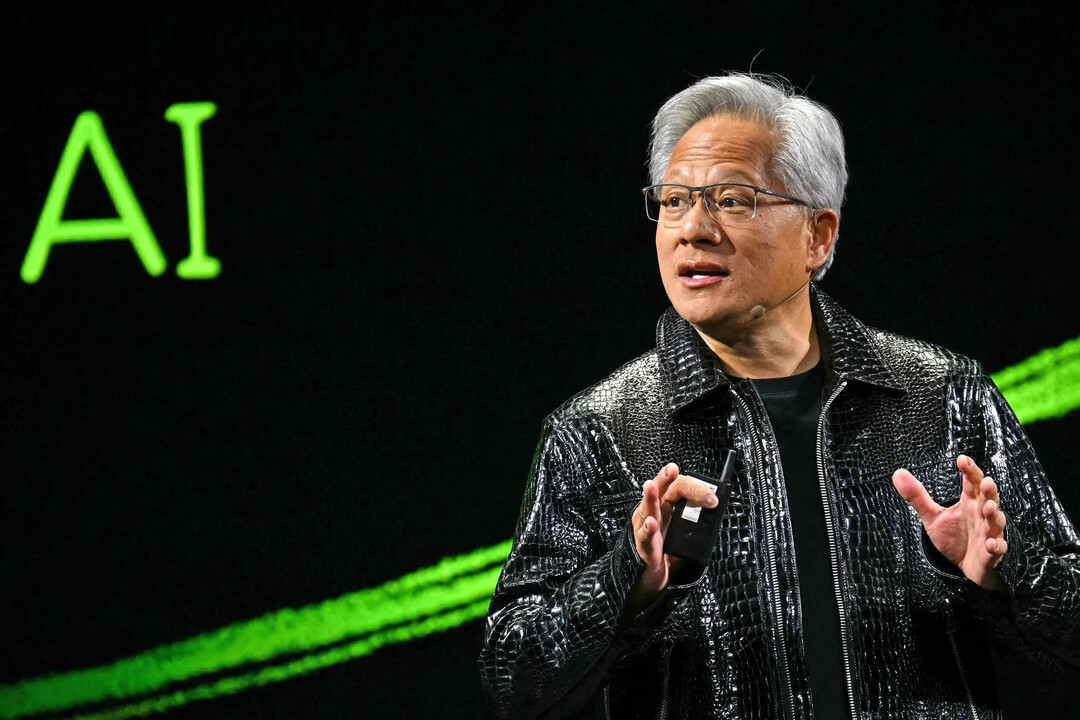
(C) Quartz
London, UK — Jensen Huang, the outspoken CEO of NVIDIA, issued a stark warning to the West, asserting that China is on track to eclipse the United States in the escalating global artificial intelligence competition. Speaking at the 'AI Future Summit' hosted by the Financial Times in London on November 5th (local time), Huang painted a picture of a U.S. AI industry "crippled by cynicism" and over-regulation, contrasting it with a rapidly growing Chinese sector buoyed by massive government support and a lenient regulatory environment.
Huang directly attributed China's projected advantage to its state-backed energy subsidies for AI development. "For Chinese AI companies, power is free," Huang claimed, pointing out a critical weakness the Chinese government effectively neutralizes with financial aid. While domestic Chinese AI chips from manufacturers like Huawei and Cambricon currently lag significantly behind NVIDIA’s products in both performance and power efficiency—requiring exponentially more chips and therefore more energy to achieve similar results—Chinese firms mitigate this overwhelming energy cost with government handouts. The Financial Times corroborated this, reporting that the Chinese government has been increasing energy subsidies for data centers operated by major domestic tech giants, including ByteDance, Alibaba, and Tencent.
The West's Regulatory Snare
In stark contrast, Huang lambasted the regulatory climate in the United States and the United Kingdom, characterizing it as a form of "AI cynicism." He argued that optimism should prevail over this skepticism, which manifests as numerous regulations hindering AI's advancement. "If a U.S. state government introduces a new AI regulation, you get 50 new regulations," Huang noted, describing a fragmented and obstructive regulatory landscape that is tying the hands of American innovators.
Huang's comments are part of a broader push to recalibrate U.S. policy regarding high-end chip exports. He has previously urged for a more open approach to supplying U.S. chips to other nations, arguing that this would foster greater reliance on American technology, even as Chinese competitors close the gap. A report published by Microsoft earlier this month indicated that the technology gap between China's leading AI models, such as DeepSeek, and those from the U.S. equivalent, OpenAI, has narrowed to just 5.3 months. This means DeepSeek’s latest model performs similarly to an OpenAI GPT model released only 5.3 months prior.
Caught in the Geopolitical Crossfire
NVIDIA finds itself precariously positioned between the geopolitical ambitions of both Washington and Beijing. The U.S. government, particularly under the Donald Trump administration, has imposed stringent controls to prevent the flow of its advanced chips to China. Simultaneously, the Chinese government is actively promoting the use of domestic chips, effectively restricting the market for NVIDIA’s flagship products.
Despite industry hopes that high-level talks between U.S. and Chinese leaders—such as those anticipated during the recent APEC summit in Korea—would ease restrictions on the supply of advanced NVIDIA chips, no significant breakthrough was achieved. In a subsequent interview with CBS on November 2nd, President Trump reaffirmed the hardline stance: "We will not allow China to use NVIDIA's most advanced chips."
Huang's warning underscores a growing concern that the U.S.'s regulatory caution and export controls are inadvertently creating a protected, state-supported environment for China's AI industry to rapidly mature and potentially overtake its American rival. The outcome, the CEO suggests, will hinge on whether the West can shed its "cynicism" and unleash the full potential of its AI innovators before China’s subsidized advantage becomes insurmountable.
[Copyright (c) Global Economic Times. All Rights Reserved.]