• 2026.05.08 (Fri)
  • All articles
  • LOGIN
  • JOIN
Global Economic Times
fashionrunwayshow2026
  • Synthesis
  • World
  • Business
  • Industry
  • ICT
  • Distribution Economy
  • Well+Being
  • Travel
  • Eco-News
  • Education
  • Korean Wave News
  • Opinion
  • Arts&Culture
  • Sports
  • People & Life
    • International Student Report
    • With Ambassador
  • Column
    • Cho Kijo Column
    • Cherry Garden Story
    • Ko Yong-chul Column
    • Kim Seul-Ong Column
    • Lee Yeon-sil Column
  • Photo News
  • New Book Guide
MENU
 
Home > Industry

Singapore and India Join Forces to Establish Green and Digital Shipping Corridor

Yim Kwangsoo Correspondent / Updated : 2025-04-01 07:12:22
  • -
  • +
  • Print

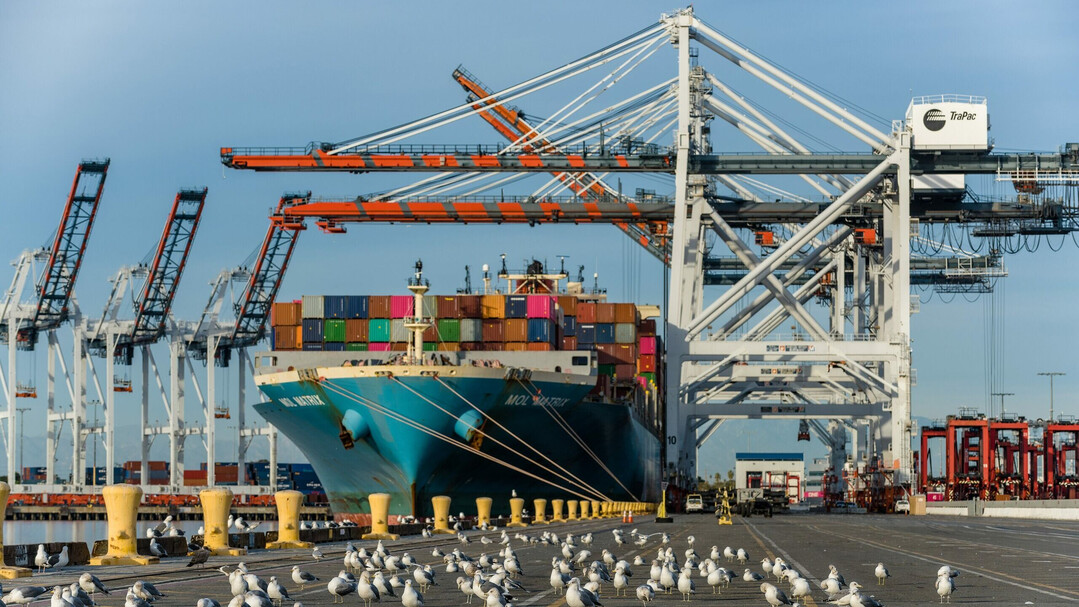
Singapore/India - Singapore and India have taken a significant step towards a more sustainable and efficient maritime future by signing a Letter of Intent (LoI) to collaborate on the development of a Green and Digital Shipping Corridor (GDSC). The agreement, announced on March 31, 2025, signals a commitment from both nations to accelerate the adoption of zero or near-zero greenhouse gas (GHG) emission technologies and digital solutions within the shipping sector.

The LoI outlines plans for identifying key stakeholders and working towards a formal Memorandum of Understanding (MoU) to establish the GDSC. This collaborative effort leverages Singapore's position as a major transshipment and bunkering hub with a thriving research and innovation ecosystem, alongside India's potential to become a significant producer and exporter of green marine fuels.

Several industry players are already making strides in India's green fuel sector. Notably, a consortium of six Japanese companies, including IHI Corporation, Hokkaido Electric Power, Mitsubishi Gas Chemical Company, Mitsui O.S.K. Lines (MOL), Mizuho Bank, and Tokyo Century Corporation, recently signed an MoU to explore investment in a green ammonia production facility in Odisha, eastern India. This facility, in collaboration with Indian renewable energy company ACME, aims for an annual production capacity of approximately 400,000 tons of green ammonia by 2030, destined for use in Japan.

The Indian government is also heavily investing in its maritime infrastructure, allocating ₹2 trillion (around $23.8 billion) to expand domestic shipbuilding capabilities with the ambition of becoming a top five shipbuilding nation by 2047. Furthermore, the Ministry of Ports, Shipping and Waterways (MoPSW) has highlighted the creation of a coastal green shipping corridor, starting with the Kandla-Tuticorin route, to promote low-emission transportation along domestic trade lanes. MoPSW also has ambitious plans for digitalization and technology-driven efficiency across major ports, targeting the completion of 150 projects by September 2025.

Singapore has also been actively pursuing maritime decarbonization. In March, Singapore and Australia jointly selected eight projects for funding under a $20 million initiative focused on reducing maritime emissions. These projects encompass innovations in the supply chain and utilization of alternative fuels like hydrogen, ammonia, and methanol, as well as safety, environmental monitoring, and electrification.

This collaboration with India follows Singapore's existing partnership with the Port of Rotterdam on a green and digital shipping corridor established in 2022. This earlier initiative has successfully brought together 28 partners across the container shipping value chain, aiming for a 20-30% reduction in GHG emissions from large container vessels on the 15,000-kilometer route by 2030, alongside the implementation of digital solutions for enhanced efficiency.

The establishment of the Singapore-India Green and Digital Shipping Corridor promises to foster greater cooperation between the two nations, accelerate the transition to sustainable shipping practices, and contribute significantly to the global effort in reducing greenhouse gas emissions from the maritime industry.

[Copyright (c) Global Economic Times. All Rights Reserved.]

  • #globaleconomictimes
  • #한국
  • #중기청
  • #재외동포청
  • #외교부
  • #micorea
  • #mykorea
  • #newsk
  • #nammidonganews
  • #singaporenewsk
  • #타이완포스트
  • #김포공항
Yim Kwangsoo Correspondent

Popular articles

  • LG AI Research Unveils ‘EXAONE 4.5’: A New Multimodal Powerhouse Outperforming Global Tech Giants

  • Ghana Appoints Carlos Queiroz as New Head Coach for 2026 World Cup, Passing Over Paulo Bento

  • Pentagon’s Arsenal Drained by Iran Conflict: Mounting Fears Over Deterrence Gaps in Korea and Taiwan

I like it
Share
  • Facebook
  • X
  • Kakaotalk
  • LINE
  • BAND
  • NAVER
  • https://www.globaleconomictimes.kr/article/1065564670003372 Copy URL copied.
Comments >

Comments 0

Weekly Hot Issue

  • Hyundai Mobis Completes Independent EV 'Heart' Lineup: A Major Leap Toward Global Leadership in Power Electric Systems
  • OpenAI Redefines Human-AI Interaction with ‘GPT-Realtime-2’ and New Suite of Live Voice Models
  • Tensions Flare in Strait of Hormuz: U.S.-Iran Clashes Threaten Fragile Truce
  • UAE Sovereign Wealth Giants Descend on Seoul to Forge Strategic AI Alliance
  • U.S. Trade Court Strikes Down Trump’s ‘Global 10% Tariff,’ Citing Executive Overreach
  • POSTECH Researchers Double Metal-Polymer Adhesion via 3D Printing Surface Control

Most Viewed

1
Iran Imposes Transit Fees on Strait of Hormuz Amid Escalating Maritime Tensions
2
Korea and Vietnam Forge Strategic Partnership in Science, Technology, and Innovation
3
80% of Enterprises Hit by 'AI Agent Anomalies': SailPoint Calls for Integrated Identity Governance
4
Kurly Abandons 'All-Paper' Packaging Strategy Amid Rising Cost Pressures
5
Tradition Meets the Public: Chungju’s Gugak Busking
광고문의
임시1
임시3
임시2

Hot Issue

Tensions Flare in Strait of Hormuz: U.S.-Iran Clashes Threaten Fragile Truce

Tesla Model Y Becomes First to Pass Grueling New U.S. Autonomous Safety Tests

U.S. Trade Court Strikes Down Trump’s ‘Global 10% Tariff,’ Citing Executive Overreach

Hyundai Motor Group Bets $700 Million on Mexico Amid Trade Policy Volatility

Fashion Runway Show 2026

Global Economic Times
korocamia@naver.com
CEO : LEE YEON-SIL
Publisher : KO YONG-CHUL
Registration number : Seoul, A55681
Registration Date : 2024-10-24
Youth Protection Manager: KO YONG-CHUL
Singapore Headquarters
5A Woodlands Road #11-34 The Tennery. S'677728
Korean Branch
Phone : +82(0)10 4724 5264
#304, 6 Nonhyeon-ro 111-gil, Gangnam-gu, Seoul
Copyright © Global Economic Times All Rights Reserved
  • 에이펙2025
  • APEC2025가이드북TV
  • 반달곰 프로젝트
Search
Category
  • All articles
  • Synthesis
  • World
  • Business
  • Industry
  • ICT
  • Distribution Economy
  • Well+Being
  • Travel
  • Eco-News
  • Education
  • Korean Wave News
  • Opinion
  • Arts&Culture
  • Sports
  • People & Life 
    • 전체
    • International Student Report
    • With Ambassador
  • Column 
    • 전체
    • Cho Kijo Column
    • Cherry Garden Story
    • Ko Yong-chul Column
    • Kim Seul-Ong Column
    • Lee Yeon-sil Column
  • Photo News
  • New Book Guide
  • Multicultural News
  • Jobs & Workers