![[등록] 2026-09-01 15:48:31](/support/_updata/banner2/tl181982910_6749.png)


Advanced Compression Casts Shadow on HBM Demand; Experts Warn of Limited Immediate Impact
Around 2024, when Samsung Electronics first introduced the Galaxy S24 as the pioneer of the "AI Phone," on-device artificial intelligence (AI) was hailed as the next foundational technology destined to reshape the mobile landscape. Proponents envisioned a future where smartphones would serve as personal AI platforms and decentralized, pocket-sized data centers (DCs), driving the next massive wave of AI democratization.
Since then, AI model developers have raced to build lightweight versions of their software, while smartphone manufacturers have upgraded their hardware to handle these workloads locally. Today, the era of the mobile AI agent is officially underway.
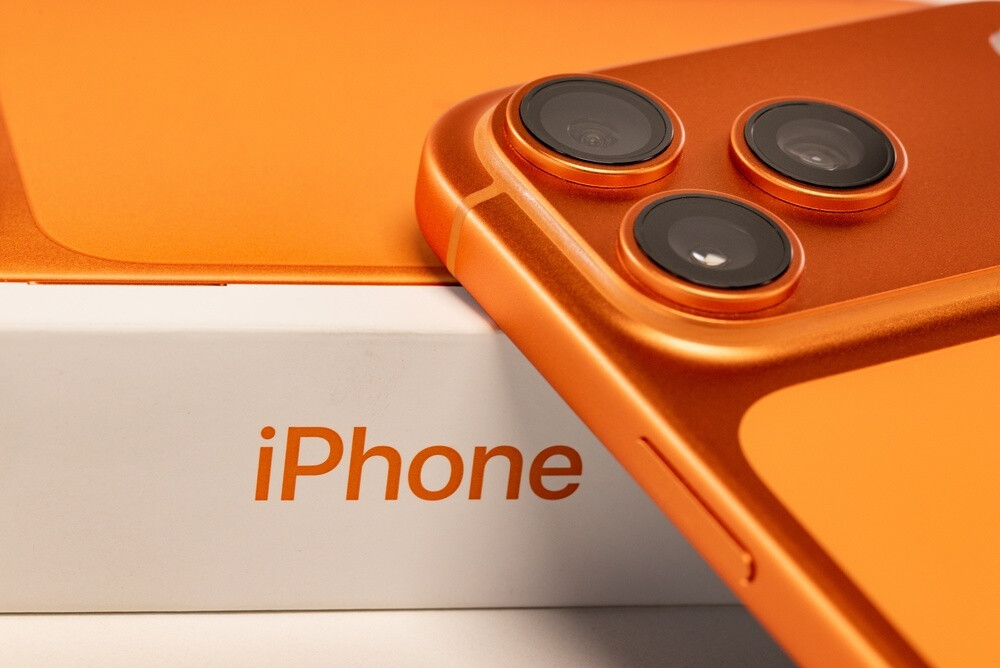
Now, Apple—frequently labeled an "AI laggard" compared to its Big Tech rivals—is moving aggressively to internalize advanced on-device AI capabilities. This shift aims to power its next-generation Siri and broader AI ecosystem directly on consumer hardware without heavy reliance on the cloud.
The Breakthrough: 27-Billion Parameter Models on an iPhone
According to a recent report by CNBC, Apple is in early-stage talks with PrismML, a spin-off from the California Institute of Technology (Caltech). PrismML specializes in advanced model compression technology that drastically reduces memory footprints while maintaining core performance. Just recently, the startup unveiled two highly compressed versions of Alibaba's open-source model, "Qwen."
"Many companies, including Apple, are currently evaluating our technology," said Babak Hassibi, CEO of PrismML and Mose and Lillian S. Bohn Professor of Electrical Engineering at Caltech. "While discussions are in the early stages, they are progressing smoothly."
PrismML claims its technology can shrink a massive 54GB model down to under 4GB, enabling a whopping 27-billion parameter model to run locally on an iPhone 15 or newer. In a mobile environment where CPUs, GPUs, and DRAM face strict physical and thermal constraints, this compression could dramatically elevate the user experience.
The startup achieved this by simplifying the internal weights of AI models—converting traditional 16-bit floating-point values into highly discretized 1-to-3-bit values (extreme quantization). PrismML asserts that this method allows a model that typically requires eight high-end cloud GPUs to run on a single GPU, effectively migrating server-class AI directly to smartphones and laptops. The trade-off, however, is a slight decline in reasoning accuracy.
A Paradigm Shift: Shaking Up the HBM and Data Center Boom
The implications of this partnership extend far beyond Apple's bid to catch up in the AI race. If Apple successfully deploys this technology at scale, it could force global tech giants to rewrite their AI investment playbooks.
If the industry paradigm shifts from building "gargantuan models" to mastering "ultra-high compression," the current gold rush in data center infrastructure construction might cool down. In the semiconductor sector, this could destabilize the soaring demand forecasts for High Bandwidth Memory (HBM)—the expensive, high-performance chips currently fueling AI data centers.
Skeptics Point to Limits: Infrastructure Demands Will Persist
However, many industry analysts remain skeptical that on-device compression will halt the data center boom, arguing that the impact will be limited during this "agentic transition period."
While local compression allows users to perform basic tasks efficiently, complex reasoning, long-context processing, and advanced multimodal operations will still require heavy-duty cloud servers. Furthermore, even though AI developers are already deploying "harness engineering" (modularizing and dividing tasks among multiple smaller specialized models), massive capital expenditure (CapEx) in infrastructure continues unabated to train next-generation models.
The Shift, Not the End, of Hardware Demand:
"Just because models are getting smaller doesn't mean we don't need chips anymore," noted Gil Luria, an analyst at D.A. Davidson. He emphasized that demand might simply shift from centralized data centers to edge devices, adding that on-device AI could actually prove less cost-effective than shared, hyperscale data centers.
The Challenges of Real-World Deployment:
Tarun Pathak, Research Director at Counterpoint Research, pointed out that the ultimate hurdle is validation. "The real test is verifying how this technology performs across millions of concurrent queries and diverse device configurations," he said.
The Battery Constraint:
Phil Solis, Research Director at IDC, raised another critical bottleneck: power. "Even if you drastically reduce the memory footprint, keeping these AI models running continuously in the background on a smartphone will introduce a new, tricky variable—battery consumption."
As Apple tests the limits of what a pocket-sized device can do, the tech world is watching closely. Whether PrismML's compression technology will truly democratize AI on the edge or remain a niche helper for basic tasks remains the multi-billion-dollar question of the on-device AI era.
[Copyright (c) Global Economic Times. All Rights Reserved.]