![[등록] 2026-09-01 15:48:31](/support/_updata/banner2/tl181982910_6749.png)


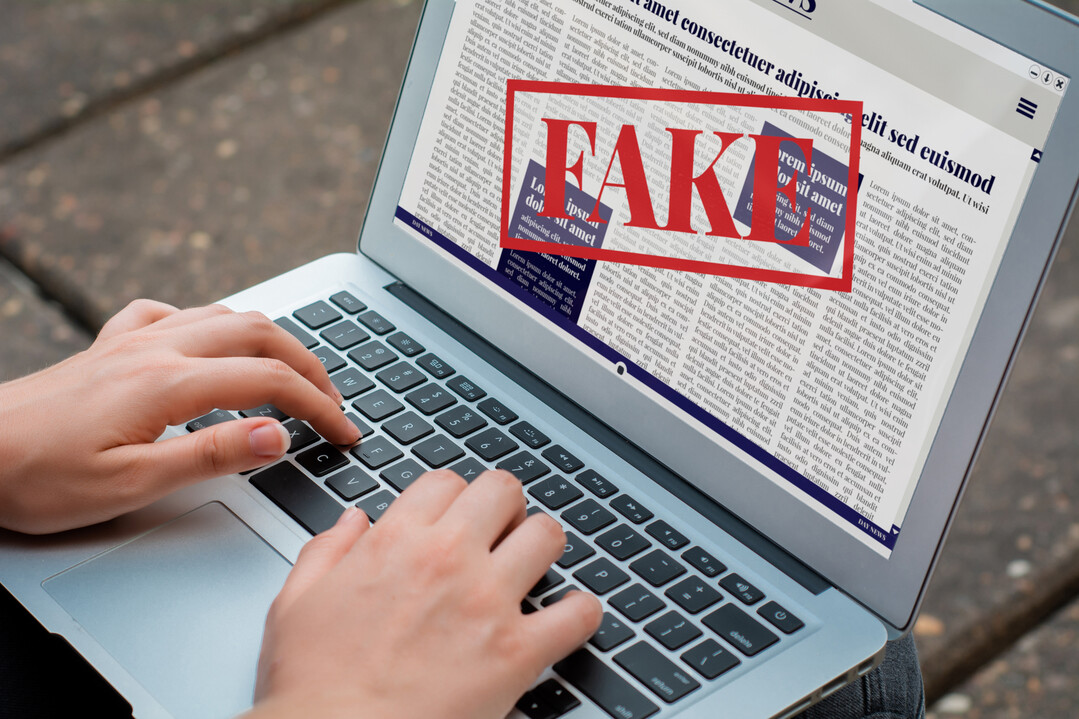
"Politicians use 'fake news' as rhetoric—a carefully calculated strategy to shift stances and rally their base. The more fiercely the press reacts, the more it may be playing into the opponent's political agenda."
Yang Jae-gyu, Head of the Research and Education Headquarters at the Press Arbitration Commission, expressed his regret, saying, "We must seize the current situation where we are insulted as 'fake news' as an opportunity to reflect on the political bias of the press. It is natural for politicians to act politically, but it cannot and must not be natural for the press to do so. Nevertheless, the political bias of South Korea's press is taken as a given and feels deeply entrenched."
As both a media studies PhD and a lawyer, Director Yang pointed out, "The pervasive 'fake news' might be an inevitable situation brought about by the political polarization of our society, but it is also a reality that must be overcome. As a result of the press taking its own political bias for granted and failing to make efforts to overcome it, politicians have been able to easily define and disparage media outlets belonging to the opposing camp as 'fake news.' Rather than fighting with politicians who provoke by labeling things as 'fake news,' it is much more beneficial for the press to fiercely combat its own political bias."
He added, "The 'fake news' used by politicians is a form of rhetoric. The press does not need to overreact to this term, which is close to political speech. The more the press reacts furiously and gets worked up over the term 'fake news,' the more it falls into the political trap."
Director Yang stated, "As for errors in the media, reporting within limited time and conditions inevitably leads to mistakes. Errors are a structural and intrinsic limitation of the press." He emphasized, "However, because errors themselves are already a problem subject to criticism, protesting that an error is being denigrated as 'fake news' is not only unpersuasive, but it also fails to garner sympathy or support from readers or viewers. We must not produce fake news, nor should we make errors."
He continued, "However, leniency toward errors is also necessary. Although it sounds like a paradox, leniency or clemency for errors is essential. Legally, errors are granted immunity under certain conditions because we know that if reporters and the press are intimidated, reporting becomes difficult. However, fake news is completely different from errors. It is intentionally fabricated false reporting by a reporter or media outlet with malicious intent or purpose. It cannot be explained by a reporter's imperfection or realistic limitations. Unlike errors, legal and institutional leniency cannot be applied to fake news."
Referring to the 2019 "Survey on Media Consumers' Perception of Fake News," Director Yang explained, "The scope of fake news is extremely comprehensive. The public considers not only fabricated false information, but also errors, biased reporting, and inaccurate reporting all to be fake news."
He went on to say, "No matter how much scholars try to teach that only fabricated false information should be called fake news, it is meaningless if the public refuses to accept it. Therefore, regarding the public's use of 'fake news'—just like politicians' use of it—there is no need to fight the term itself or dismiss it as conceptual confusion. We must deal directly with the essence of the issue."
The "essence of the issue" he explained is having a reliable information source. This means that media reports should act precisely as such a reliable information source.
This implies that it is possible only through the press's own efforts to minimize not only fake news, but errors as well.
Director Yang advised, "In a world overflowing with information, truly reliable and trustworthy information sources are scarce. If the press properly fulfills that role, and media consumers recognize and trust that role, conceptual confusion between errors and fake news will no longer be an issue."
While expressing anticipation for the amendment to the "Information and Communications Network Act" taking effect on July 7, Director Yang also expressed concern that it might cause the press to shrink back.
Director Yang welcomed the change, stating, "Under the amended Information and Communications Network Act, individuals harmed by fabricated false information can demand up to five times the damages from the perpetrator. This introduces so-called 'punitive damages.' The greatest advantage of punitive damages is their strong deterrent effect against illegal acts. If causing harm through fabricated false information results in only a small monetary penalty, an effective deterrent cannot be expected. Punitive damages represent a clear step forward."
At the same time, he noted, "The problem is the side effects inherently implied by this system: 'self-censorship' and a 'chilling effect.' No matter how problem-free you think your content is, once it is singled out as fabricated false information and you get hit with a lawsuit, you cannot help but feel anxious. Even if you think there is no way you will lose in court, a lingering doubt is only human nature. Moreover, considering the psychological distress and the time and financial burden experienced during the process even if you ultimately win, you will want to avoid facing the same situation again. Naturally, this leads to a higher level of self-censorship."
This was the core reason cited by those who opposed the introduction of punitive damages.
To address this, he proposed two alternatives.
The first is introducing a measure known as a "Strategic Lawsuit Against Public Participation (SLAPP) prevention measure." If it becomes clear that information is definitively not fabricated false information, yet someone stubbornly insists it is and files a lawsuit, the proceeding should be halted and the lawsuit terminated early.
He judged, "Since similar systems are already operating in the U.S., it is worth considering introducing them into our legal system."
The other alternative is to exclude "press reports" from the scope of the Information and Communications Network Act. Currently, press reports are also treated as a type of "information," making them subject to the Information and Communications Network Act. Consequently, punitive damage liabilities can be imposed on press reports as well, and lawsuits seeking punitive damages can be filed against critical articles.
Director Yang expressed concern, saying, "Through this process, forced claims could subject reports to punitive damages, and media outlets could suffer through litigation. If such instances repeat, the press's monitoring and critical functions regarding public spheres will atrophy. To prevent this situation, press reports must be excluded from the scope of the Information and Communications Network Act."
He emphasized, "What matters is not the quantity of information, but its quality. As perceptions grew that the press fails to properly fulfill its role of providing quality information, its credibility declined. The path for the press to recover its trust is also clear." His advice was to provide accurate, reliable, true, and good information—in other words, to remain faithful to the inherent roles and functions of the press.
[Copyright (c) Global Economic Times. All Rights Reserved.]