
![[등록] 2026-09-01 15:48:31](/support/_updata/banner2/tl181982910_6749.png)


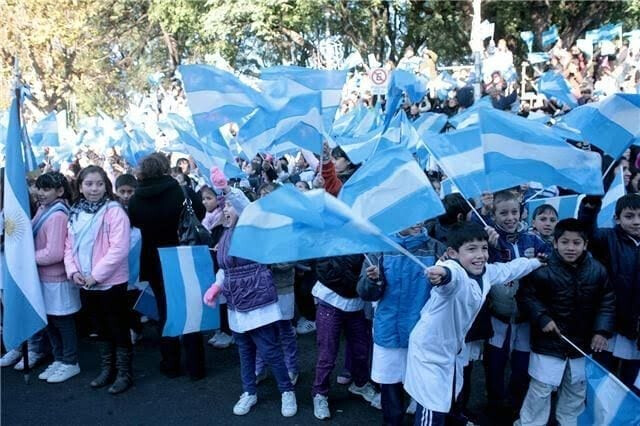
Buenos Aires, Argentina – Each year on May 25th, Argentina grandly commemorates its National Day and Revolution Day (Día de la Revolución de Mayo). This significant public holiday marks the beginning of the nation's journey towards independence from Spanish colonial rule through the May Revolution of 1810. Although Argentina officially declared its independence on July 9, 1816, the events of May 1810 are widely recognized as the crucial first step in building a sovereign nation.
Historical Context: Spanish Imperial Turmoil and the Opportunity for Independence
In the early 19th century, the Spanish Empire was in profound disarray. Napoleon's invasion of Spain in 1808 weakened the monarchy and created a power vacuum in its colonies. In Buenos Aires, then the capital of the Viceroyalty of the Río de la Plata, local residents seized upon Europe's political turmoil as an opportunity.
Thus, on May 25, 1810, a group of revolutionaries ousted Viceroy Baltasar Hidalgo de Cisneros and formed the Primera Junta (First Council), the first independent government in the region. This momentous occasion did not bring immediate independence but triggered a series of revolutionary movements across South America. For the Argentine people, this day is remembered as a powerful symbol of national pride and political awakening, heralding the dawn of self-determination. The May Revolution occurred at a time of escalating discontent with Spanish colonialism, as colonial residents were weary of the Viceroyalty's rule, which primarily served the interests of the Spanish mainland. Furthermore, the local population's self-reliance was significantly boosted after they successfully repelled two British invasions (1806, 1807) on their own, exposing the incompetence of the colonial military.
National Celebration and Cultural Significance
Argentina's National Day is filled with vibrant celebrations across the country. In Buenos Aires, festivities center around Plaza de Mayo, the historical site of the revolution. Parades, concerts, and civic ceremonies are held, often attended by national leaders and broadcast on television.
The day also holds deep cultural significance. Argentinians proudly showcase their heritage through traditional folk music, dance, and regional cuisine. A popular dish enjoyed on this day is locro, a hearty stew made with corn, beans, meat, and squash, symbolizing the unity among diverse communities. Notably, locro holds deeper meaning as it was a staple food for the impoverished soldiers during the revolution.
In schools and public institutions, educational events and patriotic activities are frequently organized in the week leading up to May 25th. Children perform plays reenacting historical scenes, and national flags proudly wave from homes and buildings. These activities play a crucial role in instilling the spirit of the May Revolution and national values in future generations.
Deeper Meaning: The Values of Liberty, Equality, and Popular Sovereignty
Beyond the festivities, Argentina's National Day offers a time for reflection. The day reminds citizens of the values of liberty, equality, and popular sovereignty that ignited the nation's birth. The May Revolution was driven by civilian action, not military conquest, serving as a reminder that change can begin with the will of the people.
The legacy of the revolution continues to shape Argentina's national identity. Even today, debates about democracy, federalism, and social justice often trace back to the ideals of 1810. In a world where political uncertainty still casts a shadow in many regions, Argentina's commemoration of its revolutionary past is a testament to the enduring power of collective action.
Argentina's National Day stands as a powerful symbol of the nation's journey towards independence and its ongoing efforts to realize the dreams of its founding revolutionaries. Through parades, food, music, and remembrance, the Argentine people honor their past and continue to build their future with pride, passion, and an unwavering commitment to freedom.
[Copyright (c) Global Economic Times. All Rights Reserved.]














