![[등록] 2026-09-01 15:48:31](/support/_updata/banner2/tl181982910_6749.png)


SEOUL – A volatile trade policy emanating from the United States under the Trump administration is leaving South Korean technology powerhouses in a state of precarious uncertainty. Initial relief felt by exporters of smartphones and personal computers, following the exclusion of these key electronic goods from a proposed regime of reciprocal tariffs, has been swiftly replaced by renewed apprehension. This reversal stems from recent pronouncements by Commerce Secretary Howard Lutnick, who has now indicated that item-specific tariffs on electronics, including smartphones and computers, are indeed on the horizon.
The fluctuating signals from Washington are exacerbating anxieties within South Korea's corporate sector, which heavily relies on exports to the U.S. market. Industry sources revealed on Monday that Samsung Electronics, a global leader in smartphone manufacturing, ships approximately half of its total smartphone output from its production facilities in Vietnam to the United States. The specter of a 46% reciprocal tariff on goods originating from Vietnam had raised serious concerns about a potential contraction of Samsung's lucrative U.S. operations.
The brief respite offered by the initial exclusion of smartphones and PCs from tariff measures was welcomed, particularly by the nation's semiconductor industry. South Korea's memory chip manufacturers, Samsung Electronics and SK Hynix, stood to be significantly impacted by any downturn in the U.S. smartphone and PC markets, given their substantial supply of components to these sectors. In the preceding year, the United States imported a staggering $141.4 billion worth of "computers and similar devices," a figure roughly three times the import value of smartphones. Imposing hefty tariffs on these finished goods could have triggered a ripple effect, negatively affecting the demand for Korean-made memory chips.
However, the fleeting nature of this tariff reprieve has placed South Korean firms back on high alert. The possibility of imminent item-specific tariffs on smartphones and PCs, the exact rates of which remain undisclosed, looms large. Should these tariffs be implemented, the price competitiveness of Korean manufacturers, including Samsung, is widely expected to suffer.
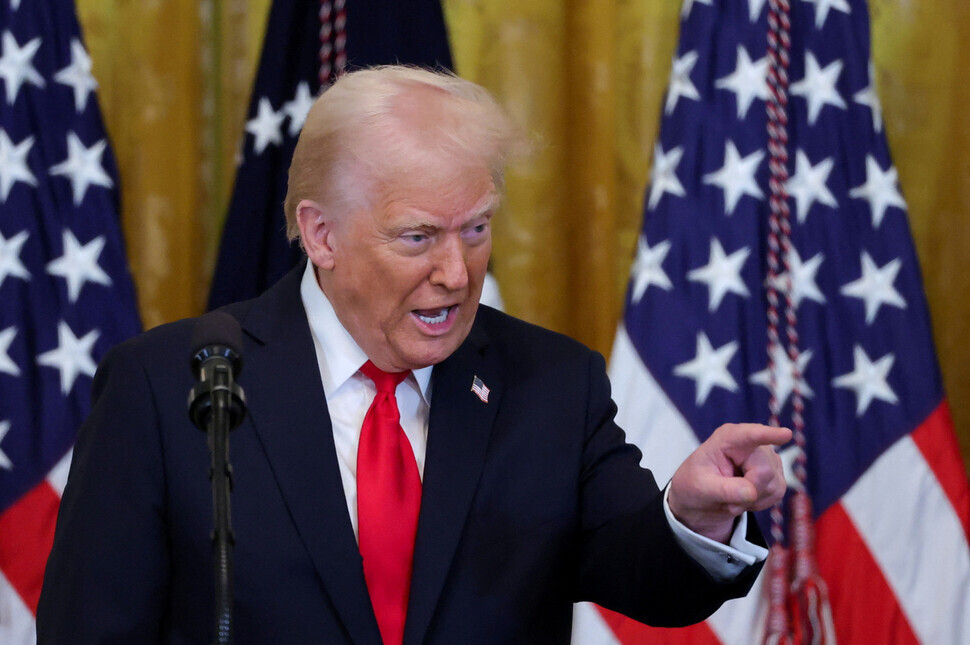
Adding to the climate of uncertainty is the impending announcement regarding U.S. tariffs on semiconductors themselves. President Trump addressed reporters on this critical issue, stating, "I will give you an answer on Monday. We will be very specific." This declaration has heightened tensions within the semiconductor industry, which is bracing for potential new levies on its core products.
The imposition of substantial semiconductor tariffs is anticipated to intensify the pressure on South Korean chipmakers with significant production footprints in South Korea and China to diversify their supply chains. The recent announcement by Taiwan Semiconductor Manufacturing Company (TSMC) of an additional $100 billion investment in the United States has further amplified the pressure on Samsung and SK Hynix to bolster their U.S.-based manufacturing capabilities. It is worth noting that both companies had already pledged significant investments in the U.S. during the Biden administration, with Samsung committing $37 billion and SK Hynix $3.87 billion.
While direct semiconductor exports from South Korea to the U.S. accounted for 7.2% of the total last year, the actual exposure to U.S. tariffs is considerably higher. A substantial volume of Korean-made semiconductors undergoes final processing in countries like Taiwan and Malaysia before being shipped to the United States. A prominent example is TSMC's practice of importing SK Hynix's high-bandwidth memory (HBM) to Taiwan for integration into artificial intelligence (AI) accelerators destined for the U.S. market.
The constant shifts in the Trump administration's trade policies are creating a challenging environment for South Korean companies, hindering their ability to formulate definitive long-term business strategies.
A representative from the business community commented, "The Trump administration's policies are in constant flux, and relocating production bases is not a feasible short-term solution. We are left with no option but to closely monitor the situation. Concrete responses can only be formulated once the specific policy direction becomes clearer and some of the prevailing uncertainty dissipates."
Echoing this sentiment, a source within the semiconductor industry emphasized, "It is premature to feel any sense of security until the final tariff rates for each product category are officially confirmed." The coming days are expected to be crucial as the Trump administration unveils its next moves in its evolving trade agenda, with significant implications for South Korean technology and semiconductor industries.
[Copyright (c) Global Economic Times. All Rights Reserved.]