
• 2026.11.27 (Fri)
  • All articles
  • LOGIN
  • JOIN
Global Economic Times
한인동포뉴스(상단)
  • Synthesis
  • World
  • Business
  • Industry
  • ICT
  • Distribution Economy
  • Well+Being
    • Pet Life
    • Halal Horizon
  • Travel
  • Eco-News
  • Education
  • Korean Wave News
  • Opinion
  • Arts&Culture
  • Sports
  • People & Life
    • International Student Report
    • With Ambassador
  • Column
    • Cho Kijo Column
    • Cherry Garden Story
    • Ko Yong-chul Column
    • Kim Bong-seon's Photo Column
    • Kim Seul-Ong Column
    • Lee Yeon-sil Column
    • Professor Lee Soo-young’s Life Essays
  • Photo News
  • New Book Guide
MENU
 
Home > Industry

Sourcing Bottlenecks Threaten South Korea’s Craft Traditional Liquor Industry

KO YONG-CHUL Reporter / Updated : 2026-11-26 07:58:16
  • -
  • +
  • Print
Strict geographic rules limit breweries to adjacent municipalities, driving up costs amid climate-induced rice shortages.

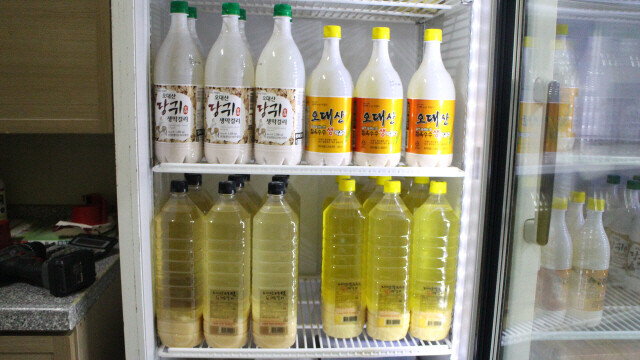
SEOUL, Nov. 26 — South Korea’s traditional liquor makers are renewing calls for regulatory reform as rigid local sourcing laws collide with surging grain prices and climate-driven supply disruptions.

Under the country’s current Liquor Tax Act, producers of "local specialty spirits"—a designation that grants valuable tax breaks and online retail privileges—must source their core agricultural ingredients exclusively from the municipality where the brewery is based or from immediately bordering districts.

While the law was originally crafted to foster ties between regional farms and local distillers, industry insiders argue that the boundary rules have become overly restrictive. For instance, a brewer operating in Pyeongchang, Gangwon State, can legally purchase rice from neighboring counties like Hoengseong or Yeongwol, but is barred from using rice harvested in Chuncheon—despite both cities sitting within the exact same province.

These geographic constraints are creating severe operational strain as extreme weather patterns—ranging from heavy downpours to unseasonal cold—disrupt local harvests and drive up costs. Data from the Korea Agro-Fisheries & Food Trade Corporation indicates that wholesale prices for a 20-kilogram bag of top-grade rice jumped 11.3% between January and November compared to the prior year. For mid-sized agricultural brewing corporations that consume upward of 160 metric tons of rice annually, the inability to shop across provincial lines translates directly into shrinking margins. In fact, localized rice shortages in Hoengseong last year forced several traditional breweries to temporarily suspend fermentation.

Brewers are also pointing out glaring inconsistencies in how the rules are applied across South Korea's special self-governing provinces. Because Jeju Island has no subordinate city or county governments, its brewers are legally permitted to source ingredients from anywhere on the island. Meanwhile, brewers in Gangwon and Jeonbuk—which also hold special self-governing status—remain bound by strict municipal borders. Adding to the frustration, breweries situated near provincial borders are permitted to buy crops from adjacent towns in neighboring provinces, leading to complaints over uneven playing fields.

To keep the sector viable, trade groups are urging lawmakers to adopt a two-pronged approach: allowing emergency cross-regional grain sourcing during acute supply shortages, and permanently widening the legal sourcing radius to the broader provincial level.

Industry leaders also note that ingredient deregulation must be paired with tax reform. Because traditional beverages such as yakju (refined rice wine) and distilled spirits are currently taxed based on product value (ad valorem) rather than alcohol volume, higher raw material costs trigger a compounding tax penalty—putting small domestic brewers at a steep disadvantage against automated, large-scale beverage corporations.

Recent legislative efforts in the National Assembly have touched upon easing agricultural linkage rules, including a bill currently under committee review. However, proposals to expand ingredient sourcing zones to the provincial level have repeatedly been left on the cutting-room floor.

"Using local crops is the very essence of regional specialty spirits, and the industry fully supports that mission," said one traditional liquor sector representative. "However, widening the sourcing boundary from neighboring counties to the entire province would still protect local farmers while giving brewers the flexibility they need to survive."

[Copyright (c) Global Economic Times. All Rights Reserved.]

  • #Cherry Garden
  • #HalalFood
  • #Halal
  • #Petlife
  • #Cats
  • #Dogs
  • #Halalhorizone
  • #Hormuz Impasse
  • #Joseon
  • #globaleconomicti
KO YONG-CHUL Reporter
Reporter Page

Popular articles

  • Culinary Mashups and Nostalgia with a Twist: South Korea’s F&B Giants Vie for Consumer Attention

  • Japanese Hotel Prices Surge Nearly 9% Amid Booming Korean Tourism

  • NVIDIA Expands Local AI Horizons with RTX Spark Laptops for Offline Creators

I like it
Share
  • Facebook
  • X
  • Kakaotalk
  • LINE
  • BAND
  • NAVER
  • https://www.globaleconomictimes.kr/article/1065567348994880 Copy URL copied.
Comments >

Comments 0

Weekly Hot Issue

  • Beyond the Pink: Why Meat Color Doesn't Tell the Whole Food Safety Story
  • “Don’t Just Stick to Olive Oil”… The Nutty Oil That Lowers ‘Bad Cholesterol’
  • Beyond the Address: Integrated Jin Air’s Busan Move Hinges on Workforce and Core Operations
  • South Korea’s Chip-Fueled Boom Deepens Economic Divide as Domestic Spending Lags
  • Siheung Turns Parking Lots and Factory Roofs into 16 GWh Solar Powerhouse
  • ‘False Springs’ Double in South Korea, Threatening Honeybees and Future Fruit Supplies

Most Viewed

1
Exercise Beats Diet in Extending Lifespan, Major Review Finds
2
South Korean Burger Chain Lotteria Expands Singapore Footprint with Halal Certification and New Teriyaki Lineup
3
AI Semiconductor Stocks Plummet: Philadelphia Index Drops 5.28% and Micron Plunges 7.59% Amid Executive Shakeup and Export Restrictions
4
"Stay Out, Get Paid, or Have Police Stay With You": Shenzhen Imposes Strict Security Ahead of APEC Summit
5
Taiwan Bans Short-Selling Below Previous Close Starting Nov. 23, Raises Margin Ratio to 150%
체리가든 스토리
nutri huevos
로타리
동포저널

Hot Issue

Elon Musk and SpaceX Pledge $18.35 Billion Stock Giveaway for U.S. Minors

U.S. Compute Restrictions and Anti-Distillation Crackdowns Slow China’s AI Race

Nvidia CEO’s Reinstatement Sparks Fierce Cabinet Divide and Chip Export Fallout

Fashion Runway Show 2026

Let’s recycle the old blankets in Jeju Island’s closet instead of incinerating them.

Global Economic Times
korocamia@naver.com
CEO : LEE YEON-SIL
Publisher & Editor : KO YONG-CHUL
Registration number : Seoul, A55681
Registration Date : 2024-10-24
Youth Protection Manager: KO YONG-CHUL
Singapore Headquarters
5A Woodlands Road #11-34 The Tennery. S'677728
Korean Branch
Phone : +82(0)10 4724 5264
#304, 6 Nonhyeon-ro 111-gil, Gangnam-gu, Seoul
Copyright © Global Economic Times All Rights Reserved
  • News K
  • 반달곰 프로젝트
  • 광고문의
Search
Category
  • All articles
  • Synthesis
  • World
  • Business
  • Industry
  • ICT
  • Distribution Economy
  • Well+Being 
    • 전체
    • Pet Life
    • Halal Horizon
  • Travel
  • Eco-News
  • Education
  • Korean Wave News
  • Opinion
  • Arts&Culture
  • Sports
  • People & Life 
    • 전체
    • International Student Report
    • With Ambassador
  • Column 
    • 전체
    • Cho Kijo Column
    • Cherry Garden Story
    • Ko Yong-chul Column
    • Kim Bong-seon's Photo Column
    • Kim Seul-Ong Column
    • Lee Yeon-sil Column
    • Professor Lee Soo-young’s Life Essays
  • Photo News
  • New Book Guide
  • Overseas Koreans
  • Multicultural News