• 2026.11.19 (Thu)
  • All articles
  • LOGIN
  • JOIN
Global Economic Times
한인동포뉴스(상단)
  • Synthesis
  • World
  • Business
  • Industry
  • ICT
  • Distribution Economy
  • Well+Being
    • Pet Life
    • Halal Horizon
  • Travel
  • Eco-News
  • Education
  • Korean Wave News
  • Opinion
  • Arts&Culture
  • Sports
  • People & Life
    • International Student Report
    • With Ambassador
  • Column
    • Cho Kijo Column
    • Cherry Garden Story
    • Ko Yong-chul Column
    • Kim Bong-seon's Photo Column
    • Kim Seul-Ong Column
    • Lee Yeon-sil Column
    • Professor Lee Soo-young’s Life Essays
  • Photo News
  • New Book Guide
MENU
 
Home > World

US Infrastructure Shaken: A Wave of Tech Failures Sparks National Anxiety Across Aviation, Finance, and Defense

Global Economic Times Reporter / Updated : 2026-11-18 08:01:06
  • -
  • +
  • Print

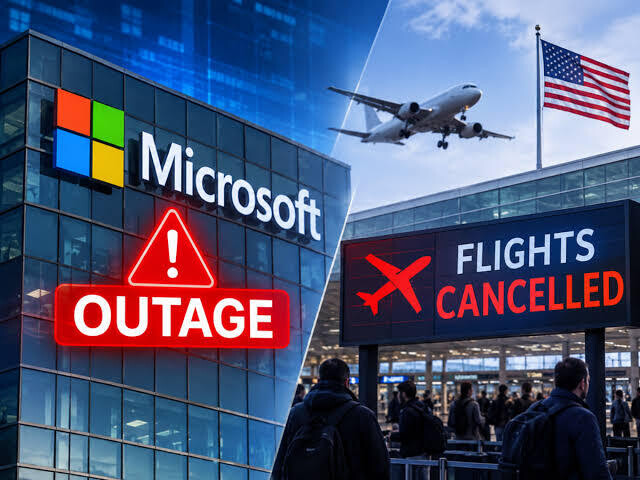
WASHINGTON — A cascading series of technological malfunctions has rattled the United States over the past week, disrupting critical sectors from commercial aviation and Wall Street banking to national defense. The streak of failures—culminating in an internal network glitch at the National Security Agency (NSA)—has renewed intense debate over digital resilience, aggressive corporate layoffs, and potential cybersecurity threats.

The NSA reported on Tuesday that routine maintenance triggered temporary performance slowdowns within its internal network. Although defense officials emphasized that primary intelligence-gathering and core operational capabilities remained uncompromised, the incident added to public unease following days of chaotic infrastructure breakdowns nationwide.

The turbulence began on November 12 when a major outage crippled Microsoft’s enterprise and email services. Just twenty-four hours later, a severe glitch in the nation’s air traffic control network triggered a nationwide ground stop lasting four and a half hours—the longest aviation shutdown in the United States since the September 11 terrorist attacks.

Flight disruptions trickled into the following days, compounded by a separate software glitch at United Airlines on November 16 that delayed roughly 150 flights. Financial markets were similarly strained; JPMorgan Chase, the country’s largest bank, experienced software-related transaction processing errors on the same day.

As government agencies and private enterprises scramble to restore stability, industry experts and lawmakers are pointing fingers at recent workforce reductions. Critics suggest that aggressive cost-cutting and layoffs may have hollowed out the talent pool required to maintain complex digital ecosystems.

The Federal Aviation Administration (FAA) faced deep staffing cuts under government efficiency initiatives spearheaded by billionaire entrepreneur Elon Musk following the inauguration of President Donald Trump. Meanwhile, private tech and aviation giants have heavily trimmed their headcounts. United Airlines cut 4% of its management roles last year, citing artificial intelligence advancements, and announced plans for another 4% reduction. Microsoft reportedly offered voluntary buyouts to a quarter of its global workforce last month.

"True system resilience relies heavily on seasoned professionals who intimately understand how these intricate networks operate," noted software reliability specialist Liz Fong-Jones. She warned that while complex software will inevitably experience failures, society’s heavy reliance on a handful of tech monoliths magnifies the fallout when systems collapse.

Fears have also mounted over whether the wave of outages could be the handiwork of coordinated cyberattacks. Security experts note a sharp spike in sophisticated, AI-driven hacking attempts aimed at multi-system infiltration. Insurance broker Marsh reported that client-reported cyber incidents more than doubled between May and October.

Political pressure is mounting accordingly. Republican Senator Josh Hawley voiced skepticism over the timing of the events, remarking that attributing all these simultaneous failures to mere coincidence defies belief.

The White House, however, has pushed back against growing panic. Speaking to reporters on the sidelines of the ASEAN summit in Manila, President Trump dismissed the incidents as growing pains inherent to massive, high-powered systems, offering reassurance that "it's fine."

White House representatives echoed this sentiment, stating that investigators have found no concrete evidence linking the tech glitches to foreign or domestic cyberattacks. In response to the FAA crisis, the administration has deployed a specialized "tiger team" of experts to overhaul air traffic systems and is pressing Capitol Hill to approve expanded funding for aviation modernization.

[Copyright (c) Global Economic Times. All Rights Reserved.]

  • #Cherry Garden
  • #HalalFood
  • #Halal
  • #Petlife
  • #Halalhorizone
  • #Hormuz Impasse
  • #Joseon
  • #globaleconomictimes
  • #micore
Global Economic Times Reporter
Reporter Page

Popular articles

  • World Citizens are Flying Directly to Busan... The Era of 4 Million Foreigners is Just Around the Corner

  • Restoring Hearing with Genes, Cochlear Implants with Robots: Where Does Hearing Loss Treatment Stand Today?

  • Cold Wave and Autumn Chill Hit Korea on "Ipdong": Gangwon -6°C, Seoul Real-Feel -4°C… Rain and Snow Expected in Central Regions on Sunday

I like it
Share
  • Facebook
  • X
  • Kakaotalk
  • LINE
  • BAND
  • NAVER
  • https://www.globaleconomictimes.kr/article/1065567611197077 Copy URL copied.
Comments >

Comments 0

Weekly Hot Issue

  • AI Music Tops Melon Chart: Is the K-Pop Production Formula Changing?
  • Beyond the Crossroads: How South Korea Can Forge a New Order in an Age of Global Upheaval
  • Pohang Struggles to Safeguard Its Hanji Heritage Amid Aging Artisans and Shifting Markets
  • KOGAS Chief Calls for Gas Price Adjustments to Clear Massive Backlog of Unpaid Bills
  • South Korea and China Reach Landmark Service and Investment FTA Agreement Translation
  • KDI Forecasts "Nearing 4% Growth" Next Year Despite Export Slowdown—Here’s Why

Most Viewed

1
South Korea and Ethiopia Sign Trilateral MOU to Introduce Liquid-Based Cytology (LBC) Technology for Cervical Cancer Diagnosis
2
Meeting Christmas Early!… Busan Dessert Sales Event "Daldal The Market" Held
3
World Citizens are Flying Directly to Busan... The Era of 4 Million Foreigners is Just Around the Corner
4
Eating 100g of Baechu Kimchi Daily Linked to Lower High-Cholesterol Risks
5
First Snow and Freeze Hit Korea as Winter Officially Begins on 'Ipdeong'
체리가든 스토리
nutri huevos
로타리
동포저널

Hot Issue

ASEAN Summit Wraps Up: Trump Holds Back-to-Back Talks with Quad and Southeast Asian Leaders

"Chilean Wine is More Than Just Cabernet Sauvignon"… Cono Sur Bets Big on Pinot Noir

"Semiconductor Boom Drives Exceptional Growth": IMF Lifts South Korea’s 2026 Growth Outlook to 3.9%

Fashion Runway Show 2026

Let’s recycle the old blankets in Jeju Island’s closet instead of incinerating them.

Global Economic Times
korocamia@naver.com
CEO : LEE YEON-SIL
Publisher & Editor : KO YONG-CHUL
Registration number : Seoul, A55681
Registration Date : 2024-10-24
Youth Protection Manager: KO YONG-CHUL
Singapore Headquarters
5A Woodlands Road #11-34 The Tennery. S'677728
Korean Branch
Phone : +82(0)10 4724 5264
#304, 6 Nonhyeon-ro 111-gil, Gangnam-gu, Seoul
Copyright © Global Economic Times All Rights Reserved
  • News K
  • 반달곰 프로젝트
  • 광고문의
Search
Category
  • All articles
  • Synthesis
  • World
  • Business
  • Industry
  • ICT
  • Distribution Economy
  • Well+Being 
    • 전체
    • Pet Life
    • Halal Horizon
  • Travel
  • Eco-News
  • Education
  • Korean Wave News
  • Opinion
  • Arts&Culture
  • Sports
  • People & Life 
    • 전체
    • International Student Report
    • With Ambassador
  • Column 
    • 전체
    • Cho Kijo Column
    • Cherry Garden Story
    • Ko Yong-chul Column
    • Kim Bong-seon's Photo Column
    • Kim Seul-Ong Column
    • Lee Yeon-sil Column
    • Professor Lee Soo-young’s Life Essays
  • Photo News
  • New Book Guide
  • Overseas Koreans
  • Multicultural News