


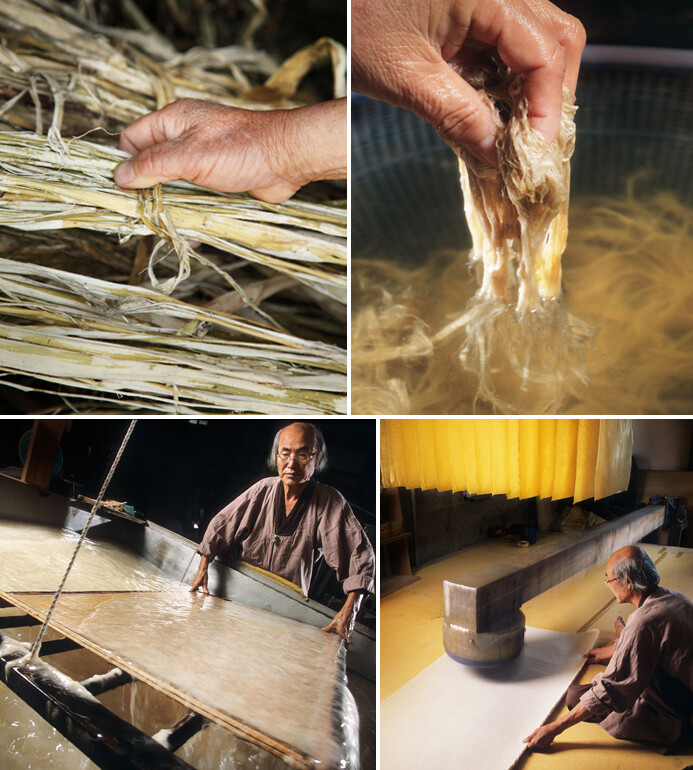
POHANG — Local experts, cultural preservationists, and industry leaders gathered at Pohang City Hall for the 2026 Pohang Hanji Policy Forum to address the critical challenges facing the region’s traditional Korean paper-making (Hanji) sector. As master craftsmen age and the number of operational producers shrinks nationwide, stakeholders emphasized that Pohang urgently requires a holistic, institutional framework to secure its unique paper-making legacy.
A Shrinking Industry Facing Structural Threats
The forum opened with grim statistics from Dr. Lim Hyun-ah of the Hanji Industry Support Center. According to her presentation, the number of traditional handmade Hanji production sites across South Korea plummeted from 64 in 1996 to roughly 20 by 2025.
With the majority of remaining artisans in their 70s and 80s, the sector faces a severe succession crisis. Dr. Lim pointed out that structural roadblocks—including a scarcity of domestic paper mulberry raw materials, heavy reliance on imported alternatives, climbing production costs, and a shrinking consumer base—continue to threaten the survival of traditional craft.
Rather than investing heavily in large-scale manufacturing infrastructure, Dr. Lim recommended that Pohang focus on cultural content development. By documenting artisan techniques and linking them with educational tours and tourism, the region can carve out a distinct identity for Pohang Hanji.
Bridging the Gap Through Education and Public Sector Demand
Professor Han Yoon-hee of Myongji University highlighted how traditional Hanji has faded from everyday consumer life. She noted that ambiguous distribution channels—which make it difficult for buyers to tell authentic handmade Hanji apart from machine-made or imported paper—undermine consumer trust and market growth.
To reverse this trend, Professor Han advocated for comprehensive archiving of master techniques via video and documentation, alongside school programs and craft workshops. She particularly stressed the impact of institutional adoption: public offices increasing their usage of Hanji products, such as official certificates, letters of appointment, and business cards, could spark fresh demand and elevate public awareness.
Meanwhile, Baek Chul-hee, CEO of Gogam Hanji & Paper, shared successful global case studies, including participating in Germany's Frankfurt trade fair and selling on Amazon. He argued that Hanji possesses immense potential as an eco-friendly material for modern art and design, urging producers to tailor product dimensions and branding to international market preferences.
The Road Ahead: Institutional Support and Funding
Representing the Korea Hanji Culture and Arts Institute, CEO Ko Jung-sook shed light on Pohang’s rich Hanji history, noting remnants of production sites in areas like Singwang-myeon, Deokdong village, and Bangsan-ri.
Ko underscored the urgency of establishing dedicated preservation spaces and official succession programs, particularly for local masters like Jang Bu-cheon, who was designated a Pohang local cultural heritage figure in 2024. Although grassroots festivals and volunteer initiatives thrive, a local support ordinance proposed in late 2025 stalled before formal submission, leaving the sector without guaranteed administrative backing.
During the panel's closing Q&A session, discussions centered on financial realism. While government subsidies and training programs—such as those observed in Jeonju—help introduce newcomers to the craft, experts agreed that trainees need long-term financial assistance, including workshop setup funds and stable career pipelines, to prevent high dropout rates.
Participants ultimately agreed that saving Pohang Hanji requires a unified 5-year master plan. This strategy must integrate archival documentation, structured successor training, guaranteed public sector procurement, and modern design-driven commercialization to ensure the craft survives for generations to come.
[Copyright (c) Global Economic Times. All Rights Reserved.]