

The conclusion of the service and investment Free Trade Agreement (FTA) between South Korea and China can be interpreted as a sign that the previously lukewarm bilateral relations are evolving into an era of "Economic Cooperation 2.0." Immediately after China joined the World Trade Organization (WTO) in 2001, South Korean companies made explosive inroads into the local market. Thanks to outsourcing by South Korean firms, China successfully established its manufacturing base while South Korea managed to boost its domestic productivity.
However, the atmosphere shifted in the 2010s. As China accelerated its manufacturing modernization, the two countries returned to a competitive relationship across various industries. Furthermore, the THAAD (Terminal High Altitude Area Defense) deployment dispute in 2016 severely chilled exchanges. The subsequent life-or-death technological hegemony struggle between the United States and China further complicated cooperation for South Korean businesses.
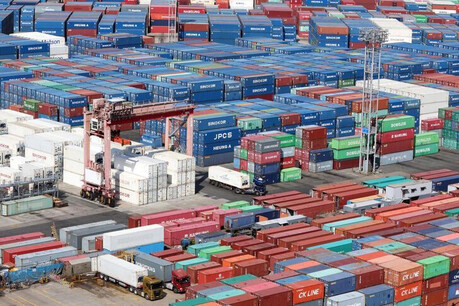
Industry insiders expect that the service and investment FTA—which achieved substantial consensus on the 18th—will serve as a turning point to reverse this trend. It immediately opens up the expansion of the service sector, which could become a future growth engine. While bilateral trade in goods reached a staggering $1.6554 trillion by October of this year, driven by the semiconductor boom, the scale of service trade stood at a modest $288.9 billion from January to September, highlighting substantial growth potential. Kim Tae-hwang, a professor of international trade at Myongji University, noted, "As South Korea's manufacturing competitiveness has relatively weakened compared to China's, we must find breakthroughs in service sectors where we hold a comparative advantage, such as healthcare, education, and cultural contents."
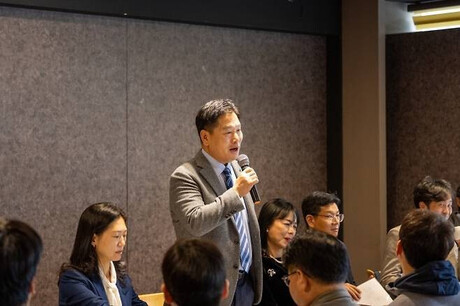
A particularly powerful ripple effect is projected in the cultural industry. Analysts suggest that the agreement effectively lifts the informal ban on South Korean cultural imports (known as Hallyu-ban or Hallyu restriction) that has hindered exchanges in films, music, and tourism for nearly a decade. During a summit with South Korean President Lee Jae-myung earlier that day, Chinese President Xi Jinping stated, "China is willing to steadily promote bilateral human exchanges and progressively develop healthy and beneficial cultural interactions with South Korea," signaling the relaxation of the restriction.
The Ministry of Trade, Industry and Energy announced, "Through this negotiation, we have secured Most-Favored-Nation (MFN) treatment in the film and gaming sectors, ensuring we are not treated less favorably than third countries." It added, "On the procedural front, a non-discrimination principle will be applied to preliminary content censorship." This marks the first time China has included such measures in a trade agreement. Additionally, the two countries signed an annex expanding the scope of co-productions—previously limited to films—to dramas, animations, entertainment shows, and documentaries.
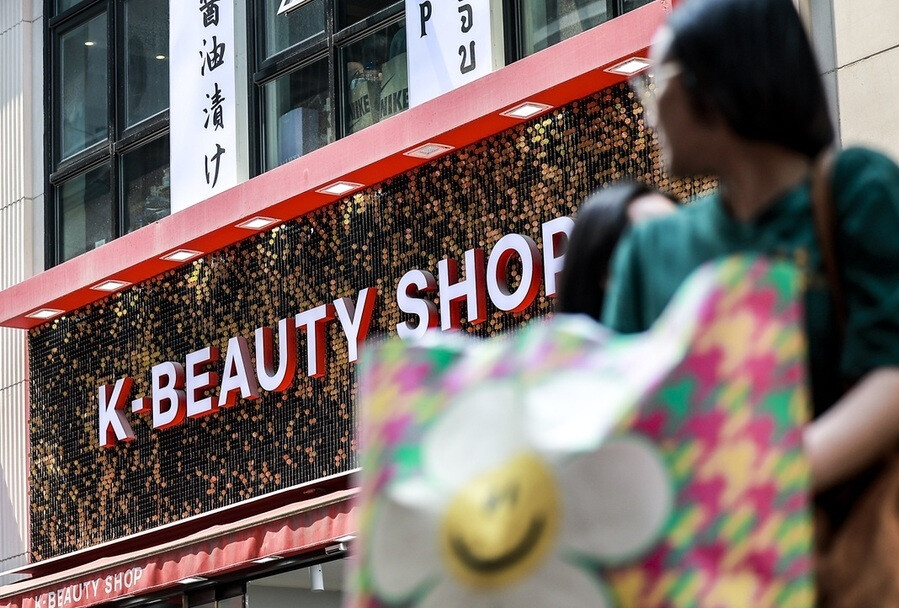
In the tourism sector, South Korean travel agencies established in 23 regions across China are now permitted to sell travel packages targeting Chinese citizens. In the distribution sector, companies looking to operate 30 or more stores in China are no longer required to form joint ventures with local Chinese firms, opening a path for K-fashion to enter the Chinese market while preserving its independent brand value.
The door has also opened to China's construction market, which is valued at approximately $4 trillion annually. Previously, China only permitted foreign construction companies to enter projects funded entirely by foreign aid, projects involving international financial institution loans and international bidding, or specialized technical projects that China could not execute independently. Under the new agreement, these restrictions will no longer apply to South Korean firms.
In the legal sector, areas where South Korean law firms can form joint ventures and business partnerships with Chinese counterparts have expanded beyond the Shanghai Free Trade Zone to Tianjin, Qianhai, and Hainan. In the financial sector, a "future MFN" clause was applied, ensuring that if China opens up its market further in the future, South Korean financial institutions will immediately reap the benefits.
Negotiations for this service and investment FTA faced numerous twists and turns over a span of 10 years. Following the implementation of the first-stage, goods-focused FTA in December 2015, the two sides agreed to pursue service and investment talks at a later date. Between 2018 and 2020, a total of nine rounds of subsequent negotiations were held alternately in Seoul and Beijing. However, the outbreak of COVID-19 in China at the end of 2020 constrained bilateral human exchanges, causing official negotiations to stall for years. Combined with the THAAD aftermath, some analysts even questioned whether the pact would fall through entirely.
Momentum was revived during a summit at the end of 2024 under the previous administration. After talks resumed in Seoul in January of the following year, final negotiations concluded after two years of discussions. An official from the Ministry of Trade, Industry and Energy explained, "The negotiations themselves have concluded; only practical tasks remain, such as refining detailed expressions in the text and ensuring there are no legal loopholes." Once the two countries sign the agreement, official implementation will follow ratification by South Korea's National Assembly and the Standing Committee of China's National People's Congress.
Nevertheless, some concerns have been raised that China's counteroffensive in the service sector might also intensify following this agreement. An industry insider remarked, "China had previously delayed negotiations because it lacked confidence in its service sector and worried that stricter intellectual property regulations would hinder domestic industrial development. Now that China's industries have modernized, it has decided it is safe to open up its service market." A high-ranking business official similarly noted, "In sectors such as artificial intelligence and electric vehicles, China is now surpassing the United States. This service FTA will serve as an opportunity to reset economic relations between South Korea and China."
[Copyright (c) Global Economic Times. All Rights Reserved.]