

The Korea Development Institute (KDI) has projected South Korea’s economic growth rate for next year at 3.9%, outperforming this year's figures. Unlike institutions like the International Monetary Fund (IMF) and the Bank of Korea (BOK), which anticipate a cooling economy, KDI maintains that near-4% growth is achievable even if export expansion moderates.
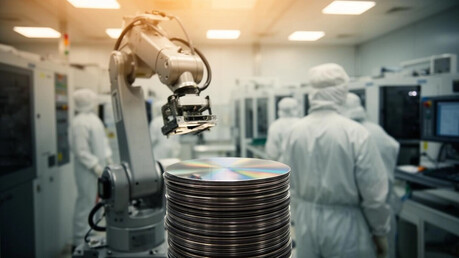
According to KDI, a surge in semiconductor prices and production volumes has significantly increased the industry's economic weight. Consequently, even with the same production growth rate, the sector can drive the overall growth index higher. KDI estimates that semiconductor production, related facility investments, and factory construction will account for roughly two-thirds of next year's growth, with consumption and construction investments providing steady secondary support.
IMF, OECD, ADB, and BOK See Slowdown; KDI Stands Firm at 3.9%
In its "2026 Second-Half Economic Outlook" released on the 18th, KDI projected this year’s growth at 3.8% and next year’s at 3.9%, marking upward revisions of 0.6 percentage points (p) and 1.7 percentage points (p), respectively, from August estimates.
Conversely, the IMF Korea mission projected growth at 3.9% this year and 3.3% next year. The Bank of Korea previously estimated 3.3% for this year and 2.9% for next year, while the Organization for Economic Cooperation and Development (OECD) forecast 3.7% and 2.6%. The Asian Development Bank (ADB) and the National Assembly Budget Office projected 3.2% / 2.3% and 3.5% / 2.7%, respectively.
While KDI’s projections for next year exceed those of the IMF (by 0.6 percentage points), the BOK (by 1.0 percentage point), and the OECD (by 1.3 percentage points), the BOK noted in October that overall economic momentum has been tracking higher than initial baseline paths.
Lower Export Growth, Higher Contribution: Semiconductor Weight Exceeds 20%
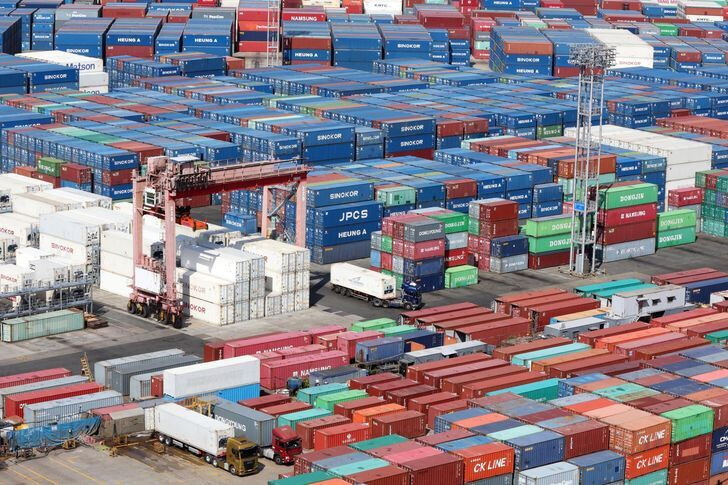
KDI projects that the export growth rate itself will moderate from 10.3% this year to 8.1% next year, with merchandise exports slowing from 10.6% to 8.5% and facility investments easing from 8.7% to 8.1%.
However, the headline growth rate rises because of the changing economic weight of semiconductors. South Korea’s real GDP growth is calculated using a chain-weighted methodology, which reflects the nominal value-added share of industries from the previous year. An industry that expands its economic share exerts a greater influence on total growth even at identical production speeds.
The nominal GDP share of computer, electronic, and optical products—anchored by semiconductors—jumped from an average of 7.5% between 2022 and 2025 to 20.7% in the first half of this year. KDI estimates that its annual share will surpass 22%.
KDI calculates that even if sectoral production growth matched the four-year average, the shift in weight for computers and electronics alone would lift overall growth by roughly 0.9 percentage points. Kim Ji-yeon, head of macroeconomic forecasting at KDI, explained that stronger-than-expected semiconductor prices and volumes combined with an upgraded outlook for next year created a compounding effect that significantly raised the growth forecast.
Although merchandise export growth is decelerating compared to this year, its expanding weight means its contribution to growth has actually strengthened. Semiconductor production, facility investments, and factory construction are projected to account for half of this year's growth and about two-thirds of next year's.
Kim Mi-roo, head of the macroeconomic and financial policy research department at KDI, stressed that this chain-weighted growth boost is not an "optical illusion," but rather an official calculation method capturing recent structural transformations in the economy.
Construction and Consumption Recovery Also Play a Role
Looking at domestic demand, other institutions share similar recovery trajectories. The Bank of Korea expects private consumption growth to rise from 2.1% this year to 2.3% next year, and construction investment to turn around from 0.2% to 1.9%, supported by expanding semiconductor factories, data centers, and a gradual easing of the residential slump.
The National Assembly Budget Office similarly projects construction investment to improve from 0.6% to 1.5%. However, it forecasts a moderation in facility investments (from 6.9% to 6.4%) and total exports (from 9.0% to 4.2%).
KDI’s outlook is comparatively robust, forecasting 2.4% growth for private consumption, 2.5% for construction investment, and 8.1% for facility investments. In particular, KDI’s facility investment forecast outpaces the BOK (4.7%) and the Budget Office (6.4%), driven by persistent momentum in semiconductor-related outlays. Merchandise exports are similarly projected at a resilient 8.5%.
Nevertheless, the construction recovery relies heavily on non-residential architecture—such as chip plants—and related civil engineering. Pointing out that construction investment dropped by 9.7% last year, Kim Mi-roo cautioned that a 2.5% rebound next year should not be interpreted as a return to a mid-to-long-term upward trend, especially given that regional population decline continues to weigh on residential housing.
Because of this heightened reliance on semiconductors, overall economic volatility has also increased. KDI estimates that a 1-percentage-point fluctuation in the real growth rate of computer, electronic, and optical products could swing overall growth by 0.2 to 0.3 percentage points.
Furthermore, strong headline growth does not necessarily translate to widespread improvements across all households. KDI noted that because the income benefits of the semiconductor boom are concentrated in specific sectors, a sense of disparity will likely persist for Main Street businesses like food services and hospitality.
Depending on how these sectors perform, next year's growth could potentially exceed 4% or drop below 3.5%, Kim concluded, adding that "3.9% is our highest-probability forecast utilizing all available data."
[Copyright (c) Global Economic Times. All Rights Reserved.]